In the high-stakes world of professional soccer, the goalkeeper is often the last line of defense—the “hero” between the posts who can win a game with a single fingertip save.
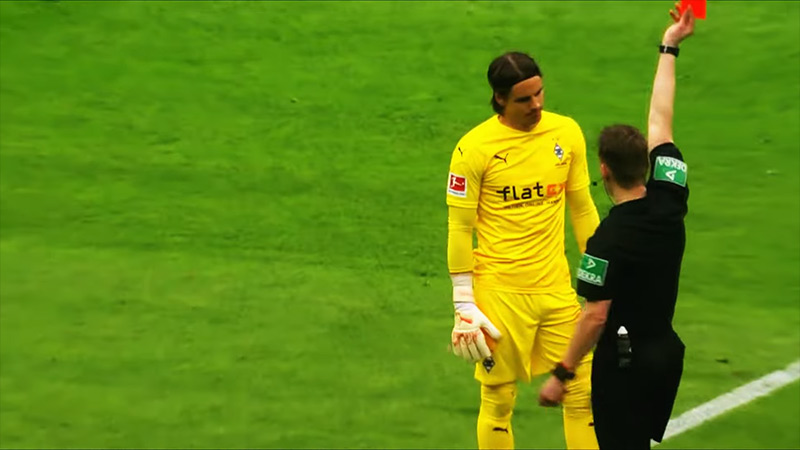
But what happens when that hero crosses the line? A common question among new fans and seasoned players alike is: Can a goalkeeper get a red card?
The short answer is yes. Goalkeepers are subject to the same fundamental laws of the game as any other player on the pitch.
However, because of their unique role and the specific privileges they enjoy (such as using their hands), the circumstances surrounding a goalkeeper’s dismissal are often more complex and tactically devastating than a standard outfield red card.
In this comprehensive guide, we will break down the specific rules governing goalkeeper dismissals, the “handball exception,” and what happens to a team when their shot-stopper is sent to the locker room.
The Fundamental Rule: Who is Subject to a Red Card?
According to the official field conduct rules, the authority of the referee to issue a red card extends beyond just the ten outfield players.
Players, substitutes, and even players who have already been subbed out can receive a red card for misconduct.
Because the goalkeeper is registered as a “player” on the team sheet, they are fully eligible to be sent off the field for any of the major offenses defined by the refereeing body.
While they have special permissions within their own 18-yard box, they do not have immunity from the laws of the game.
The Goalkeeper’s “Handball Exception.”
One of the most frequent reasons an outfield player receives a red card is for preventing a clear goal-scoring opportunity with a handball. If a defender punches the ball off the goal line, they are immediately dismissed.
However, the rules provide a specific carve-out for the goalkeeper. A goalkeeper cannot be sent off for a handball offense if the action occurs within their own penalty area. This is because the goalkeeper is legally allowed to touch the ball with their hands in this zone.
When a Goalkeeper Does Get Red-Carded for Handball: If a goalkeeper leaves their penalty area and uses their hands to stop a ball that was headed into the net or to deny an attacker a clear path to goal, they are treated like any other player.
In this scenario, they will be issued a red card for preventing a clear goal-scoring opportunity with a handball.
Denying an Obvious Goal-Scoring Opportunity (DOGSO)
Outside of handballs, the most common reason a goalkeeper is “sent for an early shower” is for committing a foul that prevents a certain goal. This is often referred to in refereeing circles as DOGSO (Denying an Obvious Goal-Scoring Opportunity).
A red card is mandatory for preventing a clear goal-scoring opportunity with foul play. For a goalkeeper, this typically happens in one-on-one situations:
- The keeper misses the ball and trips the attacking striker.
- The keeper pulls down a player who has already rounded them and has an open net.
- The keeper commits a tactical foul outside the box to stop a breakaway.
In any of these instances, the referee is obligated to show the red card to maintain the integrity of the scoring process.
Severe and Dangerous Foul Play
Soccer is a physical sport, but there is a clear line between a “hard tackle” and “dangerous conduct.” Goalkeepers often have to be brave, throwing their bodies into a crowd of players to punch a ball away. However, if that bravery turns into aggression, they face the ultimate sanction.
A red card must be issued for severe and dangerous foul play. This applies to goalkeepers who:
- Lead with their studs high into an opponent’s chest or head.
- Use excessive force that endangers the safety of an opponent.
- Engage in violent conduct (such as throwing a punch or headbutting) during a set piece.
Regardless of where the keeper is on the field—whether inside their box or near the halfway line—dangerous play is a straight red card offense.
Illegal Entry and Field Conduct
A lesser-known rule involves the “sanctity” of the field of play. A red card can be issued for entering the field without permission if that entry results in preventing a clear goal-scoring opportunity.
While this rarely applies to the starting goalkeeper, it could apply to a substitute goalkeeper.
For example, if a substitute goalkeeper sees the ball trickling into the net and runs onto the field from the bench to kick it away, they will receive a straight red card before they even officially join the match.
The Tactical Fallout: What Happens After the Red?
When a goalkeeper receives a red card, the team faces a much more difficult situation than losing a midfielder or defender. Because the rules of soccer require a team to have a designated goalkeeper on the pitch at all times, the coach must make a difficult choice:
- The Substitution: If the team has substitutions remaining, the coach will usually “sacrifice” an outfield player (often a striker or winger) to bring on the backup goalkeeper.
- The “Emergency” Keeper: If the team has already used all their substitutions, an outfield player currently on the pitch must put on the goalkeeper’s jersey and gloves. This “stand-in” keeper must finish the match in goal, which often leads to lopsided scores.
Summary of Red Card Offenses for Goalkeepers
A goalkeeper will be dismissed if they engage in:
- DOGSO via Foul Play: Tripping or fouling an opponent to stop a clear goal.
- DOGSO via Handball (Outside the Box): Using hands outside the 18-yard area to stop a goal.
- Dangerous Play: Any action that constitutes “severe and dangerous foul play”.
- Illegal Interference: Entering the field without permission to stop a goal.
Conclusion
A red card for a goalkeeper is one of the most dramatic moments in sports. It changes the entire geometry of the game and tests a team’s depth and discipline.
While goalkeepers are protected from red cards for handballs within their own penalty area, they are held to the highest standard of conduct regarding the safety of their opponents and the fairness of the competition.
Understanding these rules is essential for players and fans who want to appreciate the tactical nuances of the “beautiful game.”