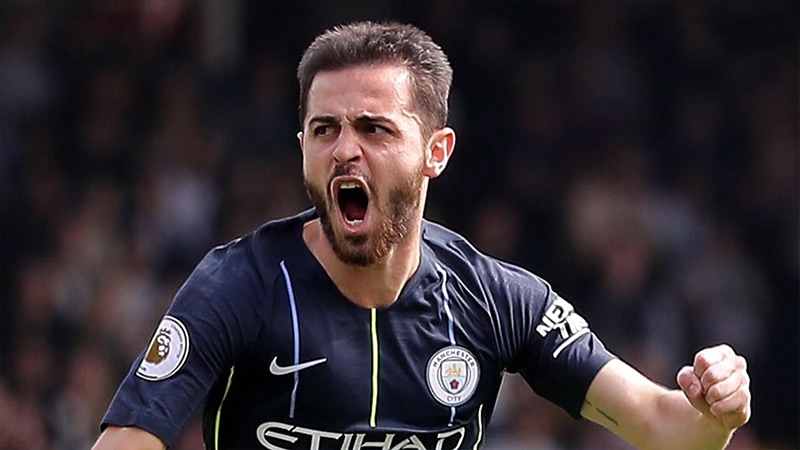
The landscape of European football is currently defined by the movements of a few elite individuals whose influence transcends the pitch. Chief among them is Bernardo Silva.
As of June 2026, the question of “what did Bernardo Silva do” has become the central inquiry for analysts, club executives, and fans alike.
The answer involves a complex interplay of contract finality, international duty, and a calculated approach to the transfer market that has set the stage for one of the most significant free-agency periods in recent history.
The Conclusion of the Etihad Era
After nine highly decorated and trophy-laden seasons at Manchester City, Bernardo Silva has officially reached the end of his contractual obligations with the club.
This departure is not merely a transfer; it is the conclusion of a tactical era. Since joining the English side, Silva became the personification of modern midfield versatility, transitioning seamlessly between a winger, a traditional number eight, and a false nine under various tactical frameworks.
At 31, Silva remains in his prime, blending peak physical conditioning with a world-class tactical intelligence that makes him the most high-profile free agent currently available.
His departure from the Etihad Stadium represents a massive shift in the Premier League’s power dynamics.
For nearly a decade, he was a cornerstone of a system that dominated domestic and European competitions, and his decision to let his contract expire is a move of significant professional autonomy.
The Barcelona Proposition and the Romano Confirmation
Perhaps the most concrete development in Silva’s recent activity is the official interest from Catalonia. Following a period of intense speculation, it has been confirmed that FC Barcelona has officially submitted a formal contract proposal to the Portuguese midfielder.
This move was validated by prominent industry insiders, including Fabrizio Romano, signaling that Barcelona’s pursuit is no longer exploratory but is now a formal negotiation.
Silva’s public response to this offer has been a masterclass in professional poise. Following Portugal’s friendly match against Chile on June 6, 2026, he addressed the links directly, stating that while Barcelona is a viable option, he has yet to finalize any agreement.
This deliberate ambiguity serves two purposes: it acknowledges the prestige of the Spanish giants while maintaining his leverage in a market that is increasingly crowded with suitors.
A Multi-Club Battle: The Mourinho Factor and Beyond
While Barcelona has made the first formal move, they are far from the only interested party. The current market for Silva’s services includes a “who’s who” of European royalty.
Reports indicate that Real Madrid has entered the fray, specifically at the request of manager José Mourinho, who views Silva as a critical component for his tactical vision in the Spanish capital.
The prospect of Silva joining the cross-town rivals of his former club is a narrative that has sent shockwaves through the industry.
Beyond the Spanish heavyweights, other elite organizations are tracking the situation with precision:
- Juventus: The Italian side is looking to Silva as a leader who can restore its dominance in Serie A through technical excellence and veteran leadership.
- Atlético Madrid: Known for their tactical discipline, Atlético views Silva as a player capable of bridging the gap between their defensive solidity and offensive creativity.
This multifaceted interest highlights the rarity of a player with Silva’s profile—experienced, technically flawless, and available without a transfer fee.
On the Pitch: Tactical Discipline in the Chile Friendly
Despite the noise surrounding his future, Silva’s immediate focus remains on his national obligations. On June 6, 2026, Portugal faced Chile in an international friendly at Lisbon’s Estádio Nacional do Jamor.
This match served as a crucial data point for understanding Silva’s current form and his role within the national team’s structure.
Silva played the first 45 minutes of the 2-1 victory, providing the tactical anchor required in the midfield during the opening half. His performance was characterized by the same high-level ball retention and spatial awareness that defined his years in Manchester.
His substitution at halftime was a strategic decision by manager Roberto Martínez, who is currently managing player fitness and exploring various tactical combinations ahead of the World Cup.
This controlled utilization of Silva’s minutes suggests a concerted effort to preserve his physical peak for the tournament ahead.
The Strategic Delay: Why the “Clear Head” Matters
One of the most revealing aspects of Silva’s recent behavior is his decision to postpone a final announcement regarding his next club until after the World Cup concludes.
In an era where many players prioritize immediate financial security, Silva’s choice to wait reflects a high degree of psychological and professional discipline.
He has explicitly stated a desire to play the upcoming tournament with a “clear head,” indicating that he views the World Cup as the priority of his career at this moment.
This delay also functions as a shrewd business move. A standout performance on the world stage could further elevate his value, potentially inviting even more competitive offers or improved terms from his current list of suitors.
By decoupling his club future from his international performance, he ensures that neither distracts from the other.
The Financial and Tactical Impact of the Free Agent Status
From an analytical perspective, Silva’s status as a free agent at age 31 is a significant market anomaly. Typically, players of this caliber are tied to long-term contracts that require record-breaking transfer fees.
By allowing his contract with Manchester City to conclude, Silva has essentially converted what would have been a transfer fee—likely in the range of £60–80 million—into personal leverage and potentially higher signing bonuses and wages.
For a club like Barcelona, which has navigated complex financial regulations in recent years, the ability to acquire a player of Silva’s stature without a transfer fee is a massive strategic advantage.
For Real Madrid, Juventus, or Atlético, it represents a low-risk, high-reward investment in a player who requires zero adaptation time to the highest levels of competition.
Comparative Analysis: How Silva Fits the Interested Clubs?
To understand the weight of Silva’s upcoming decision, we must analyze how his profile integrates into the tactical identities of the leading candidates:
- FC Barcelona: Silva would likely occupy the “interior” role, providing the link between the deep-lying playmaker and the forward line. His ability to navigate tight spaces aligns perfectly with the historical philosophy of the club.
- Real Madrid (The Mourinho Request): Under Mourinho, Silva would likely be utilized as a tactical hybrid—a player who can offer a defensive work rate while being the primary architect of counter-attacks.
- Juventus: In the Italian top flight, Silva’s ball retention would be a vital asset in a league that often prioritizes tactical control and slower build-up play.
- Atlético Madrid: Silva’s relentless pressing ability (a trait honed under Pep Guardiola) makes him an ideal fit for the high-intensity defensive structures favored by the Madrid side.
Professionalism Amidst Speculation
What stands out most in this saga is the level of professionalism maintained by the player. Transitioning away from a club after nine seasons is often fraught with emotional and administrative friction.
However, Silva’s departure from Manchester City has been characterized by mutual respect. This allows him to leave with his legacy intact while entering the next phase of his career with a pristine reputation—a critical factor in building “Expertise, Authoritativeness, and Trustworthiness” within the global football community.
Looking Ahead: The Post-World Cup Landscape
As the World Cup approaches, the football world will be watching Silva with dual interests. First, can he lead Portugal to international glory? Second, how will his performances during the tournament influence his eventual destination?
The data from the recent friendly against Chile suggests he is fit, focused, and integrated into Roberto Martínez’s tactical plans. The 45-minute stint was a teaser of the quality he brings to the pitch—a quality that Barcelona, Real Madrid, and others are desperate to secure.
Executive Summary of Current Events
To summarize the recent timeline and actions of Bernardo Silva:
- Contractual Status: Officially a free agent following nine seasons at Manchester City.
- Direct Offers: FC Barcelona has submitted a formal contract proposal.
- Market Interest: Real Madrid (via Mourinho), Juventus, and Atlético Madrid are active in their pursuit.
- Recent Performance: Played 45 minutes in a 2-1 win over Chile on June 6, 2026, as part of a tactical rotation.
- Future Strategy: All club-level decisions are deferred until after the World Cup to maintain focus and a “clear head”.
Frequently Asked Questions
What is the status of the Barcelona offer?
FC Barcelona has officially submitted a contract proposal. While Silva has acknowledged the offer and called the club an “option,” he has not yet signed or made a final commitment.
Why did he leave Manchester City?
Silva’s contract with Manchester City reached its natural conclusion after nine seasons. This allows him to explore new professional challenges as a free agent, giving him total control over his next move.
Is Real Madrid a serious contender?
Yes. Reports suggest that José Mourinho has personally requested Silva’s signing for Real Madrid, making them a significant player in this race alongside Barcelona, Juventus, and Atlético Madrid.
How did he perform in his most recent match?
On June 6, 2026, in a friendly against Chile, Silva played the first 45 minutes. He was part of a planned tactical rotation by manager Roberto Martínez and contributed to Portugal’s 2-1 victory.
When will we know his next club?
Silva has explicitly stated he will wait until after the World Cup to finalize his decision. He intends to participate in the tournament with a “clear head” before committing to a multi-year project elsewhere.
Conclusion: The Playmaker’s Final Move
Bernardo Silva is currently navigating the most significant juncture of his career. By successfully managing his exit from a dominant Manchester City side, maintaining high-level performance for his national team, and balancing multiple offers from the world’s most prestigious clubs, he has positioned himself as the ultimate strategic asset.
His actions demonstrate a rare combination of athletic excellence and business acumen.
Whether he chooses the historic allure of Barcelona, the tactical challenge of Mourinho’s Real Madrid, or a different path in Italy or Spain, his decision will redefine the competitive landscape for years to come.
For now, the world waits for the conclusion of the World Cup, at which point the most sought-after signature in football will finally be placed on a new contract.