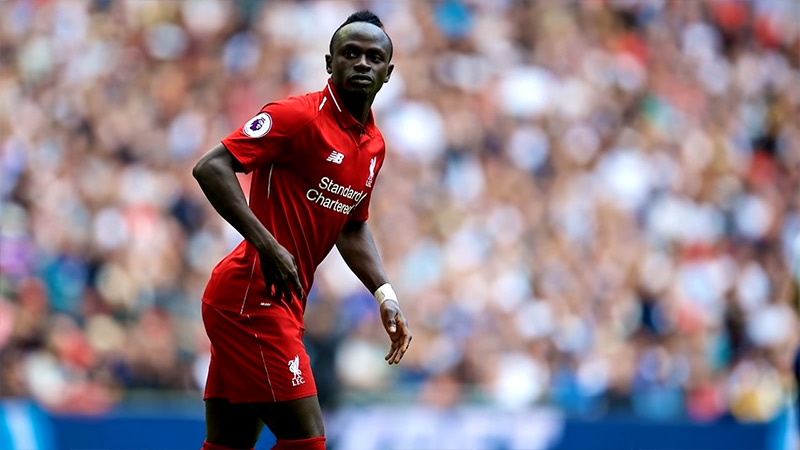
For nearly a decade, Sadio Mané stood as a paragon of the modern forward: explosive, selfless, and clinically efficient.
His tenure at Liverpool saw him climb to the absolute pinnacle of European football, winning every major trophy available and establishing himself as one of the most feared attackers in the world.
However, in recent seasons, the narrative surrounding the Senegalese star has shifted from the consistent highlights of the Premier League to a more complex story of transition, adversity, and eventual revitalization in the Middle East.
To understand what happened to Sadio Mané, one must look past the simple movement of transfers and examine a series of high-stakes decisions, physical setbacks, and a profound commitment to both his national identity and his humanitarian roots.
The Bavarian Mismatch: Why Bayern Munich Didn’t Work
In the summer of 2022, Mané made the strategic decision to depart Anfield, seeking a new challenge in the Bundesliga.
His £35 million move to Bayern Munich was framed as a landmark signing, intended to fill the void left by the departure of legendary striker Robert Lewandowski.
On paper, the pairing of Germany’s most successful club and one of Africa’s greatest players seemed destined for success.
The reality, however, proved significantly more challenging. Mané’s arrival coincided with a period of tactical transition within the club, and he struggled to find the same rhythmic consistency he enjoyed under Jürgen Klopp.
He finished his sole season in Germany with 12 goals in 38 appearances—respectable figures for many, but below the elite standards expected of a Ballon d’Or runner-up.
Two specific factors derailed his tenure in Munich:
- The Pre-World Cup Injury: Perhaps the most significant blow to Mané’s momentum was a major leg injury sustained just weeks before the 2022 FIFA World Cup. This injury necessitated surgery and, most devastatingly, forced him to miss the tournament entirely. For a player whose identity is so closely tied to his national team, the psychological and physical toll of this absence cannot be overstated.
- Internal Friction: Professional frustrations culminated in a widely publicized dressing room incident. Following a Champions League defeat to Manchester City, Mané was involved in a physical altercation with teammate Leroy Sané, resulting in a club-imposed fine and suspension.
By the end of the 2022–2023 campaign, both Mané and manager Thomas Tuchel reached a consensus that a departure was the most pragmatic path forward. Tuchel famously described the move as a way to “untie the knot” that had formed during a difficult year for both the player and the institution.
The Saudi Renaissance: Strategic Growth at Al Nassr
The next phase of Mané’s career reflects the broader shift in the global football landscape. In August 2023, he joined the growing contingent of elite players moving to the Saudi Pro League, signing a lucrative contract with Al Nassr.
While some critics viewed the move as a step toward retirement, Mané’s performance data suggests a complete revitalization of his professional form.
At Al Nassr, Mané has transitioned from being a primary goal-scoring burden-bearer to a multifaceted forward playing alongside Cristiano Ronaldo.
This partnership has proven fruitful; Mané has integrated seamlessly into the squad, maintaining high performance ratings throughout the 2024–2026 seasons.
His presence has been a catalyst for Al Nassr’s domestic success, proving that his technical ability remains at a world-class level even as he enters the latter stages of his career.
This move was more than a financial decision; it provided Mané with the environment needed to regain his confidence and physical sharpness away from the intense scrutiny of the European media cycle.
The International U-Turn: A Quest for Redemption
Mané’s relationship with the Senegal national team, the Lions of Teranga, remains the heartbeat of his professional life. His recent international journey has been a “rollercoaster” of extreme highs and unexpected pivots.
The crowning achievement of this period was captaining Senegal to a historic victory in the 35th Africa Cup of Nations (AFCON), defeating Morocco in a hard-fought final. This victory solidified his status as a national hero and arguably the greatest player in the country’s history.
However, the emotional exhaustion of the tournament and the pressures of his club career led to a brief moment of uncertainty. Following the AFCON triumph, Mané indicated he was retiring from international football.
This news sent shockwaves through the continent, as many felt he still had significant contributions to make on the world stage.
The retirement was short-lived. Following a recall by head coach Pape Thiaw, Mané reversed his decision. This return is strategically motivated by a desire for “World Cup redemption.”
Having missed the 2022 tournament due to injury, Mané is now focused on leading Senegal into the 2026 FIFA World Cup, aiming to provide the veteran leadership necessary for a deep run in the tournament.
The Humanitarian Benchmark: Transforming Bambali
While his movements on the pitch are tracked by millions, his impact off the pitch in his home village of Bambali is perhaps his most enduring legacy.
Mané has utilized a massive portion of his personal wealth to facilitate a socioeconomic transformation of his community, effectively turning a village into a functional town.
His philanthropic investments are structured and impactful:
- Healthcare: He funded a £455,000 hospital to provide essential services to the region.
- Education: He commissioned a €250,000 school to ensure the next generation has access to quality learning environments.
- Infrastructure: His contributions include a new post office and a fuel station to stimulate the local economy.
- Connectivity and Support: He has provided high-speed 4G internet for the community and established a system of monthly financial allowances for local families.
For Mané, success in Saudi Arabia or with the national team is a means to an end—the continuous improvement of the lives of those in Senegal. This commitment to “giving back” has earned him a level of respect that transcends sports.
Detailed Analysis: Frequently Asked Questions
Where is Sadio Mané playing right now?
As of 2026, Sadio Mané is a key forward for Al Nassr in the Saudi Pro League. He continues to play a vital role in their attacking lineup alongside other international stars.
Why did Sadio Mané leave Bayern Munich so quickly?
His departure was a mutual decision between the player and management. A combination of a major pre-World Cup injury, a struggle to adapt to the team’s tactical system, and a disciplinary incident with Leroy Sané led to the conclusion that parting ways was best for both parties.
Did Sadio Mané retire from international football?
He briefly indicated his retirement following Senegal’s AFCON victory against Morocco. However, he quickly reversed this decision and has returned to lead the squad in the 2026 World Cup qualifiers.
What has Sadio Mané built in his home village?
Mané has personally funded a comprehensive infrastructure overhaul in Bambali, including a hospital, a school, a post office, and a fuel station. He also provides monthly stipends to families and has brought 4G internet to the area.
Conclusion: The Enduring Value of a Legend
The story of “what happened” to Sadio Mané is not one of decline, but of calculated evolution. While his time in Germany was a rare professional setback, his ability to pivot to the Saudi Pro League and maintain elite performance levels demonstrates remarkable resilience.
By returning to the national team, he has positioned himself for one final, grand act on the global stage: the 2026 World Cup. Yet, regardless of the results in North America or Riyadh, Mané’s legacy is already secure.
He has proven that a world-class athlete can be defined as much by the hospitals and schools they build as by the trophies they lift.
Sadio Mané remains a vital, influential figure in global football, continuing to lead both on the pitch and in the hearts of the Senegalese people.