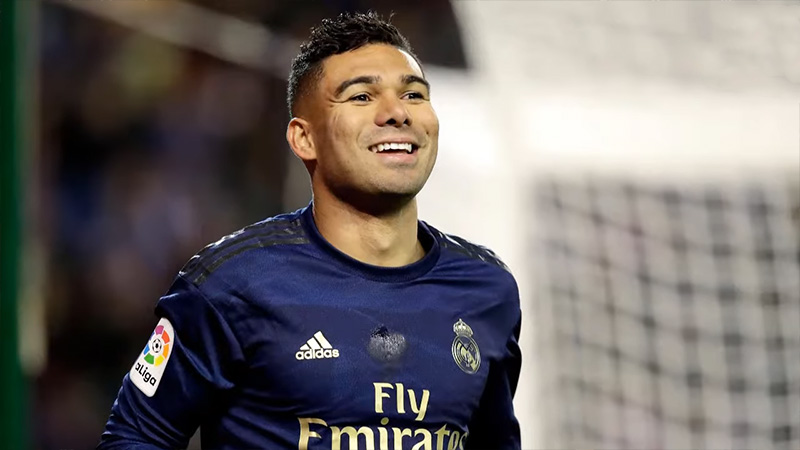
In the world of professional football, few names command as much respect in the defensive midfield position as Carlos Henrique Casemiro.
Known simply as Casemiro, he has spent over a decade at the pinnacle of European and international football, serving as the “engine room” for some of the greatest teams in history.
As fans and analysts look at his current performance levels, a recurring question emerges: How old is Casemiro, and how much longer can he dominate the pitch?
This comprehensive guide explores Casemiro’s age, his storied career path, and how he continues to redefine the role of a veteran midfielder in 2026.
How Old Is Casemiro Today? The Definitive Answer
To get straight to the facts: Casemiro was born on February 23, 1992. As of today, April 13, 2026, Casemiro is 34 years old.
At 34, a footballer is traditionally considered to be in the “twilight” of their career. However, for a player whose game is built on tactical intelligence, positioning, and physical presence rather than raw sprinting speed, the mid-thirties can often be a period of refined excellence.
Casemiro’s age reflects a wealth of experience that few players in the history of the sport can match.
The 1992 Generation: A Vintage Year for Football
Born in 1992, Casemiro belongs to a distinguished cohort of footballers. The early 90s produced a wave of talent that would go on to define the 2010s and early 2020s.
Being 34 years old in 2026 puts Casemiro in the same bracket as other legends who have had to adapt their games as they moved past thirty.
For Casemiro, his birth year of 1992 represents an era of Brazilian football that focused on producing “modern” defensive midfielders—players who weren’t just ball-winners but were also capable of initiating attacks and scoring crucial goals in high-pressure moments.
Early Life and the Foundations of a Champion (1992–2010)
Casemiro’s journey began in São José dos Campos, Brazil. Growing up, his path was marked by a relentless work ethic and a clear focus on the defensive side of the game.
He joined the youth ranks of São Paulo FC, where his leadership qualities were evident even as a teenager.
During these formative years, Casemiro earned the nickname “Casemarra,” a play on his name and the Portuguese word for “arrogance” or “toughness.”
While some saw it as a critique of his confidence, it was actually the early sign of the mental fortitude that would eventually help him win five UEFA Champions League titles.
By the time he broke into the São Paulo first team, it was clear that he was a talent destined for the European stage.
The Real Madrid Dynasty: Conquering Europe
Casemiro’s move to Real Madrid initially began with a loan to their “B” team, Castilla. It was a humble beginning for a future legend, but it allowed him to adapt to the Spanish style of play.
After a successful loan spell at FC Porto, where he proved he could handle the rigors of European competition, he returned to the Bernabéu to become an indispensable part of the squad.
The “Triangle of Bermuda”
Alongside Toni Kroos and Luka Modrić, Casemiro formed what Madrid manager Carlo Ancelotti famously called the “Triangle of Bermuda”—a midfield where opposing attacks would simply disappear.
- His Role: Casemiro provided the defensive shield that allowed Kroos and Modrić the freedom to create.
- The Impact: This trio was the heartbeat of a Real Madrid side that won three consecutive Champions League titles between 2016 and 2018.
By the time he left Madrid, Casemiro had established himself as perhaps the best “number 6” in the world. His age during these peak years (mid-to-late 20s) saw him at his physical and tactical peak.
Transitioning to the Premier League: The Manchester United Chapter
In 2022, Casemiro sought a new challenge, moving to the English Premier League to join Manchester United.
Many questioned the wisdom of signing a player who was entering his 30s for a high transfer fee. However, Casemiro quickly silenced critics by transforming United’s midfield.
His arrival brought a “winner’s mentality” to a dressing room that desperately needed it. Even as he moved from age 30 to 34, his ability to read the game and snuff out danger remained elite.
In the Premier League, where the pace is notoriously fast, Casemiro’s experience allowed him to anticipate plays before they happened, compensating for any slight loss in foot speed.
Casemiro at 34: Physical Evolution and Tactical Intelligence
Now that Casemiro is 34 years old in 2026, his role on the pitch has naturally evolved. In modern football, 34 is no longer the “retirement age” it once was.
Advances in sports science, nutrition, and recovery have allowed elite athletes to extend their careers well into their late thirties.
How He Defies Age
- Positional Discipline: Casemiro rarely finds himself out of position. By staying “ahead of the ball,” he reduces the need for long-distance recovery sprints.
- Leadership: At 34, he is often the “coach on the pitch,” directing younger teammates and organizing the defensive shape.
- Strength and Aerial Ability: His physical strength remains a massive asset, particularly in the Premier League, where he continues to win the majority of his aerial duels.
The Secret to Longevity: How Defensive Midfielders Last
The defensive midfield role is grueling, but it is also one where experience is a primary currency. If we look at other greats like Claude Makélélé or Fernandinho, they continued to play at a high level until they were 37 or 38.
Casemiro, at 34, is following a similar trajectory. By focusing on his recovery and tactical awareness, he has managed to maintain a high level of availability.
For a 34-year-old, his “footballing age” is arguably much younger because he has avoided major, career-threatening injuries through disciplined professional habits.
Career Statistics and Milestones: A Quick Glance
To understand the weight of Casemiro’s 34 years, one must look at what he has achieved in that time:
- UEFA Champions League: 5 Titles
- La Liga: 3 Titles
- Copa del Rey: 1 Title
- FIFA Club World Cup: 3 Titles
- Copa América (Brazil): 1 Title (2019)
These aren’t just numbers; they represent over a decade of playing in the most high-pressure matches in the world. Every year of his 34-year life has contributed to a resume that is almost unparalleled in modern football.
Casemiro’s Impact on the Brazilian National Team
Beyond club football, Casemiro has been the bedrock of the Seleção. As a 34-year-old veteran in 2026, he remains a vital figure for Brazil as they navigate World Cup qualifiers and international tournaments.
His presence provides a bridge between the legendary teams of the past and the rising stars of the future. For young Brazilian midfielders, Casemiro is the gold standard of what a defensive anchor should be.
Frequently Asked Questions (FAQ)
Q: When was Casemiro born?
A: Casemiro was born on February 23, 1992.
Q: How old is Casemiro in 2026?
A: As of April 13, 2026, he is 34 years old.
Q: Which club does Casemiro play for?
A: As of the most recent records in 2026, Casemiro has been a key figure for Manchester United following his legendary stint at Real Madrid.
Q: How many Champions League titles has Casemiro won?
A: Casemiro has won 5 UEFA Champions League titles, all during his time with Real Madrid.
Q: Is Casemiro still playing for Brazil?
A: Yes, Casemiro remains a vital leader and veteran presence for the Brazilian national team.
Conclusion: A Legacy Carved in Silver
So, how old is Casemiro? He is 34 years old, born on February 23, 1992. But in the context of football, age is often just a number. For Casemiro, 34 represents a perfect blend of remaining physical capability and unmatched tactical wisdom.
Whether he is breaking up a counter-attack for Manchester United or leading the Brazilian national team, Casemiro continues to prove that he is a “serial winner.”
As he moves further into his thirties, his legacy as one of the greatest defensive midfielders to ever grace the pitch is already secure.
Fans should cherish these years, as players with his specific combination of grit, intelligence, and silverware are a rare breed in the beautiful game.