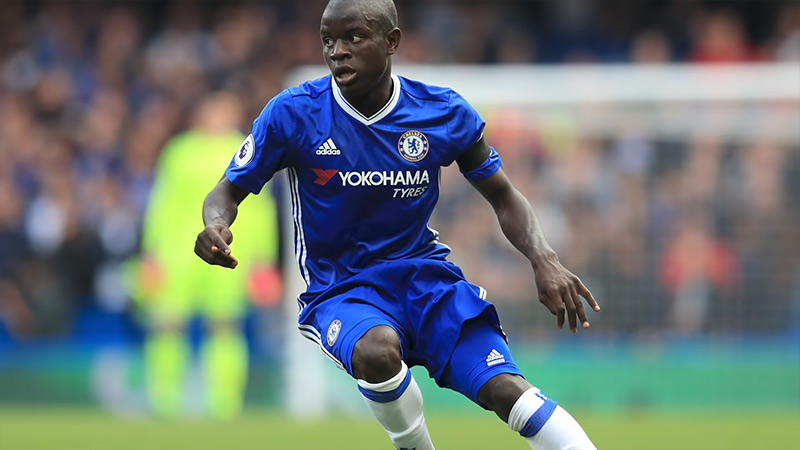
In the modern era of multi-million dollar scouting networks and youth academies that track players from the age of six, the story of N’Golo Kanté remains one of the most statistical anomalies in football history.
Today, he is recognized globally as a midfield powerhouse, a Premier League champion, and a World Cup winner. However, his journey did not begin in the sterile environments of elite training centers.
To understand where N’Golo Kanté came from, one must look back to the lower tiers of French football and a path defined by quiet persistence rather than overnight hype.
This blog post explores the “meteoric rise” of a player who defied the odds to move from the eighth tier of the French league to the pinnacle of world football.
Born in Paris: The Roots of a Champion
N’Golo Kanté was born in Paris to Malian parents. Growing up in the French capital, his early life was shaped by the vibrant but often overlooked footballing culture of the city’s suburbs.
Unlike many of his future peers who were scouted by major Ligue 1 academies in their early teens, Kanté’s path was much more grounded.
His footballing education began at a local level, far from the bright lights of the Parc des Princes. He joined JS Suresnes, a club that operated in the eighth tier of French football.
It was here, in the amateur divisions, that the foundations of his legendary work rate were laid. While he was often the smallest player on the pitch, his ability to cover ground and disrupt play was already becoming his trademark.
The Professional Breakthrough: US Boulogne
While many stars are established professionals by age 18, Kanté’s breakthrough came later than most. He did not sign his first professional contract until he was 19 years old. This contract was with US Boulogne, a club located in the north of France.
His transition to professional football was not immediate. Upon arriving at Boulogne, he was initially placed in their reserve team. This period required immense patience.
While others might have been discouraged by starting in the reserves at 19, Kanté continued to hone his craft. His persistence eventually paid off when he made his professional debut in the French Ligue 2 in 2012.
The Catalyst: Moving to SM Caen
The year 2013 marked a significant turning point in Kanté’s career trajectory. He moved to SM Caen, who were then competing in Ligue 2. This move served as the ultimate catalyst for his ascent into the elite tiers of the sport.
At Caen, Kanté’s influence was transformative. He was a “breakthrough” player for the side, providing a defensive shield that allowed the team to thrive. His performances were instrumental in helping SM Caen gain promotion to Ligue 1, the top flight of French football.
This promotion was more than just a team achievement; it was Kanté’s personal arrival on the big stage. Suddenly, the player who had been in the eighth tier just a few years prior was now competing against some of the best players in Europe.
The Leicester City Miracle: A £5.6 Million Bargain
By 2015, Kanté’s performances in France had caught the eye of scouts across the English Channel. In a move that would later be described as one of the greatest transfer bargains in history, he was signed by Premier League side Leicester City for a reported fee of £5.6 million.
At the time, Leicester City was a team widely expected to struggle against relegation. However, with Kanté in the heart of their midfield, the “Foxes” defied all logic.
Kanté played a crucial role in their 2015–16 Premier League title win, a feat often described as the greatest sporting underdog story of all time.
Conclusion: A Legacy of Persistence
Where did N’Golo Kanté come from? He came from a place of humility, hard work, and an unconventional path. From the eighth tier at JS Suresnes to the reserve team at Boulogne, and finally to the Premier League trophy with Leicester City, his rise was anything but guaranteed.
His story serves as a powerful reminder that it is not where you start, but how you persist. In just a few years, he transitioned from an amateur prospect to a global icon, proving that even in the modern game, talent and dedication can still find a way to the top.