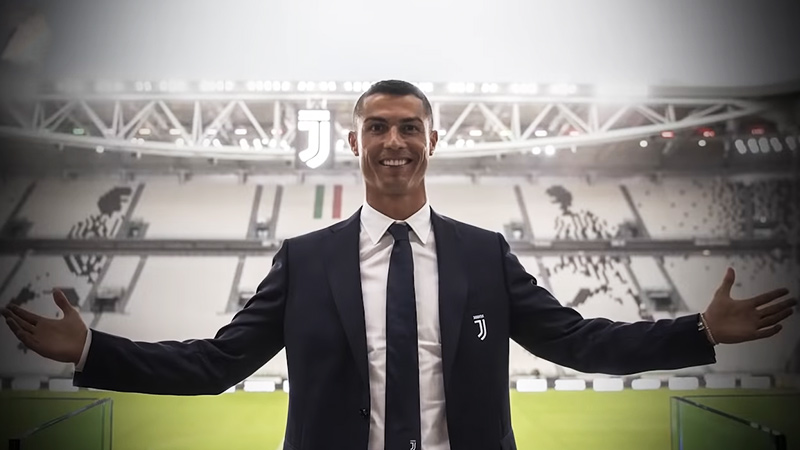
In the summer of 2018, the football world witnessed a seismic shift that redefined the economics of the sport. After nine trophy-laden years and a record-shattering goal tally, Cristiano Ronaldo departed the Santiago Bernabéu.
This move wasn’t just a sporting transition; it was a sophisticated financial maneuver that challenged traditional logic regarding aging athletes.
For fans and analysts asking how much did Real Madrid sell Ronaldo for, the answer lies in a complex €112 million package.
This transaction remains a benchmark in sports finance, signaling the immense commercial and competitive value of elite global icons.
Breaking Down the €112 Million Transfer Fee
When analyzing the departure of Cristiano Ronaldo to Juventus in July 2018, it is essential to look beyond the headline figure.
While many reports simplified the deal, the actual financial architecture was comprised of several distinct layers that satisfied both the selling and buying clubs, as well as the governing bodies of international football.
The Primary Transaction to Real Madrid
The core of the deal involved a direct payment of €100 million to Real Madrid as the primary transfer fee.
This figure represented a significant return on investment for the Spanish giants, considering they had purchased him nine years earlier for €94 million.
Securing a profit on a player who had provided his peak years is a rare feat in professional sports management.
Solidarity Contributions and Training Rights
In addition to the primary fee, an additional €12 million was paid to cover various overheads and regulatory requirements. A significant portion of this went toward “training rights,” also known as solidarity contributions.
These are payments mandated by FIFA to be shared among the clubs that contributed to a player’s development between the ages of 12 and 23.
In Ronaldo’s case, this meant that his former clubs, Sporting CP and Manchester United, received a financial windfall as part of the Juventus deal.
The Age Factor: Defying Market Gravity
One of the most remarkable aspects of the 2018 transfer was the player’s age. At 33 years old, Ronaldo was at a stage where most professional footballers see a sharp decline in their market valuation.
However, his physical conditioning and consistent output allowed him to command a fee that shattered previous records for veteran players.
Setting a New Benchmark for Over-30s
At the time of the transaction, the €112 million price tag made Ronaldo the most expensive player over the age of 30 in the history of the sport. This shattered the conventional wisdom that a player’s resale value disappears once they enter their fourth decade.
Juventus viewed the investment not as a gamble on a declining asset, but as a strategic acquisition of a proven winner who could provide immediate dividends in the Champions League and in global brand expansion.
The Value of 450 Goals
Real Madrid’s willingness to sell for €100 million was balanced against the staggering contribution Ronaldo had made during his tenure. He left the club having scored 450 goals in just 438 games.
When calculating the “cost per goal” or the value provided over his nine seasons, the initial €94 million paid to Manchester United in 2009 is often cited by analysts as one of the most cost-effective transfers in history, despite its world-record status at the time.
The Financial Evolution: Ronaldo’s Career Transfer Timeline
To understand the context of the Real Madrid sale, one must examine the broader trajectory of Ronaldo’s career valuations. His journey reflects the hyper-inflation of the football market and his sustained status at the top of the pyramid for two decades.
| Year | Transaction | Fee (Approximate) |
|---|---|---|
| 2003 | Sporting CP to Manchester United | €19 million |
| 2009 | Manchester United to Real Madrid | €94 million (£80m) |
| 2018 | Real Madrid to Juventus | €112 million (£99.2m) |
| 2021 | Juventus to Manchester United | €15–17 million |
| 2023 | Manchester United to Al-Nassr | Free transfer |
The Early Years and the Leap to Madrid
Ronaldo’s financial journey began with a €19 million move from Sporting CP to Manchester United in 2003. At the time, this was a massive sum for a teenager. By 2009, his value had quintupled, leading to the landmark €94 million move to Spain.
This 2009 transfer held the world record for several years and set the stage for the era of the “Galactico” 2.0.
The Juventus Era and the Return to Old Trafford
The €112 million move to Juventus represented the absolute peak of his market value in terms of a single transfer fee. However, as he entered his late 30s, the market finally began to reflect his age.
When he returned to Manchester United in 2021, the fee had dropped significantly to approximately €15–17 million.
Finally, his move to Al-Nassr in early 2023 was a free transfer, reflecting a shift in his career where his value shifted from a “transfer fee” model to a “high-wage” model in the Saudi Pro League.
Analyzing the Strategic ROI for Real Madrid
From a corporate perspective, Real Madrid’s decision to sell Ronaldo for €100 million plus costs was a masterclass in asset management. While losing the club’s all-time leading scorer was a sporting risk, the financial timing was impeccable.
Reinvesting the Capital
The €100 million windfall allowed Real Madrid to begin the process of squad rejuvenation. In the years following Ronaldo’s departure, the club focused on acquiring younger talents who could form the core of the next decade’s successes.
This pivot ensured that the club remained financially stable while transitioning away from a system that had been built entirely around one individual’s scoring prowess.
Salary Cap and Wage Structure
Beyond the transfer fee, the sale removed a massive salary burden from the club’s books. This provided the “fiscal space” necessary to navigate the financial challenges that would eventually hit the football world in 2020.
By selling at the absolute peak of his late-career value, the club avoided a scenario where they would be paying record-breaking wages to an aging player with no future resale value.
The Global Impact of the Transfer
The sale of Ronaldo to Juventus had repercussions far beyond the balance sheets of the two clubs involved. It affected the television rights valuation for Serie A and the commercial sponsorships associated with both Real Madrid and Juventus.
The Italian Market Boost
Upon the announcement of the €112 million deal, the Italian league saw an immediate surge in international interest.
Juventus’ stock price experienced significant volatility and growth, reflecting the “Ronaldo Effect” where a single player acts as a stimulus for an entire corporate entity.
The investment was as much about marketing and global reach as it was about the 100+ goals he would eventually score for the Italian side.
Real Madrid’s Brand Transition
For Real Madrid, the post-Ronaldo era was a test of the “club over player” philosophy. By successfully moving on and continuing to win major trophies, including the Champions League, the club proved that their brand equity was not solely dependent on a single superstar.
This reinforces the idea that strategic sales, even of legendary players, are vital for the long-term health of a global sports franchise.
Frequently Asked Questions
What was the exact amount Real Madrid received?
Real Madrid received a primary transfer fee of €100 million. The total cost to Juventus reached €112 million after accounting for solidarity payments to former clubs and other administrative fees.
Was Ronaldo the most expensive player ever in 2018?
No. While he was the most expensive player over age 30, the absolute world record had been set by Neymar’s move to PSG in 2017 for €222 million. However, Ronaldo’s €112 million fee was higher than the €94 million Real Madrid originally paid for him in 2009.
How many goals did he score before being sold?
Ronaldo left Real Madrid as their greatest-ever goalscorer, with 450 goals in 438 official appearances. This incredible ratio meant that Juventus was paying for a player who averaged more than one goal per game over nearly a decade.
Which other clubs got money from the Juventus deal?
Due to FIFA’s solidarity mechanism, clubs like Sporting CP and Manchester United were entitled to a portion of the €12 million in additional costs paid by Juventus. These payments are designed to reward the clubs that develop players in their youth.
Conclusion: A Landmark in Sports Finance
The sale of Cristiano Ronaldo from Real Madrid to Juventus for €112 million stands as a pivotal moment in the history of football transfers.
It proved that an elite player’s value could increase even as they aged, provided their performance and global brand remained at the highest level.
Real Madrid’s ability to sell a 33-year-old for a profit after nine years of service is a feat of financial management that few clubs will ever replicate.
As the market continues to evolve, the Ronaldo-Juventus deal serves as a case study for Fortune 500-level sports organizations on how to manage high-value assets, time the market for maximum return, and balance emotional legacy with fiscal responsibility.
Ronaldo’s career, spanning from a €19 million teenager to a €112 million icon, remains the ultimate blueprint for the financial evolution of a modern athlete.