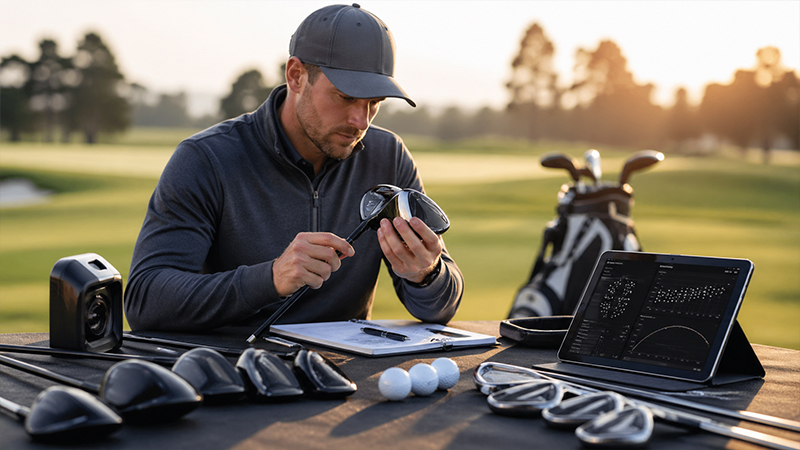
The allure of the “Tour-only” prototype is a powerful force in the world of golf. For decades, the cutting-edge technology developed by major manufacturers was locked behind the gates of professional tours, accessible only to those with a tour card.
However, the landscape of Research and Development (R&D) has shifted. Today, the most influential brands in the world—names like Titleist, TaylorMade, and Callaway—rely on a sophisticated network of dedicated amateurs to refine their products before they ever reach a retail shelf.
This is not merely about receiving free equipment; it is about becoming a critical component of a multi-billion-dollar product lifecycle. To succeed in this arena, you must move beyond the mindset of a “reviewer” and adopt the persona of a professional product tester.
The Foundations: Establishing Your “Player Profile”
Before you can apply for a testing panel, you must understand what manufacturers are looking for. They aren’t just looking for golfers; they are looking for reliable data points.
1. The Power of the Verified Handicap (GHIN)
In the world of professional product testing, your handicap is your resume. Maintaining a low, verified handicap is the primary way to demonstrate that you are an active, serious golfer.
- Why it matters: Manufacturers need to know that your swing is consistent enough to produce repeatable data. If your strike pattern varies wildly, your feedback on a new ball’s spin rate or a driver’s forgiveness becomes statistically insignificant.
- The GHIN Advantage: Having an official GHIN number provides a level of transparency that brands trust. It proves you play frequently and adhere to the Rules of Golf, positioning you as a high-authority tester.
2. Shifting to Data-Driven Insights
The era of “it felt soft” or “it looks fast” is over.
- Quantitative Feedback: If you are testing a prototype club, brands want to know about launch angles, ball speed, and dispersion patterns. Access to a launch monitor (like a Trackman or GCQuad) can significantly elevate your status as a tester.
- Qualitative Precision: When providing “honest, detailed feedback,” you must be able to articulate the why behind the feel. Is the feedback through the hands or the ears? How does the turf interaction change in wet vs. dry conditions?
Direct Routes: Joining Official Manufacturer Panels
The most direct way to influence the next generation of golf gear is to join the official testing programs hosted by the manufacturers themselves.
1. Titleist: The Gold Standard of Ball Testing
Titleist is renowned for its rigorous testing protocols. By joining the Titleist Golf Ball Testing Team, golfers gain the opportunity to test prototype balls.
- The Process: Titleist often sends out “white box” prototypes—balls without final branding—to gather unbiased feedback on cover durability, spin characteristics, and flight consistency.
- The Expectation: Testers are expected to put these prototypes through real-world conditions and provide feedback that helps Titleist decide on the final formulations for iconic lines like the Pro V1.
2. Team TaylorMade Panel
TaylorMade has built a massive community of loyalists through its Team TaylorMade Panel. This program allows members to test a wider range of equipment, including clubs and accessories.
- Early Access: Members are often among the first to see the “Carbonwood” or “Speed Pocket” iterations before the general public,.
- Engagement: Success in this panel requires more than just testing; it requires active sharing of feedback within their structured reporting systems.
3. Callaway Product Testing
Callaway’s application process is highly professional and comes with specific eligibility requirements that reflect their commitment to unbiased data.
- The “Non-Industry” Rule: To apply for Callaway product testing, you must be 18 years or older and not employed in the golf industry. This ensures that the feedback comes from authentic consumers rather than industry insiders with potential biases.
- Breadth of Testing: Callaway’s R&D spans from Odyssey putters to Chrome Soft ball variations, offering a diverse range of testing opportunities.
The Ecosystem: Leveraging Online Communities and Forums
While direct manufacturer panels are prestigious, the “heartbeat” of golf product testing often resides in independent online communities. These platforms frequently bridge the gap between the golfer and the brand.
1. MyGolfSpy: The “Data-First” Community
MyGolfSpy is a leader in the “No-Post-Purchase-Regret” movement. Their forums are a primary hub for announcing member testing opportunities for clubs, bags, and even apparel.
- The User Intent: Golfers here are looking for objective truth. If you are selected to test for MyGolfSpy, you are expected to write detailed, multi-part reviews that include photos, launch monitor data, and long-term durability assessments.
2. GolfWRX: The Equipment Junkie’s Haven
As one of the world’s largest golf communities, GolfWRX offers unparalleled access to industry insiders. Their “Testing and Review” sections are frequently updated with opportunities to try out the latest gear from both major brands and niche boutique manufacturers.
3. TwinCitiesGolf.com: The Localized Approach
Platforms like TwinCitiesGolf.com represent a unique niche: the course and product reviewer. This role often involves a hybrid of equipment testing and “experience” testing, where you evaluate the playability of courses alongside the gear you are using.
The Reality of the Tester’s Journey: What to Expect
Entering a professional testing program is an exciting prospect, but it comes with specific responsibilities and realities that every applicant should be prepared for.
1. The Prototype Experience
When you are selected for a program, you aren’t just getting a retail product for free. You often receive prototype clubs, balls, or apparel.
- Pre-Release Access: These items are frequently sent to testers before they are released to the public. This means you are handling intellectual property that is often subject to strict non-disclosure agreements (NDAs).
- The “White Box” Aesthetic: Expect items to look different—sometimes they have no markings, or they may have “test” stamps to distinguish them from final retail versions.
2. The Feedback Loop: Honesty Over Flattery
One of the most common mistakes new testers make is providing only positive feedback in hopes of getting more gear.
- Constructive Criticism: If a prototype ball shears too easily or a driver sounds “tinny,” the R&D team needs to know. Your value as a tester is your ability to help them catch these issues before a product launch costs them millions in potential returns or brand damage.
3. Time Commitment and “Active” Participation
Brands prioritize passionate, active golfers. This means you must be playing and practicing regularly to provide timely feedback.
Most testing programs have strict deadlines for submitting reports; failing to meet these can result in immediate removal from the panel.
How to Build Your Personal Brand as a Tester
To get noticed by brands and forum moderators, you should treat your own digital presence as an extension of your testing resume.
- Optimize Your Social Profiles: If you are active on Instagram or X (formerly Twitter), ensure your bio highlights your handicap and your interest in golf tech. Use relevant hashtags like #GolfTech, #ProductTesting, and #GHIN.
- Content Creation: Don’t wait for a brand to send you gear. Start by writing detailed, data-driven reviews of the equipment you already own on forums like GolfWRX or MyGolfSpy. This creates a “paper trail” of your expertise.
- Engagement: Be a helpful member of the community. Answer questions about gear, share your launch monitor sessions, and engage with the R&D accounts of major brands.
Frequently Asked Questions (FAQ)
Do I get to keep the equipment I test?
In most cases, yes. However, for some highly sensitive prototypes or expensive clubs, manufacturers may require you to return the item after a set period so they can analyze the wear and tear in their labs.
Is there a minimum handicap requirement?
While many programs look for a “low, verified handicap” to ensure consistency, brands also need “average Joe” testers. A 15-handicap golfer provides different (and equally valuable) data on forgiveness than a scratch player. The key is that the handicap is verified.
Can I be a tester if I live outside the United States?
Yes, though some programs (like Callaway’s) may have specific regional restrictions. Brands like Titleist and TaylorMade are global entities and often seek international feedback to understand how their products perform in different climates and turf conditions.
Does it cost money to join these panels?
Official manufacturer panels are free to join. Be wary of any site asking for a “membership fee” to become a product tester; these are often scams. Authentic opportunities come directly from the brands or established community forums.
Conclusion: Your Roadmap to the First Tee
Becoming a professional golf product tester is a journey that rewards consistency, honesty, and a passion for the technical side of the game.
By establishing a verified handicap, joining official manufacturer panels like those at Titleist and TaylorMade, and becoming an active voice in the golf community, you position yourself at the forefront of golf innovation.
The industry is moving toward a more transparent, data-driven future. Whether you are hitting prototype balls in a “white box” or testing the next generation of carbon-face drivers, your feedback is the bridge between a designer’s concept and a golfer’s “best round ever.”
Ready to start your journey? Begin by ensuring your GHIN is up to date, and then head over to the Titleist or TaylorMade official sites to register for their inner circles.