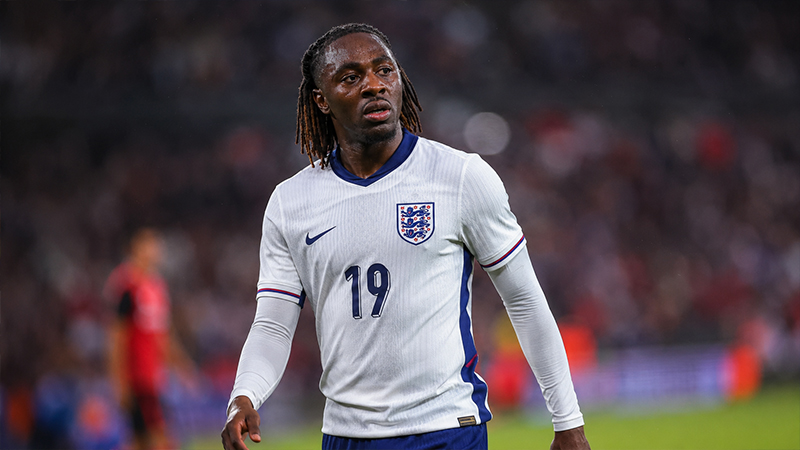
The footballing world witnessed a definitive changing of the guard at the Emirates Stadium as Eberechi Eze propelled Arsenal into the UEFA Champions League quarter-finals.
In a high-stakes encounter against Bayer Leverkusen, Eze didn’t just participate; he dominated, delivering a performance that justified every penny of his significant transfer fee.
This match represented more than a tactical victory for Mikel Arteta; it was the arrival of a world-class talent on the grandest stage of European football.
Fans and analysts alike are now dissecting the “magical moment” that turned a tense aggregate deadlock into a statement of intent for the North London giants.
The Night Eberechi Eze Conquered Europe
The atmosphere at the Emirates Stadium on March 17, 2026, was electric, charged by the weight of a 1-1 draw from the first leg in Germany.
Arsenal needed a hero to break the tactical stalemate imposed by a disciplined Bayer Leverkusen side, and in Eberechi Eze, they found a player capable of transcending structured play with pure individual brilliance.
Strategic Context of the Second Leg
Entering the second leg, the pressure was immense on Arsenal to prove their pedigree in the knockout stages of the Champions League. The first leg at the BayArena had been a cagey affair, leaving the aggregate score at a precarious 1-1.
Arteta’s selection of Eze in the starting lineup was a clear signal that Arsenal intended to take the game to the reigning German champions through creative flair and directness.
The midfielder’s ability to find pockets of space between Leverkusen’s defensive lines proved to be the decisive factor from the opening whistle.
From London Rivals to Emirates Royalty
The narrative surrounding Eze’s performance is deeply intertwined with his high-profile arrival in North London. Arsenal successfully navigated a fierce transfer battle, beating out Tottenham Hotspur to secure his signature from Crystal Palace for a package exceeding £60 million.
This match against Leverkusen served as the ultimate validation of that investment, as Eze demonstrated the “big game” temperament required to thrive under the bright lights of the Champions League.
His transition from a star at Selhurst Park to a linchpin at the Emirates has been remarkably swift, fueled by what Arteta describes as “rapid tactical chemistry”.
Breaking Down the 37th-Minute Wondergoal
The defining moment of the match, and perhaps Arsenal’s entire European campaign thus far, arrived in the 37th minute. It was a goal of such technical complexity and aesthetic beauty that it left spectators and professionals alike in a state of collective shock.
| Statistic | First Leg (Away) | Second Leg (Home) |
|---|---|---|
| Date | March 11, 2026 | March 17, 2026 |
| Scoreline | Leverkusen 1–1 Arsenal | Arsenal 2–0 Leverkusen |
| Eze Minutes Played | 82 Minutes | 68 Minutes |
| Goals Scored | 0 | 1 (37′) |
| Shots Taken | 0 | 2 |
| Aggregate Result | N/A | Arsenal 3-1 Leverkusen |
Anatomy of a Technical Masterpiece
The goal began with sustained pressure from the Gunners, eventually leading to Leandro Trossard spotting Eze at the edge of the penalty area. As the ball bounced toward him, Eze exhibited world-class composure, teeing up a ferocious 25-meter half-volley.
The strike was so pure that it bypassed the outstretched arms of Leverkusen’s Janis Blaswich, nestling into the top-left corner with clinical precision.
The reaction from teammates William Saliba and Ben White—holding their heads in disbelief—mirrored the sentiment of the 60,000 fans in attendance.
Comparisons to Arsenal Legends
The sheer audacity of the strike prompted immediate comparisons to some of the greatest goals in the club’s storied history. Long-time supporters noted that the flick and subsequent volley were reminiscent of Thierry Henry’s iconic strike against Manchester United.
By blending power with “aesthetic perfection,” Eze has quickly earned nicknames like the “Greenwich Ronaldinho” and the “Vernal Assassin” from a fan base that is notorious for its high standards.
This goal wasn’t just about the scoreline; it was about establishing a new standard of individual excellence in North London.
Tactical Evolution Under Mikel Arteta
Beyond the spectacular goal, Eze’s performance against Leverkusen highlighted a significant evolution in his tactical discipline.
While he is primarily celebrated for his “neat tricks and flicks,” his contribution to Arsenal’s defensive structure has not gone unnoticed by the coaching staff.
The Role of the Modern Playmaker
Mikel Arteta has lauded Eze for his “physical consistency,” a trait that allows him to maintain high-intensity pressing throughout his time on the pitch.
Against Leverkusen, Eze showed a marked improvement in his backtracking, often dropping deep to disrupt German counter-attacks before they could develop.
This balance of offensive flair and defensive responsibility is exactly why he has become “the engine” of Arsenal’s midfield in such a short period.
Synergy with the Core Squad
The match demonstrated a burgeoning partnership between Eze, Leandro Trossard, and Declan Rice. Trossard’s vision to pick out Eze for the opening goal and Rice’s subsequent insurance goal in the 63rd minute showed a team in perfect harmony.
This “tactical chemistry” is a testament to Arteta’s coaching, as he has successfully integrated Eze into a system that maximizes his creative output without sacrificing team balance.
Observers noted that any Arsenal attack became “dangerous” the moment Eze touched the ball, illustrating his role as the team’s primary catalyst.
Behind the Legend: The Greenwich Ronaldinho
Eberechi Eze is a character of depth, both on and off the pitch, and his personality is quickly becoming as legendary as his footwork. His journey to the top of European football is marked by a unique discipline that separates him from the typical modern footballer.
- Chess Master: Off the pitch, Eze is an accomplished chess player, having won a Chess.com tournament without losing a single game. This strategic mindset is often cited as the reason for his exceptional “decision-making” and spatial awareness during matches.
- March Momentum: There is a growing belief among fans that Eze “comes alive” during the spring. Historically, his form peaks between March and the end of the season, a trend that appears to be continuing with his Champions League heroics.
- Prophetic Talent: Some fans describe Eze as “anointed,” pointing to a sense of inevitability in his play. His calm demeanor in post-match interviews, even when facing injury scares, suggests a player who is fully aware of his destiny at the highest level.
Managing the Aftermath: Injury and Outlook
The triumph over Leverkusen was slightly tempered by news regarding Eze’s physical condition following the match. Reports have surfaced indicating that the midfielder may have sustained a calf injury that could sideline him for four to six weeks.
The Impact of the Potential Absence
Losing Eze for any length of time is a significant blow to Arsenal’s momentum, particularly with the quarter-finals and domestic cup competitions looming.
Fans have expressed concern that his absence in the Carabao Cup could be felt deeply, as he has become the “massive difference maker” for the squad.
However, the player himself remained optimistic in recent interviews, laughing off the severity and stating, “Yeah, I’ll be fine”.
Arsenal’s Depth and Strategic Shifts
If Eze is sidelined, Arteta will need to look toward his rotational players to maintain the high technical ceiling the Englishman has established. The challenge will be replacing the “magical moments” that Eze provides consistently.
While the squad has depth, the unique blend of power and “aesthetic beauty” Eze brings is difficult to replicate. The medical team’s assessment over the coming days will be crucial in determining how Arsenal navigates the most critical phase of their season.
Frequently Asked Questions
How did Eberechi Eze perform against Bayer Leverkusen?
Eze was the standout performer for Arsenal, scoring a stunning 25-meter half-volley in the 37th minute to help secure a 2-0 win on the night and a 3-1 aggregate victory in the Champions League Round of 16.
What was the reaction to Eze’s goal?
The goal was widely described as “aesthetic perfection” and the “best goal” Arsenal has scored this season. Teammates like William Saliba and Ben White were seen reacting in disbelief at the technical quality of the strike.
What is the status of Eberechi Eze’s injury?
While some reports suggest a calf injury could sideline him for four to six weeks, Eze himself indicated in a post-match interview that he believes he will be fine.
Why do fans call Eze the “Greenwich Ronaldinho”?
The nickname stems from his incredible technical ability, “neat tricks and flicks,” and his upbringing in South London, drawing comparisons to the legendary Brazilian playmaker’s flair.
How has Eze adapted to Arsenal’s tactics?
Mikel Arteta has praised his “rapid tactical chemistry” and his improved defensive work rate, noting that his physical consistency makes him a vital part of the team’s pressing system.
Conclusion: The New Icon of the Emirates
The performance of Eberechi Eze against Bayer Leverkusen will be remembered as the moment he transitioned from a talented signing to an Arsenal icon.
By delivering a world-class goal under the immense pressure of the Champions League knockout stages, he has proven that he belongs among the elite of the sport.
While the looming injury concerns provide a shadow of uncertainty, the impact he has already made in North London is undeniable.
As Arsenal prepares for the quarter-finals, the “Vernal Assassin” has set a new benchmark for excellence.
Whether through his strategic chess-like positioning or his “prophetic” goal-scoring ability, Eze has revitalized the Gunners’ European ambitions. The Emirates has a new hero, and his name is Eberechi Eze.