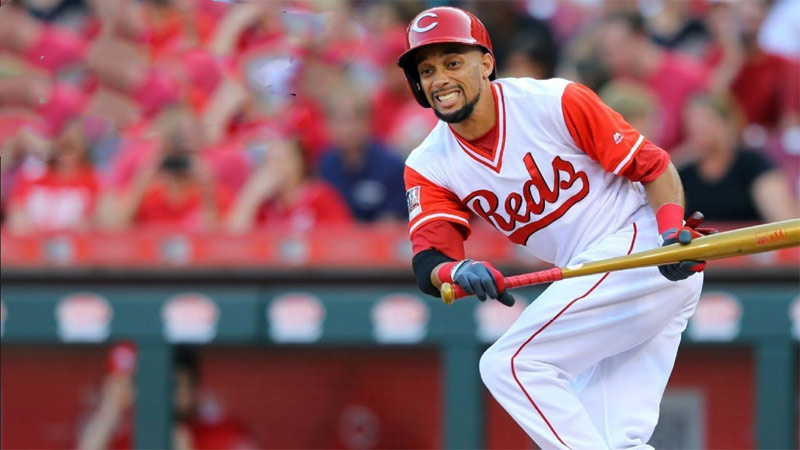
Bunting is fully allowed in Major League Baseball (MLB). It remains a recognized, tactical maneuver designed to manipulate field positioning, advance runners, or earn a base hit.
To casual spectators or new fans, a common question arises: why do batters bunt instead of trying to hit the ball as hard and as far as possible on every pitch?. While hitting for power is ideal, batters cannot hit the ball hard and far every single time.
In specific game situations, bunting serves as an essential alternative strategy to manufacture runs and outmaneuver defensive formations.
Technically, a bunt occurs when a batter intentionally stops the bat to deaden the ball’s momentum, causing it to land softly and travel only a short distance into the infield.
The Official MLB Bunting Rulebook: Key Legal Constraints
While bunting is permitted, the official rules place strict boundaries on how and when a bunt can be executed. Understanding these regulations is necessary for evaluating game strategy:
- General Legality: A batter is permitted to intentionally tap or deaden the ball at any point during an at-bat, provided they adhere to standard batting regulations.
- The Two-Strike Bunt Rule: Unlike standard swings where a foul ball with two strikes results in a re-pitch, if a batter attempts to bunt and hits the ball foul with two strikes, it is ruled a strike and results in an automatic strikeout.
- Batter’s Box Restriction: A batter will be called out immediately if they make contact with a bunted ball while either foot is completely outside the lines of the batter’s box.
- Sacrifice Definition: A batter may intentionally accept an out at first base if the primary objective and result is advancing a teammate to a higher base.
- Bunt Hit Definition: A batter may legally attempt to reach first base safely via a drag or surprise bunt without the intention of sacrificing their at-bat.
Strategic Framework: The Three Core Types of Bunts
In professional baseball, bunting is divided into three primary tactical applications depending on base-runner placement, defensive alignment, and game context.
1. The Sacrifice Bunt (Advance Bunt)
The most common form of bunting is the sacrifice bunt (also referred to as an advance bunt).
- Objective: The batter intentionally taps the ball into the infield, accepting an out at first base in order to advance a base runner to second or third base.
- Context: This tactic is frequently deployed when a team has a runner on first base with no outs, aiming to put that runner into scoring position for subsequent hitters.
2. Bunting for a Base Hit (Drag and Surprise Bunts)
Rather than sacrificing an out, players can bunt with the explicit intention of reaching base safely.
- Objective: The batter uses speed and surprise to lay down a bunt and sprint to first base before fielders can complete a throw.
- Context: This play is utilized by extremely fast runners or deployed against defensive teams that are not well-drilled in bunt defense.
3. The Squeeze Bunt
The squeeze play represents one of the highest-risk, highest-reward plays in baseball strategy.
- Objective: Executed with a runner on third base, the play forces the defense to make a difficult field-and-throw decision while the runner sprints home to score.
- Context: Teams deploy the squeeze bunt in close games or when facing a dominant pitcher where traditional hits are difficult to obtain.
Tactical Value: Scoring Probability and Resource Allocation
Strategic decision-making in baseball hinges on evaluating the trade-off between outs and base advancement. Bunting relies on mathematical and tactical principles:
The Value of Scoring Position
In baseball terminology, second base and third base are designated as scoring positions. Statistically, a base runner on second base has an 80% higher chance of scoring than a runner on first base.
Because advancing a runner from first to second base drastically increases their likelihood of scoring, coaches and teammates willingly trade a single out to achieve that positional upgrade.
This explains why a batter receives praise and enthusiasm from teammates and coaches after a sacrifice bunt, even if they are thrown out at first base—their primary assignment of advancing the runner was fulfilled.
Trading Outs for Runs
In baseball strategy, a run is significantly more valuable than an out. If a team could theoretically trade one out for one run in every inning, they would secure nine runs per game—a outcome that would satisfy any coaching staff.
Strategic Directional Placement
A successful bunt requires precise directional control. The primary goal is to land the ball as far away from the pitcher, catcher, and fielders as possible:
- Third-Baseline Placement: Rolling the ball straight down the third-base line is ideal because it creates maximum physical distance from the pitcher, forcing the third baseman to make a long, difficult charge and throw.
- First-Baseline Placement: Rolling the ball straight up the first-base line forces fielders to cover ground while creating difficult angles for the pitcher and first baseman.
High-Risk Execution Dynamics: The Squeeze Play
While sacrifice bunts are standard play calls, the squeeze play demands flawless execution due to its severe risk profile.
Squeeze Play Mechanics:
[Runner on 3rd] ---> Sprints toward Home Plate on Pitcher's First Movement
[Batter]       ---> MUST make contact or foul off the pitch
[Risk Event]    ---> If pitch passes to Catcher, Runner is Tagged Out
- Runner Lead and Timing: On a squeeze play, the runner on third base takes off sprinting toward home plate as soon as the pitcher begins their delivery motion.
- Batter Imperative: The batter must get the bat on the ball—either putting it in play or at least fouling it off.
- Failure State: If the batter misses the pitch entirely and the ball passes through to the catcher, the runner sprinting from third base is left completely unprotected and will be easily tagged out at home plate.
Contextual Limits of the Available Analysis
While the underlying tactical principles, directional strategies, and core regulations of MLB bunting are clear, specific historical dataset evolutions (such as decade-by-decade bunting frequency rates or recent defensive shift rule modifications) are not detailed in the reference material.
Conclusion
Bunting is a fully legal, highly calculated tactic in Major League Baseball. Whether executed as a sacrifice to boost scoring probability by 80%, a surprise drag bunt to exploit defensive gaps, or a high-stakes squeeze play to score from third base, bunting remains a key strategic tool for manufacturing runs when power hitting alone is insufficient.