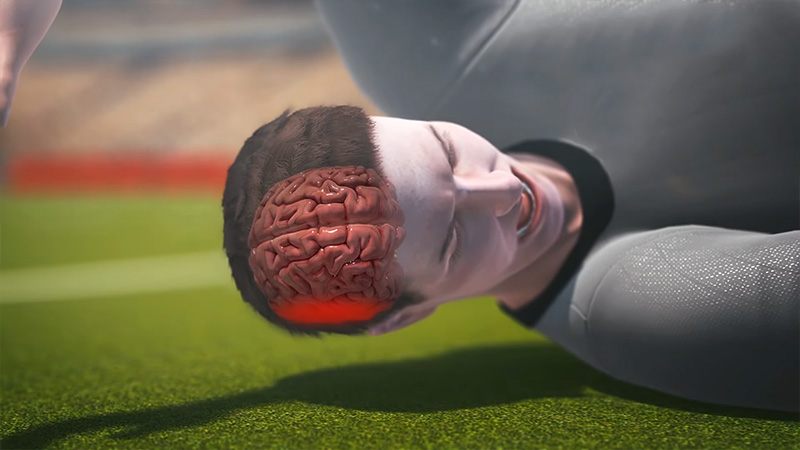
The game of rugby, celebrated for its physical intensity, strategic complexity, and deep-rooted heritage, currently faces a profound reckoning regarding the long-term neurological health of its participants.
At the heart of this discussion is Chronic Traumatic Encephalopathy (CTE), a degenerative brain disease that has moved from the periphery of sports medicine to the center of global athletic discourse.
For years, the conversation around CTE was dominated by American football, but recent scientific inquiries and high-profile legal challenges have made one thing clear: rugby players are not only susceptible to this condition but may be at a risk level that warrants a total re-evaluation of how the sport is played and managed.
Understanding the Neurological Reality
CTE is a progressive degenerative disease of the brain found in people with a history of repetitive head impacts.
Unlike a standard concussion, which is often an acute event with recognizable symptoms, CTE is believed to be the result of a cumulative “dose” of head trauma—both concussive and sub-concussive—over many years.
The pathology involves the accumulation of tau protein in the brain, which leads to the death of brain cells and results in symptoms that can include memory loss, confusion, impaired judgment, impulse control problems, aggression, depression, and eventually, progressive dementia.
In the context of rugby, the concern is no longer theoretical. Post-mortem studies of former players have confirmed the presence of CTE pathology, linking the disease directly to the repetitive head impacts inherent in the sport’s mechanics.
Because the disease can currently only be definitively diagnosed after death, these findings represent a critical, if sobering, milestone in our understanding of player safety.
The Statistical Correlation: Time as a Risk Factor
One of the most significant shifts in our understanding of CTE in rugby is the realization that the risk is not evenly distributed but is instead tied closely to the duration of a player’s career.
Research indicates that the risk of developing CTE pathology increases significantly with every year an athlete remains active in the sport.
Specifically, data shows that each additional year of playing rugby increases the likelihood of developing CTE by approximately 14%.
This “cumulative risk” model changes the advice given to players and parents. It suggests that there is no “safe” way to play a high-contact game indefinitely; rather, the “clock” begins the moment a player enters a high-contact environment.
A landmark study analyzing the brains of former rugby players found evidence of CTE in roughly two-thirds of the samples examined.
This high prevalence suggests that the disease is not an outlier or a rare occurrence for those who commit a significant portion of their lives to the pitch.
Democratizing the Risk: Professionals vs. Amateurs
A common misconception in the early years of brain health research was that CTE was a “professional’s disease”—a consequence of the extreme speed and force found only at the elite level.
However, the evidence now contradicts this assumption. CTE pathology has been identified in both professional and amateur rugby players.
While professional players may experience hits with greater velocity, amateur players often lack the elite-level medical support, rigorous “Return to Play” protocols, and advanced conditioning found in the professional ranks.
Furthermore, because the risk is so heavily tied to the total number of years played, an amateur who plays from childhood through their thirties may accumulate a similar “impact load” to a professional who has a shorter, more intense career.
This finding is particularly alarming for the grassroots of the sport, as it implies that the dangers are woven into the very fabric of the game, regardless of the level of play.
The Modern Game: Speed, Size, and Continuous Contact
The transition of rugby to a professionalized sport in the mid-1990s altered the physical profile of the game in ways that are still being understood. Today’s players are significantly larger, faster, and more powerful than their predecessors.
While this has made the sport more spectacular, it has also increased the kinetic energy involved in every tackle, ruck, and maul.
Furthermore, the nature of modern rugby involves continuous contact. Unlike American football, where play stops after every tackle, rugby is a game of flow. This leads to frequent, repeated impacts in quick succession.
Even with the introduction of modern rule changes, improved conditioning, and sophisticated head-impact assessments designed to protect the athletes, the inherent physics of the sport remains a challenge.
The increased size and speed of players today mean that even “legal” tackles can deliver significant force to the head and neck, contributing to the cumulative trauma that drives CTE.
The Human Cost and Legal Accountability
The medical data is now being mirrored by a human crisis. A growing number of former elite and professional players are coming forward with devastating stories of early-onset dementia and other neurological symptoms.
These are individuals in their 40s and 50s—ages where they should be in the prime of their lives—who are instead struggling with the cognitive decline usually reserved for the elderly.
This human toll has led to significant legal consequences. Numerous former players have joined major lawsuits against rugby’s governing bodies.
These lawsuits allege negligence, arguing that the organizations responsible for the sport failed to adequately protect players from brain injuries or warn them of the long-term risks associated with repeated head trauma.
These legal battles are not just about financial compensation; they are a demand for institutional accountability and a catalyst for systemic change in how the sport is governed.
The Cultural Divide: The Future of the Pitch
The rugby community is currently divided on how to move forward. On platforms where fans and players congregate, such as the rugbyunion community on Reddit, the debate is often polarized.
There is a palpable fear that as the evidence of CTE becomes more undeniable, youth participation will plummet as parents choose to steer their children toward non-contact or lower-risk sports.
On the other hand, many believe that the sport is capable of evolution. This perspective suggests that rugby can survive and even thrive if it embraces stricter safety protocols, better risk awareness, and perhaps even fundamental changes to how the game is played (such as lowering the legal tackle height or limiting contact in training).
The goal is to preserve the spirit of the game while acknowledging that the current level of neurological risk is unsustainable.
Frequently Asked Questions
Do only professional rugby players get CTE?
No. Research has confirmed that CTE pathology is found in both professional and amateur players. The primary driver appears to be the total duration of the career and the cumulative number of head impacts, rather than just the level of competition.
How much does the risk increase each year?
According to recent studies, each additional year of playing rugby is associated with a roughly 14% increase in the risk of developing CTE pathology.
What is the “two-thirds” study?
A notable brain-donation study found evidence of CTE in approximately two-thirds of the brains examined from former rugby players. This high percentage has been a major factor in the increased urgency surrounding player safety.
Is modern rugby safer than the “old” game?
While modern rugby has better medical protocols, head-impact assessments, and rule changes designed to protect players, it also features larger and faster athletes than in the past. The continuous contact and increased force of modern play continue to present serious challenges to brain health.
Conclusion: A Path Forward for the Sport
The evidence regarding rugby and CTE is a call to action for everyone involved in the sport—from the governing bodies and coaches to the players and parents.
We can no longer treat brain health as an afterthought or a “part of the game” that players must simply accept.
The survival of rugby depends on its ability to adapt. This means prioritizing neurological health over traditional notions of “toughness,” investing in long-term research, and being transparent about the risks involved.
By acknowledging the reality of CTE and implementing rigorous, science-based safety measures, the sport can work toward a future where the passion of the game does not come at the cost of a player’s cognitive future. The goal is clear: we must protect the players as much as we celebrate the game.