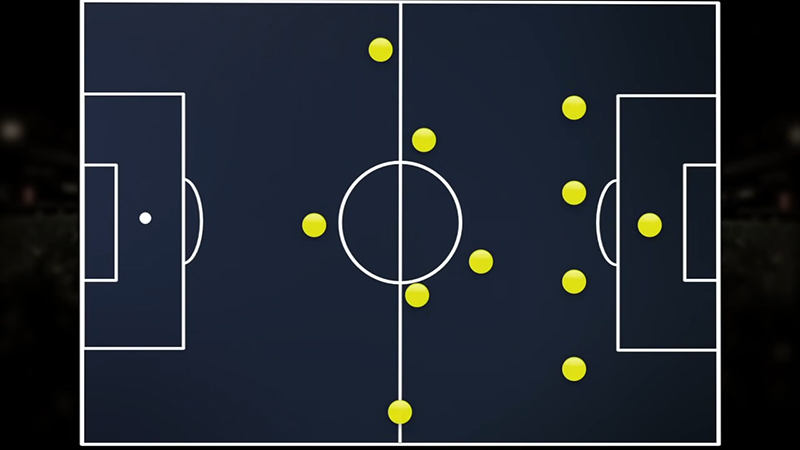
Soccer is arguably the most sophisticated example of a team sport, where the collective performance of eleven individuals dictates the ultimate outcome on the pitch.
Within this complex ecosystem, every player occupies a specific territory and carries a distinct tactical burden.
However, few roles are as strategically pivotal or physically demanding as the Central Defensive Midfielder, commonly abbreviated as the CDM.
Positioned at the heart of the formation, the CDM acts as the primary engine and the tactical bridge between the defensive unit and the creative midfield.
This role requires a rare blend of defensive aggression, technical precision, and elite endurance.
To truly understand what a CDM means in the context of modern soccer, one must look beyond the basic definition and analyze the multifaceted responsibilities that make this position the “unsung hero” of winning teams.
Decoding the Position: What Does CDM Mean?
At its most fundamental level, the CDM is a specialist position dedicated to the middle of the team’s structure. Geographically, the player is situated between the traditional midfielders and the backline defenders.
This unique placement allows the CDM to function as a vital component of both units, adapting their behavior based on the phase of play.
In a defensive phase, they are the first line of protection for the center-backs. In an offensive phase, they are often the first point of distribution, receiving the ball from the goalkeeper or defenders to initiate an attack.
Because they operate in the most congested area of the field, the Central Defensive Midfielder is often one of the most active and influential players throughout the ninety minutes.
The Tactical Blueprint: Core Responsibilities
The objectives of a CDM are vastly different from those of a striker, whose focus is primarily on goal-scoring, or a goalkeeper, who is tasked with shot-stopping. The CDM operates with a mindset centered on balance and transition.
1. The Defensive Shield
The primary job of any Central Defensive Midfielder is to provide cover for the defensive line. By occupying the space in front of the defenders, they prevent opposing attackers from running directly at the back four or five.
This involves “holding” the position to ensure the team is never caught out of balance during a counter-attack.
2. The Link in Transition
While the name emphasizes defense, the modern CDM is the primary connector between the back and the front of the formation.
They are responsible for the “transition,” which is the critical moment when a team wins the ball and moves from a defensive posture to an attacking one.
A high-level CDM does not just win the ball; they immediately look for opportunities to pass “ahead in the film,” finding teammates in advanced positions to spark a goal-scoring chance.
3. Chance Creation from Deep
Contrary to the traditional view of the “destroyer,” a CDM can be a creative force. When the opportunity arises, they are encouraged to move forward and contribute to the build-up play, using their vision to spot gaps in the opponent’s midfield.
The Anatomy of an Elite CDM: Essential Qualities and Skills
Achieving mastery in this position is a difficult feat, which is why only a select few players reach the pinnacle of the role. The following attributes represent the technical and physical requirements necessary to dominate the center of the pitch.
Elite Tackling Mechanics
Tackling is the foundational skill for any defensive specialist. However, at the professional level, a CDM must possess more than just strength; they need accuracy and versatility.
An elite player in this position is capable of tackling effectively with both feet, allowing them to win the ball regardless of the angle of the opponent’s approach.
This ability to win the ball cleanly is essential for creating immediate turnover opportunities.
Game Reading and Interception Logic
Great defensive midfielders often don’t need to tackle at all because they excel at game reading. This involves analyzing the opponent’s body language, passing lanes, and movement patterns to predict where the ball will go next.
By making well-timed interceptions, a CDM can break up an attack midway through the pitch, which significantly boosts the confidence and motivation of the entire squad.
Physical Dominance and Stamina
The workload of a CDM is immense. They must possess the stamina to roam through both halves of the field for the duration of the match while under constant pressure. This physical profile is rounded out by several key metrics:
- Strength and Body Balance: Essential for shielding the ball and winning 50/50 challenges in the air or on the ground.
- Agility and Speed: Necessary for covering large distances quickly to close down an opponent or track a runner.
- Composure: The ability to remain calm while being “pressed” by multiple opponents in tight central spaces.
Technical Proficiency
Because they are often the starting point for attacks, a CDM must have amazing ball control. A heavy touch in the center of the field can lead to a dangerous turnover.
Furthermore, they must possess the vision and technical ability to execute accurate long passes, allowing the team to switch the point of attack and exploit space on the opposite flank.
The “Invisible” Skills: Communication and Leadership
A Central Defensive Midfielder acts as the field general. Because of their central location, they have a panoramic view of both the attacking and defensive shapes of the team. This makes pro-level communication a non-negotiable requirement.
Effective communication in this role includes:
- Calling and Directing: Telling defenders which runners to pick up and informing attackers where the space is.
- Visionary Skills: Understanding the “soccer environment” and anticipating tactical shifts before they become problems.
- Hearing and Awareness: Staying attuned to the shouts of teammates and the coaching staff to maintain the team’s tactical discipline.
This mental toughness and leadership provide the stability required for the rest of the team to express themselves creatively.
Icons of the Position: The Gold Standard
To see the practical application of these skills, one only needs to look at the players who have defined the role in the modern era. These individuals embody the “active” nature of the position and its importance to team success.
- N’Golo Kanté: Renowned for his supernatural stamina and his ability to be “everywhere” on the pitch, Kanté revolutionized the role by combining relentless ball-winning with efficient transition play.
- Casemiro: A master of the defensive shield, Casemiro is celebrated for his physical strength, tactical discipline, and his ability to protect the backline in high-stakes environments.
- Joshua Kimmich: Representing the more technical side of the CDM role, Kimmich excels at game reading and distribution, often acting as the primary playmaker from a deep-seated position.
Conclusion: The Path to Mastering the Midfield
The role of the Central Defensive Midfielder is one of the most complex and rewarding positions in soccer. It is a dream for many, yet it remains one of the hardest roles to fill because it demands a rare combination of defensive grit and offensive intelligence.
For players looking to excel at this level, the focus must be on developing the diverse set of duties and qualities outlined—from the physical rigors of stamina to the mental demands of game reading.
When performed correctly, the CDM does not just support the team; they define its character, providing the security that allows the attack to flourish and the defense to remain impenetrable.
Frequently Asked Questions
How does a CDM differ from a CM (Central Midfielder)?
While a Central Midfielder (CM) typically has more freedom to move box-to-box and contribute to the final third, the CDM is more positionally disciplined. The CDM’s primary focus is protecting the defense and acting as the pivot in the initial build-up phase.
Why is stamina so important for a CDM?
Because the CDM is the link between defense and attack, they are constantly moving to provide a passing option or defensive cover. This requires “roaming through both halves” and handling immense pressure for the full 90 minutes.
Can a CDM score goals?
Yes. While not their primary goal, a CDM can come ahead when chances are available or to create opportunities for others. Many top CDMs also contribute through long-range shots or by joining the box during set-pieces.