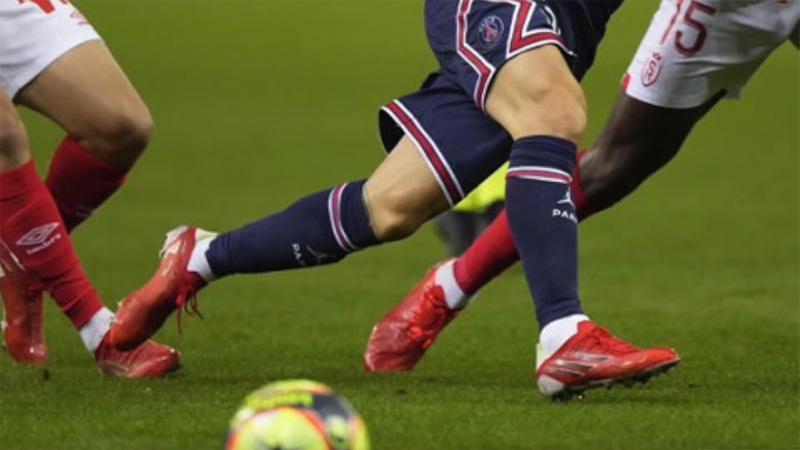
Have you ever noticed professional soccer players sporting what looks like a patchwork of socks, often with visible tape around the ankles?
From the elite pitches of the English Premier League to the international stages of the World Cup, the trend of integrating compression technology into match-day kits has become a standard protocol for the world’s best athletes.
This practice is far more than a stylistic choice; it is a calculated physiological strategy designed to optimize blood flow, stabilize muscle tissue, and ensure that a player’s recovery begins the moment the final whistle blows.
The Physiological Mechanics of Compression in Elite Sport
The primary reason soccer players wear compression garments is to leverage the science of graduated pressure. Unlike standard athletic socks, compression gear is engineered to apply specific levels of pressure to the limbs, which facilitates several critical biological processes during a 90-minute match.
Graduated Pressure and Venous Return
Professional soccer involves repetitive, high-intensity movements that can cause blood to pool in the lower extremities due to gravity. Compression socks provide graduated pressure that helps push blood from the lower legs back toward the heart.
This mechanism significantly increases oxygen delivery to the calf muscles, which is essential for maintaining aerobic capacity during the closing stages of a game.
By assisting the “calf muscle pump,” these garments ensure that metabolic waste products, such as lactic acid, are cleared more efficiently from the muscle tissue.
Mitigating Muscle Vibration and Micro-Tears
Every time a player sprints, jumps, or lands, their muscle fibers undergo intense “vibration” or oscillation. This repetitive shaking is a leading cause of muscle fatigue and can lead to micro-tears in the tissue.
Compression garments stabilize the muscles during these high-intensity movements. By keeping the muscle belly compact and reducing unnecessary movement, players can decrease the risk of mid-game cramps and long-term strain injuries.
This stabilization is particularly vital for the gastrocnemius and soleus muscles, which bear the brunt of explosive acceleration.
Ankle Stability and Joint Support on the Pitch
While much of the focus remains on the calf muscles, the benefits of compression extend significantly to the joints. Soccer is a sport defined by constant turning, pivoting, and sudden changes of direction, all of which place immense stress on the ankle complex.
- Proprioception Enhancement: The snug fit of a compression sock increases the sensory feedback sent from the ankle to the brain. This heightened awareness of joint position—known as proprioception—can help a player react faster to uneven turf or a sliding tackle.
- Mechanical Support: Compression around the ankle provides an extra layer of support. This is crucial for players who have previously suffered from ligament sprains, as the garment acts as a secondary “skin” that adds tension and stability without the bulk of a traditional brace.
- Swelling Prevention: Constant impact can cause minor inflammation during the game. The pressure exerted by the garment keeps interstitial fluid from building up, ensuring the ankle remains mobile and responsive throughout the duration of play.
The Professional “Hack”: Navigating Official Kit Regulations
One of the most common questions fans ask is why players seem to be wearing two different sets of socks. In professional soccer, official match kits usually require specific team-branded socks for aesthetic and sponsorship reasons.
To bypass the limitations of standard-issue kit socks, players have developed several sophisticated methods to incorporate compression technology.
| Method | Execution | Primary Benefit |
|---|---|---|
| Layering | Wearing a thin compression sock directly against the skin under the team sock. | Maximum skin contact for blood flow and warmth. |
| Compression Sleeves | Using “tubes” that cover only the calf, leaving the foot entirely free. | Allows the use of specialized grip socks on the feet. |
| The Cut Sock Trend | Cutting the foot off the official team sock and wearing the remaining part as a sleeve. | Maintains team branding while allowing custom foot-gear and compression. |
The “Cut Sock” method has become particularly ubiquitous in the modern era. Players often prefer high-performance “grip socks” on their feet to prevent slipping inside their cleats, but they still require the calf benefits of compression.
By cutting their official socks, they can wear a compression sleeve and a grip sock simultaneously, securing the two with athletic tape at the ankle to ensure they meet league uniform requirements.
Strategic Recovery: The Game After the Game
For a professional athlete, the recovery process is just as important as the training session itself. Many soccer players utilize compression gear long after they have left the pitch to manage the physical toll of a high-load environment.
Addressing Delayed Onset Muscle Soreness (DOMS)
The soreness that peaks 24 to 48 hours after a match can be debilitating for a player on a tight schedule. Wearing compression garments post-match can reduce the severity of “delayed onset muscle soreness.”
By maintaining pressure on the muscles, the gear limits the space available for swelling and inflammation to take hold, allowing the athlete to return to light training much faster.
Travel and Circulation Management
Elite teams often travel long distances via bus or plane immediately after a match. Sitting for extended periods after intense physical exertion is a recipe for stiffness and poor circulation.
Players wear compression socks during travel to prevent blood pooling and reduce the risk of deep vein thrombosis (DVT), ensuring that their legs feel fresh and “light” when they arrive at their next destination.
Why Compression Gear is Non-Negotiable for Modern Midfielders
Midfielders often cover the most ground during a match, sometimes exceeding 12 kilometers in a single 90-minute session. For these high-volume runners, the efficiency of every muscle contraction matters.
The Biomechanics of Midfield Endurance
For a midfielder, the constant transition between jogging and sprinting creates a high metabolic demand. Compression gear assists in the “shuttling” of nutrients to the muscles during these transitions.
When a player moves from a stand-still to a sprint, the sudden surge in blood flow can be managed more effectively by the external pressure of the sock, preventing that “heavy leg” sensation that often occurs in the second half.
Choosing the Right Compression: What the Pros Look For
Not all compression socks are created equal. When Fortune 500-level sports brands design gear for professional athletes, they focus on specific technical specifications that differentiate elite gear from standard retail options.
- Millimeters of Mercury (mmHg): This is the unit used to measure the pressure of the garment. Professionals typically use a range of 15-20 mmHg for active play and a higher range of 20-30 mmHg for recovery and travel.
- Moisture-Wicking Fabrics: Soccer is played in all weather conditions. The best gear uses synthetic blends that pull sweat away from the skin, preventing the sock from becoming heavy and waterlogged, which would negate the benefits of the compression.
- Anatomical Mapping: Elite socks are designed specifically for the left and right foot. This ensures that the compression zones align perfectly with the muscle groups and the arch of the foot, providing targeted support where it is needed most.
FAQ: Everything You Need to Know About Soccer Compression
Are compression socks legal in all soccer leagues?
Generally, yes, as long as they comply with uniform color regulations. If a player cuts their socks or wears a sleeve, the color of the compression garment or the tape used must match the color of the official team sock to satisfy IFAB (International Football Association Board) rules.
Do compression socks prevent muscle cramps?
While they are not a cure-all, they significantly reduce the likelihood of cramps by improving oxygen delivery and reducing muscle vibration. However, hydration and electrolyte balance remain the primary factors in preventing cramps.
How long should a player wear compression socks after a game?
Most sports scientists recommend wearing recovery-grade compression for at least 2 to 4 hours post-match. Some players even choose to sleep in light compression sleeves to maximize the reduction of swelling and DOMS.
Can youth players benefit from wearing them?
Absolutely. While the physical demands on youth players may not be as high as the professional level, the benefits of muscle stabilization and recovery habits are universal. It also helps younger players become accustomed to the “professional” feel of elite gear.
Conclusion: Elevating Your Game with Professional Standards
The use of compression socks in professional soccer is a testament to the sport’s evolution into a high-tech discipline where every percentage of performance is scrutinized.
By understanding the mechanics of improved circulation, muscle stabilization, and accelerated recovery, players at all levels can adopt these professional “hacks” to enhance their own performance on the pitch.
Whether you are a competitive amateur looking for an edge or a casual player wanting to reduce post-game soreness, integrating compression technology into your kit is a proven way to protect your body and extend your playing career.
The secret isn’t just in the talent—it’s in the preparation and the tools you use to support your movement.
Ready to optimize your performance? Start by experimenting with calf sleeves during your next training session and experience the difference in stability and endurance that the pros rely on every single week.
High-quality compression is an investment in your athletic longevity—don’t step onto the pitch without it.