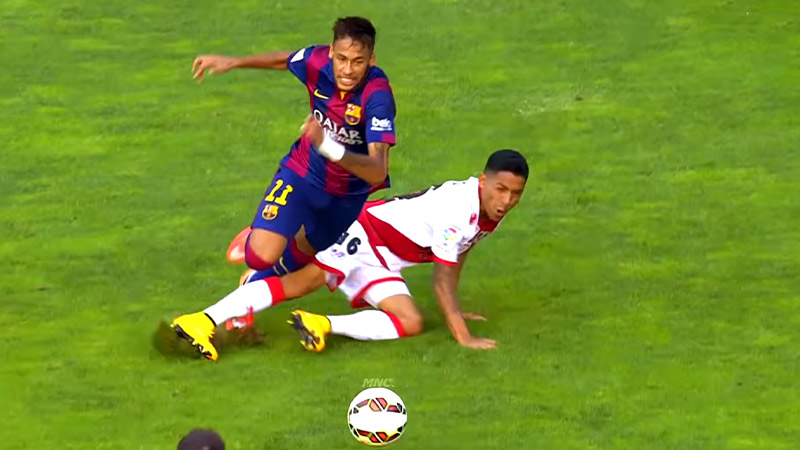
In the high-stakes environment of competitive soccer, physical contact is an inherent element of the game.
Among the various injuries sustained during tackles and aerial challenges, the “dead leg” remains one of the most frequent yet misunderstood conditions affecting both amateur and professional athletes.
While the name suggests a temporary nuisance, a thigh contusion is a clinical injury that requires a sophisticated understanding of muscle trauma to ensure a safe and efficient return to play.
Defining the Impact: What is a “Dead Leg”?
A dead leg, clinically referred to as a thigh contusion or sometimes a “charley horse,” is a traumatic injury resulting from a direct, forceful blow to the quadriceps muscle.
In soccer, this typically occurs when an opponent’s knee or hip makes high-velocity contact with a player’s thigh during a tackle or a contested header.
The physiological mechanism is straightforward yet damaging: the force of the impact pins the large quadriceps muscle against the femur (the thigh bone).
This compression causes deep internal bleeding, known as a hematoma, and intense localized bruising within the muscle fibers.
The sensation of the leg becoming “dead”—heavy, unresponsive, and temporarily paralyzed—is the direct result of this internal trauma and the body’s immediate inflammatory response.
The Symptom Profile: Recognizing Internal Trauma
Identifying the severity of a thigh contusion early is critical for establishing an accurate recovery timeline. Athletes and coaching staff should monitor for several key indicators immediately following the impact:
- Sudden Intense Pain: Players will experience an immediate, sharp pain at the site of the collision, often described as a “shocking” or “stabbing” sensation.
- Loss of Functional Mobility: A primary hallmark of a significant contusion is the inability to flex the knee fully or lift the leg. Players may find themselves walking with a pronounced limp or unable to put full weight on the affected limb.
- Physical Changes in the Tissue: The injured area often becomes stiff, swollen, and hard to the touch as the hematoma develops. Visible bruising may appear shortly after or may remain deep within the tissue, masked by the muscle mass.
The Grading System: Categorizing Severity
Not all dead legs are created equal. Medical professionals categorize these injuries based on the level of functional loss and the depth of the muscle damage.
- Grade 1 (Mild): These are minor contusions where the player retains a significant range of motion. While there is stiffness and localized pain, the athlete can usually return to training within 2 to 5 days as the initial inflammation subsides.
- Grade 2 (Moderate): This involves deeper tissue damage and a noticeable loss of strength. The player will likely have difficulty climbing stairs or performing explosive movements.
- Grade 3 (Severe): These are massive contusions involving significant internal bleeding. A Grade 3 injury can sideline a player for 4 to 8 weeks and almost always requires professional physiotherapy to prevent long-term complications.
The Gold Standard of Immediate Care: The PRICE Protocol
When a player is removed from the pitch following a severe blow to the thigh, the first 24 to 48 hours are foundational for recovery. The PRICE method is the industry-standard approach to managing the initial inflammatory phase:
- Protect: The first priority is to remove the athlete from the environment of further injury. Continuing to play on a dead leg can exacerbate muscle tearing and increase internal bleeding.
- Rest: Immediate cessation of activity is required to allow the clotting process to begin and to prevent the hematoma from expanding.
- Ice: Applying ice (wrapped in a protective layer like a towel) for 15–20 minutes every few hours is essential. This helps constrict blood vessels, reducing swelling and providing a natural analgesic effect for the pain.
- Compress: Utilizing an elastic bandage to wrap the thigh firmly—though not so tight as to cut off circulation—helps limit the spread of internal swelling.
- Elevate: By propping the leg up above heart level, the athlete uses gravity to encourage fluid drainage away from the injury site, further mitigating the inflammatory response.
The Crucial Warning: The Risk of Myositis Ossificans
One of the most dangerous misconceptions regarding thigh contusions is the urge to “stretch it out” or “massage the lump.” In the context of a severe dead leg, these actions can lead to a rare but debilitating condition known as Myositis Ossificans.
Myositis Ossificans occurs when the body’s repair mechanism malfunctions, causing bone tissue to grow inside the deep muscle bruise.
This bone formation within the muscle can lead to permanent loss of flexibility and chronic pain.
To avoid this risk, players must never deeply massage or aggressively stretch the thigh during the first 24 to 48 hours while the muscle is actively bleeding.
Gentleness during the acute phase is the most effective way to ensure the body heals muscle tissue rather than creating calcifications.
Advanced Rehabilitation: The Path Back to Match Fitness
Once the acute inflammatory phase (the first 48–72 hours) has passed, the focus shifts from protection to restoration.
Step 1: Restoring Range of Motion
The initial goal is to regain the ability to bend the knee and move the hip without sharp pain. This should start with very gentle, pain-free active movements. If any movement causes sharp pain, it is a sign that the internal hematoma is still too unstable for mobilization.
Step 2: Strengthening and Loading
As the stiffness fades, athletes begin isometric exercises—contracting the muscle without moving the joint.
This helps maintain muscle tone without putting undue stress on the healing fibers. Gradually, this progresses to eccentric and concentric exercises, such as slow squats or leg presses, to rebuild the quadriceps’ capacity to handle force.
Step 3: Sport-Specific Drills
Before returning to a full match, the athlete must pass functional tests. This includes sprinting, cutting (lateral movement), and eventually kicking the ball. Since kicking involves a violent extension of the quadriceps, it is often the last movement to be cleared by physiotherapists.
The Role of Nutrition in Muscle Repair
While physical protocols are vital, the biological building blocks of recovery are often overlooked. Nutritional intervention is a standard part of the recovery strategy.
- Anti-Inflammatory Intake: Consuming omega-3 fatty acids and antioxidants can help manage the systemic inflammation associated with a Grade 3 contusion.
- Protein Synthesis: Increasing protein intake ensures that the amino acids necessary for repairing torn muscle fibers are readily available in the bloodstream.
- Hydration: Proper hydration is essential for cellular repair and for the efficient transport of nutrients to the injury site.
Prevention: Minimizing Future Risk
While contact in soccer cannot be entirely avoided, certain strategies can reduce the frequency and severity of thigh contusions:
- Protective Gear: Many modern “compression shorts” for soccer players now include integrated thigh pads. While not mandatory, these can significantly dampen the force of a direct knee-to-thigh impact.
- Conditioning: Strong, well-conditioned quadriceps are more resilient to impact. A robust muscle belly can better absorb the energy of a collision, potentially turning a Grade 2 injury into a Grade 1.
- Awareness: Training players to be aware of their positioning during tackles can help them avoid “squaring up” to an opponent’s knee, which is the most common cause of the injury.
Commonly Asked Questions: Managing Expectations
How long until I can run again?
For a mild Grade 1 injury, you may be running within 48 to 72 hours. However, for severe cases, running must be delayed until you have nearly a full range of motion and no pain during walking.
Should I use heat or ice?
In the first 48 hours, ice is mandatory to control bleeding. Heat should only be introduced after the initial bleeding has stopped (usually after 3 days) to help increase blood flow and relax the muscle fibers for stretching.
Can a dead leg lead to a muscle tear?
Yes. If you return to play too early, the weakened muscle fibers are significantly more susceptible to a full quadriceps strain or tear.
Conclusion: A Disciplined Approach to Recovery
A dead leg is more than just a bruise; it is a complex soft-tissue injury that demands respect and a disciplined recovery protocol.
By adhering to the PRICE method, respecting the danger of early stretching, and following a structured return-to-play timeline, soccer players can ensure that a temporary setback does not become a season-ending complication.
Whether you are an elite professional or a weekend warrior, the key to longevity in soccer is knowing when to play through the pain and when to prioritize the biological needs of your body.
If you experience a loss of function that lasts beyond 48 hours, consulting a professional physiotherapist is the most effective step toward reclaiming your place on the pitch.