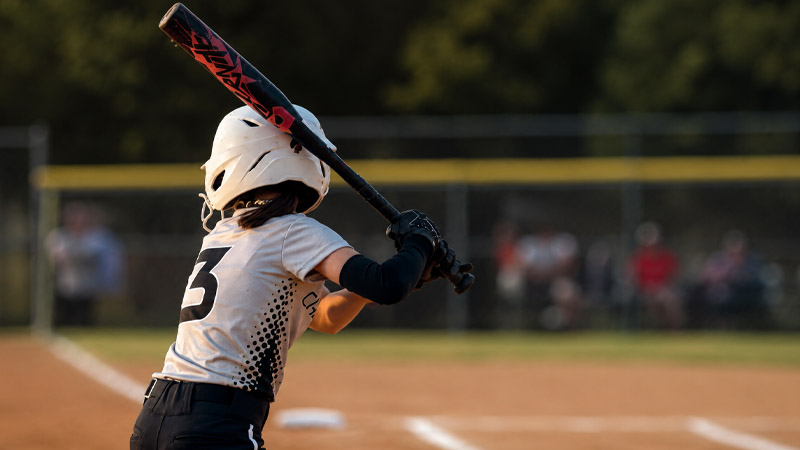
A high-performance composite bat is one of the single most significant investments a player or parent will make in diamond sports.
With top-tier models ranging anywhere from $300 to over $500, understanding the true lifespan of these engineered barrels is critical to protecting your investment and maintaining competitive performance at the plate.
Under typical competitive playing conditions, a composite baseball or softball bat lasts 1 to 3 seasons, which translates roughly to 1,000 to 1,500 impacts.
However, this range varies dramatically based on hit force, swing frequency, ball types, and environmental factors.
Composite Bat Lifespan by Player Profile
Because swing mechanics, exit velocities, and usage frequencies differ across playing levels, bat longevity should always be evaluated through the lens of player age and usage profile.
| Player Profile | Swing Volume per Year | Average Lifespan | Primary Wear Factors |
| Power Hitters & College/High School Athletes | High (5,000+ swings across games & practice) | 1 Season (or less) | High exit velocities, continuous microfiber compression |
| Travel Ball & Competitive Youth Players | Moderate to High (2,000–4,000 swings) | 1 to 2 Seasons | Year-round play, varied weather conditions |
| Standard Recreational League Players | Moderate (1,000–2,000 swings) | 2 to 3 Seasons | Standard seasonal wear and tear |
| Casual / Limited Play & Little League | Low (< 1,000 swings) | 4 to 5 Seasons | Natural material breakdown over multi-year storage |
High-Impact & Power Hitters (1 Season)
Players with swing speeds exceeding 60–70 mph generate immense kinetic energy upon impact. For high school varsity, collegiate, and elite travel ball power hitters, a composite bat is designed for maximum performance rather than multi-year longevity.
The aggressive flexing of the barrel wall compresses the internal carbon-fiber layers faster, meaning a single calendar year of heavy year-round use often exhausts the barrel’s structural integrity.
Standard Competitive Players (2 to 3 Seasons)
For middle school, high school junior varsity, or seasonal travel players who balance practice with game play, a composite barrel typically delivers peak pop throughout two to three full spring and fall seasons.
Casual & Youth League Players (4 to 5 Seasons)
Younger players in Little League or recreational divisions apply significantly less physical force to the barrel per swing. When stored properly in climate-controlled environments and used strictly with regulation game balls, a composite bat can easily survive four or five years—often outlasted only by the player growing out of the length and weight specifications.
The Engineering Behind Composite Wear
Unlike traditional aluminum alloy bats—which remain rigid and maintain uniform wall density until they dent—composite bats are constructed from woven carbon-fiber strands bound by synthetic resin matrices.
When fresh off the assembly line, these carbon microfibers are stiff and tightly bonded. As you hit balls, the resin matrix microscopic structures begin to loosen and flex.
This process creates the coveted trampoline effect, where the barrel wall compresses inward upon impact and springs back, transferring maximum kinetic energy directly back into the ball.
However, material fatigue is a continuous, cumulative process:
- Stiff Phase (New): Stiff composite matrix; lower trampoline effect, needs break-in.
- Peak Pop Phase (Broken-In): Fibers flex optimally; maximum energy transfer and exit velocity.
- Degradation Phase: Fibers begin to detach from resin matrix; micro-fractures develop.
- Structural Failure (Dead): Matrix breaks down completely; barrel loses tension, cracks, or rattles internally.
The 5 Major Factors That Destroy Composite Bats Prematurely
While natural wear is inevitable over hundreds of impacts, several preventable handling errors can shorten your bat’s life from years to weeks.
       [ TEMPERATURE ] ----------------> Avoid hitting below 60°F (15°C)
              |
       [ BALL TYPE ] ------------------> Avoid dimpled/cage & heavy weighted balls
              |
  [ BREAK-IN PROCEDURE ] --------------> Perform 100-200 initial 50% power tee hits
              |
   [ BARREL ROTATION ] ----------------> Rotate 1/4-turn after every single hit
1. Cold Weather Play (The 60°F Rule)
Temperature is the leading cause of sudden composite catastrophic failure. When ambient temperatures drop below 60°F (15°C), two dangerous physical changes happen simultaneously:
- The Bat: The synthetic resin binding the carbon fibers hardens and becomes brittle.
- The Ball: Regulation leather balls condense, becoming significantly harder and denser.
Hitting a cold, dense leather ball with a cold, brittle composite barrel creates shock forces that cause micro-fractures to immediately propagate into deep surface cracks.
2. Dense Practice & Pitching Machine Balls
Composite barrels are strictly engineered for regulation leather baseballs and softballs. The following ball types should never come into contact with a composite barrel:
- Yellow Dimpled Pitching Machine Balls: Designed with dense rubber compounds that compress less than leather, causing severe point-impact stress on the barrel walls.
- Heavy Weighted Training Balls: Intended for strength training; the extra mass rapidly crushes internal composite layers.
- Wet Leather Balls: Leather absorbs water weight, turning a standard 5 oz baseball into a heavy impact projectile.
3. Skipping the Break-In Process
Hitting at 100% velocity right out of the wrapper creates localized stress concentration. If you hit a 90 mph fastball on day one, the stiff, unyielding resin will fracture locally instead of flexing across the entire barrel wall.
4. Poor Barrel Rotation Practices
Hitting the ball continuously on the exact same side of the barrel causes localized fatigue. Once that specific quadrant loses tension, the rest of the barrel structure quickly follows.
5. Improper Storage
Leaving your bat in the trunk of a hot car during summer heat waves (where temperatures top 120°F) degrades the resin matrix bond. Conversely, leaving a bat in an unheated garage during winter freezes the internal composite structure.
Step-by-Step: The Proper Composite Break-In Protocol
To ensure your barrel flexes evenly and achieves its maximum possible service life, follow this systematic break-in routine before taking your bat into a live game environment.
Step 1: Tee Work (Swings 1–50)
- Set up a tee with standard regulation baseballs or softballs.
- Swing at approximately 50% power.
- Crucial: Manually rotate the bat 1/4-turn in your hands after every single swing to ensure uniform fiber stretching around the entire 360-degree circumference.
Step 2: Soft Toss & Front Toss (Swings 51–150)
- Transition to soft-toss or slow front-toss pitching.
- Increase swing intensity to 75% power.
- Continue rotating the barrel 1/4-turn after every hit.
Step 3: Live BP (Swings 151–200)
- Move back to standard batting practice distance with live pitching at normal speeds.
- Take full-power, 100% effort swings.
- Maintain strict barrel rotation throughout the entire round.
Diagnostics: How to Tell if Your Composite Bat Is Dying
It is essential to distinguish between a bat that has simply reached peak “pop” and one that has suffered irreversible structural failure.
       COMPOSITE BAT HEALTH CHECK
                  |
        +---------+---------+
        |                   |
  [ VISUAL CRACKS ]   [ INTERNAL NOISE ]
        |                   |
   Mild Webbing?      Rattling Resin?
   (Peak Pop)         (Internal Breakage)
        |                   |
 Deep Vertical Crack?       |
  (Dead / Discard)    [ AUDIBLE SOUND ]
                            |
                     Dull Thud Sound?
                     (Dead / Discard)
Cosmetic Webbing vs. Vertical Cracks
Spider-Webbing: Thin, cross-hatching hairline lines in the clear coat finish are a natural sign that the outer resin layer is flexing. This usually indicates the bat is in its prime performance window.
Vertical Stress Cracks: Deep, pronounced straight lines running parallel to the direction of the barrel fibers indicate structural separation. Once a vertical crack can catch a fingernail, the bat is dead and unsafe for play.
Internal Rattling
If you shake your bat vertically and hear small loose pieces sliding inside the barrel (similar to maraca beads or sand), the internal composite resin matrix or end-cap retaining structures have broken apart. While minor resin flakes sometimes occur without immediate performance drops, loud rattling signals impending failure and often leads to disqualification during pre-game umpire inspections.
Audible Impact Sound Shift
A healthy, fully functional composite bat produces a crisp, ringing impact sound—a distinct high-frequency “ping” or sharp “crack.” When the internal wall structure collapses, the barrel can no longer compress and rebound properly. The impact sound instantly shifts to a flat, dull “thud,” accompanied by a sudden drop in exit velocity and increased vibration felt in the hands.
Essential Storage and Maintenance Checklist
- Keep It Indoors: Always store your bat inside a climate-controlled home at room temperature (65°F–75°F). Never store it in garages, sheds, or vehicle trunks.
- Use an Alloy Bat in the Cage: Dedicate an inexpensive aluminum alloy bat for commercial batting cages, dimpled balls, and cold weather practices under 60°F.
- Clean with Mild Soap: Remove pine tar or dirt with a soft microfiber cloth, warm water, and mild dish soap. Never use harsh chemical solvents or acetone, which strip the protective clear-coat resin layer.
- Individual Sleeve Protection: Keep your composite bat inside a padded bat sleeve or separate compartment in your equipment bag to prevent metal cleats from scratching the barrel resin.
Frequently Asked Questions
Can you fix or repair a cracked composite bat?
No. Once carbon fibers shear or the structural resin matrix fractures, the mechanical integrity of the barrel is permanently compromised.
Structural repairs cannot restore the trampoline effect, and attempting to glue or roll damaged barrels violates all major league rules (BBCOR, USA, USSSA) and renders the equipment illegal.
Does manufacturer warranty cover cold-weather cracking?
Most major bat manufacturers offer a 1-year limited warranty against structural cracks and defects from the original date of purchase.
However, warranties typically exclude damage resulting from clear misuse, such as hitting non-regulation balls, using the bat in commercial batting cages, or displaying clear signs of low-temperature impact. Always keep your original purchase receipt from an authorized dealer.
Are composite bats less durable than alloy bats?
Yes, in terms of absolute structural toughness. Aluminum alloy bats are much less sensitive to cold temperatures and ball types, making them virtually immune to cracking (though they can dent over time).
Composite bats offer superior trampoline effect, lighter swing weights, and larger sweet spots, but they require strict care protocols to reach their full potential lifespan.
Protect Your Investment
A composite bat is a precision-engineered piece of sports equipment. By maintaining a strict break-in procedure, avoiding low temperatures, using proper regulation balls, and storing your equipment indoors, you can ensure your barrel delivers peak performance and exit velocity throughout its natural lifecycle.