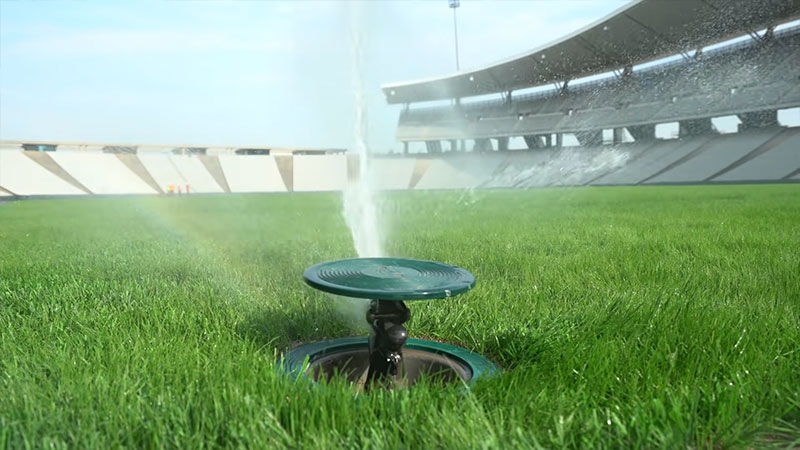
In the high-stakes environment of professional soccer, every variable is meticulously managed to ensure optimal performance and athlete safety.
One of the most frequently questioned practices by spectators and casual observers is the sight of high-powered irrigation systems drenching a synthetic “plastic” pitch minutes before kickoff or during halftime.
To the uninitiated, watering a non-organic surface seems counterintuitive, if not wasteful. However, the application of water to synthetic turf is a sophisticated requirement rooted in thermodynamics, biomechanics, and surface engineering.
The transition from traditional natural grass to high-performance synthetic systems—often referred to as 3G or 4G pitches—has necessitated a new set of maintenance protocols.
Far from being a “maintenance-free” alternative, these modern surfaces require precise moisture management to mimic the playability of natural grass while mitigating the inherent physical limitations of synthetic polymers.
Thermodynamics: Managing the Heat Retention of Synthetic Polymers
The primary driver behind the irrigation of synthetic soccer fields is thermal regulation. Unlike natural grass, which benefits from a biological process known as transpiration—where the plant releases moisture to cool itself and the surrounding air—synthetic turf is composed of inert materials that act as a heat sink.
The 140°F Threshold
Synthetic fields are typically constructed using polyethylene or polypropylene fibers supported by a dense layer of infill, usually consisting of crumb rubber and sand. These materials have a high heat capacity and low reflectivity.
On a clear day with moderate ambient temperatures, the sun’s radiation can cause these surfaces to reach temperatures exceeding 140°F (60°C).
At these levels, the field becomes more than just uncomfortable; it becomes a liability for heat-related illnesses and can even cause footwear to soften or skin to blister upon contact.
The Mechanism of Evaporative Cooling
Watering the turf introduces a temporary but highly effective cooling mechanism. As the water is applied, it coats the fibers and the infill.
Through the process of evaporation, heat energy is pulled away from the surface to convert the liquid water into vapor.
This thermal exchange can lead to a significant drop in surface temperature, often reducing the heat by as much as 30°F (15°C).
This cooling effect is essential for maintaining a safe environment for athletes who are performing at peak cardiovascular intensity, as a cooler surface helps regulate their core body temperatures.
Biomechanics and Injury Prevention: The Friction Factor
Player safety is the cornerstone of professional athletic facility management. The physical interaction between an athlete’s skin and the playing surface is a critical area of concern, particularly during high-velocity movements such as sliding tackles or diving saves.
Mitigating Friction Burns
Dry synthetic turf is notoriously abrasive. In its dry state, the friction between the synthetic fibers and human skin can be compared to the effect of coarse sandpaper.
Without the lubrication provided by water, a player sliding across the turf is at high risk for “turf burn”—painful abrasions that are prone to infection and can sideline a player for multiple matches.
Creating a Hydroplaning Effect
By spraying the turf, grounds crews create a thin, slick layer of moisture across the polyethylene blades. This moisture acts as a lubricant, significantly reducing the coefficient of friction.
This allows players to slide, tackle, and dive with a degree of “give” that mimics the behavior of a well-manicured, moist natural grass pitch.
This reduction in friction is not merely about comfort; it is a fundamental safety protocol designed to prevent dermatological trauma during intense match play.
Ball Kinematics: Enhancing Game Speed and Predictability
In elite soccer, the speed of the ball and the consistency of its roll can dictate the tactical success of a team’s playing style.
Synthetic surfaces, while providing a level of uniformity that natural grass cannot always match, present unique challenges regarding ball-to-surface interaction.
Stabilizing the Infill System
Synthetic turf systems rely on a complex mixture of sand and rubber pellets, known as infill, to keep the individual blades of “grass” standing upright and to provide the necessary shock absorption.
On a dry field, this infill can be “splashed” or displaced easily, leading to uneven patches and unpredictable ball bounces.
Optimizing Roll and Glide
When water is applied, it weighs down the infill and acts as a binding agent, effectively settling the particles and creating a firmer, more consolidated surface. This stabilization allows the soccer ball to glide across the tips of the fibers with less resistance.
For teams that rely on rapid, short-passing sequences, a wet pitch is an absolute necessity. The moisture ensures that the ball moves faster and follows a more predictable trajectory, allowing for the precision required at the professional level.
The Electrical Component: Minimizing Static Discharge
A less obvious but equally important reason for irrigating synthetic turf involves the management of static electricity. The constant friction between an athlete’s footwear and the synthetic polymer fibers can generate a substantial electrostatic charge.
On a dry field, this build-up has nowhere to go. Players can experience uncomfortable static shocks when they come into contact with each other or metal fixtures like goalposts.
Furthermore, high levels of static can interfere with the sensitive electronic performance-tracking equipment that many modern athletes wear in their kits.
Regular watering of the turf effectively eliminates this static build-up, ensuring that the only “sparks” on the field are tactical ones.
Maintenance, Hygiene, and Surface Longevity
Beyond the immediate requirements of a 90-minute match, irrigation plays a vital role in the long-term hygiene and structural integrity of the facility.
Synthetic fields are high-traffic environments that accumulate a variety of biological and environmental contaminants.
Sanitation Protocols
During a match, a field is exposed to sweat, saliva, and occasionally blood, alongside external pollutants like dust and environmental debris.
Unlike natural grass, which contains soil microbes that help break down organic matter, synthetic turf is a sterile environment where these substances can linger.
Regular irrigation serves as a flushing mechanism, washing these contaminants through the porous backing of the turf and into the drainage system below.
This ensures a cleaner, more hygienic surface for the players who frequently make direct contact with the ground.
Dust Suppression
The sand and rubber infill used in these fields can produce fine dust over time as the materials break down through physical wear.
If left dry, this dust can become airborne during play, potentially causing respiratory discomfort for athletes. Moisture keeps these fine particles trapped within the infill layer, maintaining air quality at the pitch level.
The Professional Standard: Why Every Detail Matters
The decision to water a synthetic pitch is rarely the result of a single factor; rather, it is a holistic approach to athletic excellence. For sports organization or a top-flight football club, the field is a high-value asset that must be optimized for peak performance.
Meeting Global Performance Criteria
International governing bodies, such as FIFA, have established rigorous standards for synthetic surfaces. These standards include specific metrics for ball rebound, shock absorption, and surface friction.
In many cases, a synthetic pitch only meets these elite performance benchmarks when it is properly hydrated. Watering the field is therefore not an “extra” step—it is the final stage of preparing the surface to meet professional specifications.
Frequently Asked Questions (FAQ)
Does watering the turf make the field slippery or dangerous?
Quite the opposite. While it reduces abrasive friction, it actually creates a more consistent and predictable surface. Professional soccer cleats are designed to provide grip on moist surfaces.
The “slickness” is intentional, as it allows for natural sliding movements that prevent the foot from “sticking” in the turf, which is a common cause of lower-limb injuries.
How much water is actually used?
The amount of water used is significantly less than what is required to maintain a natural grass field over the course of a week.
For synthetic turf, the water is applied in a “flash” irrigation style—short, high-volume bursts designed to coat the surface rather than soak the ground deeply.
Does the water drain away immediately?
Modern synthetic fields are engineered with advanced subsurface drainage systems. These systems are capable of handling several inches of rain per hour.
The water applied during pre-match irrigation typically stays on the fibers and infill for the duration of the half before gradually draining away or evaporating.
How long does the cooling effect last?
The cooling effect is most potent immediately after application. On extremely hot days, grounds crews may reapply water at halftime to ensure the surface temperature remains within safe limits for the remainder of the match.
Strategic Conclusion: The Future of Synthetic Surface Management
As the sports world continues to evolve, the technology behind synthetic playing surfaces will only become more sophisticated. However, the fundamental physics of the game remains the same.
Whether it is a championship match or a high-level training session, the application of water to synthetic turf is a testament to the meticulous care required to balance performance with safety.
By understanding the thermal mechanics, friction dynamics, and structural needs of these fields, facility managers can ensure they are providing the best possible environment for their athletes.
Irrigation is not a sign of a “fake” field trying to act like a real one; it is a precision tool used to unlock the full potential of modern sports engineering.
For those managing world-class facilities, watering the turf is a non-negotiable protocol that ensures the game is played at the highest possible speed, with the lowest possible risk. It is the “invisible advantage” that keeps the world’s most popular sport moving forward.
Summary of Key Insights:
- Temperature Regulation: Irrigation provides a cooling effect of up to 30°F through evaporation, preventing surface temperatures from exceeding 140°F.
- Player Safety: A wet surface reduces abrasive friction, transforming the “sandpaper” effect of dry fibers into a slick, safe sliding surface.
- Ball Control: Moisture stabilizes the infill (rubber/sand), creating a firmer surface that allows for faster and more predictable ball movement.
- Static and Hygiene: Water eliminates electrostatic discharge and flushes away debris, sweat, and dust to maintain a hygienic environment.