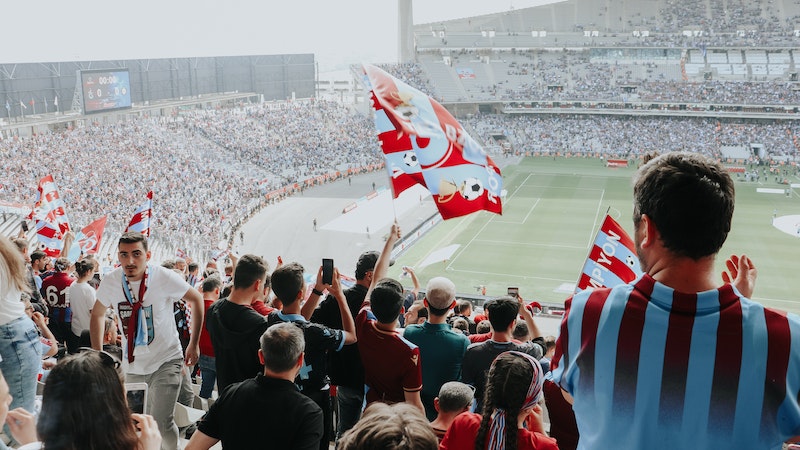
The global landscape of athletics is often divided by a single word: soccer. While the majority of the planet identifies the world’s most popular sport as “football,” a significant number of nations maintain a different linguistic tradition.
This terminology gap is not merely a matter of preference but a reflection of deep-seated cultural history and the presence of competing domestic sports codes.
Understanding which countries use this term, and the historical reasons behind it, provides essential insight into the evolution of global sports branding and regional identity in the modern era of international athletic competition.
The Surprising British Origin of the Word Soccer
To understand why certain nations use the term soccer, one must first look at 19th-century England. It is a common misconception that the word is a modern invention of North American media; however, historical records confirm it originated within the elite educational institutions of Great Britain.
The Rise of Association Football
In the mid-1800s, various versions of “football” were played across English schools, each with its own set of rules. In 1863, the Football Association (FA) was formed to codify the game, leading to the official name “Association Football.”
This was necessary to distinguish the game from “Rugby Football,” which allowed the use of hands.
The Oxford “-er” Slang Tradition
During this period, it was a popular linguistic trend among students at Oxford University to add the suffix “-er” to shortened versions of nouns. “Rugby Football” became “rugger,” and “Association Football” was shortened to “assoc,” which eventually evolved into “soccer”.
For many decades, “soccer” was a perfectly acceptable and widely used term in Britain to describe the sport, existing alongside “football” without controversy.
Major Nations Where Soccer is the Standard Term
In regions where the word “football” was already claimed by a dominant local sport, “soccer” became the essential identifier to avoid confusion. This is particularly evident in North America and Oceania, where distinct “football” codes had already established deep cultural roots.
The North American Dominance
In the United States and Canada, the word “football” is almost exclusively synonymous with gridiron-style play. Whether it is the NFL in America or the CFL in Canada, the high-contact, tactical game played with an prolate spheroid ball dominates the cultural consciousness.
Consequently, “soccer” became the definitive term for the sport played with the feet and a round ball to ensure clarity in media, marketing, and daily conversation.
The Australian Sporting Landscape
Australia presents a unique case where multiple codes of football compete for attention. Historically, the term “soccer” was used to differentiate the sport from Australian Rules Football (AFL), Rugby League, and Rugby Union.
While the national governing body officially rebranded to “Football Australia” in 2005 to align with international FIFA standards, the term “soccer” remains deeply embedded in the public lexicon.
| Country | Primary Term | Alternative Term | Reason for “Soccer” Usage |
|---|---|---|---|
| United States | Soccer | Association Football | Avoid confusion with American Football |
| Canada | Soccer | Association Football | Avoid confusion with Canadian Football |
| Australia | Soccer | Football | Distinction from AFL and Rugby codes |
| Japan | Sakkā | Futtobōru | Phonetic adaptation of the English “soccer” |
| South Africa | Soccer | Sokker | Distinction from Rugby Union |
Linguistic Adaptations in Asia and Africa
The use of the term soccer is not limited to English-speaking Western nations. Several countries in Asia and Africa have adopted the term through phonetic translation or historical colonial influence, often to distinguish it from other popular team sports.
The Japanese Phonetic Shift
In Japan, the sport is most commonly referred to as sakkā (サッカー), which is a direct phonetic adaptation of the word “soccer”. While the Japan Football Association uses “football” in its official English title, the domestic population and media almost exclusively use sakkā.
This choice helps distinguish the sport from American football, which also has a dedicated, albeit smaller, following in the country.
South African Cultural Nuance
South Africa provides another compelling example of linguistic distinction. In this nation, “football” is a term used by many, but “soccer” (or the Afrikaans sokker) is incredibly widespread.
This terminology helps differentiate the sport from Rugby Union, which historically held significant cultural and political weight in the country.
The 2010 FIFA World Cup, hosted by South Africa, famously used the term “soccer” in the naming of its primary stadium, Soccer City.
Countries with Mixed or Regional Usage Patterns
In some parts of the world, the debate between “football” and “soccer” is not settled, leading to a “mixed usage” environment. In these locations, the term used often depends on the age of the speaker, their geographic location, or the specific sporting context.
The Irish Linguistic Divide
In Ireland, the term “football” is frequently reserved for Gaelic Football, a traditional and highly popular national sport. As a result, “soccer” is the standard term used to refer to Association Football to ensure there is no ambiguity.
This is one of the few places in Europe where “soccer” remains a common and necessary part of the sporting vocabulary.
Evolution in New Zealand and the Philippines
New Zealand has historically favored the term “soccer” due to the overwhelming popularity of Rugby, which is often simply called “football”. However, there has been a concerted effort by the national body, now called New Zealand Football, to shift the terminology.
This has created a generational gap where older fans stick to “soccer” while younger enthusiasts adopt the global “football” standard.
Similarly, in the Philippines, younger generations are increasingly using “football” due to global media influence, while “soccer” remains the preference for older demographics.
Why the Labeling Matters for Global Brands
For organizations operating on a global scale, navigating these linguistic boundaries is essential for effective communication and market positioning. The terminology used can signal a brand’s understanding of local culture and its respect for regional sporting history.
The Standardization Trend
There is a clear global trend toward the word “football,” driven largely by the influence of FIFA and the massive commercial reach of European leagues like the English Premier League and UEFA Champions League.
As the sport becomes more digitized and globally connected, many nations are officially rebranding their associations to include “football” to foster a sense of international unity.
The Persistence of Local Identity
Despite the push for standardization, the term “soccer” is unlikely to disappear. It serves as a marker of a nation’s unique sporting ecosystem.
In the United States, for example, the term is tied to the identity of Major League Soccer (MLS) and the highly successful U.S. Women’s National Team.
For these fans, the word is not a slight against the sport’s traditions but a reflection of their own domestic sporting journey.
Frequently Asked Questions
Is “soccer” a real word?
Yes, “soccer” is a legitimate English word that originated in 19th-century Britain as a shortened version of “Association Football”.
Why do Americans call it soccer?
Americans use the term to distinguish the sport from American Football, which is the most popular sport in the country.
Did England ever use the word soccer?
Yes, the word was used frequently in England for decades. It only fell out of favor in the late 20th century as “football” became the exclusive dominant term.
Which country has the most “soccer” fans?
The United States has the largest population that consistently uses the term “soccer,” with millions of active players and fans following both domestic and international leagues.
What does FIFA stand for?
FIFA stands for Fédération Internationale de Football Association. Interestingly, the word “Association” at the end is the very word from which “soccer” was derived.
Conclusion: A Sport Defined by Diversity
The linguistic divide between “football” and “soccer” is a testament to the sport’s incredible ability to adapt to diverse cultural landscapes.
Whether a nation calls it sakkā in Japan, soka in Papua New Guinea, or soccer in North America, the fundamental essence of the game remains unchanged. These variations in terminology are not barriers to understanding but are instead rich markers of history and regional pride.
As the “world’s game” continues to grow, its names will likely continue to evolve, reflecting the unique identities of the billions of fans who call it their own.
Understanding these boundaries allows fans and organizations alike to navigate the complex, multi-layered world of international sports with greater expertise and cultural sensitivity.