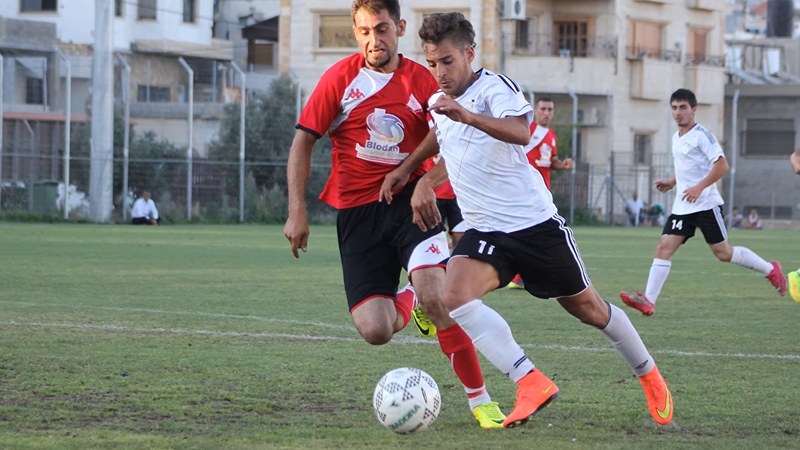
The modern football landscape has undergone a tectonic shift, and perhaps no position embodies this transformation more than the winger.
Once viewed as a specialist confined to the touchline, the contemporary winger has evolved into a multi-functional engine responsible for tactical flexibility, high-intensity defensive pressing, and primary goal-scoring.
This guide provides an analytical exploration of the winger’s role, physical demands, and the technical mastery required to excel in the world’s most demanding leagues.
The Fundamental Definition: Beyond the Touchline
In its most basic form, a winger is an attacking player who operates in the wide areas of the pitch along the left or right touchlines.
Historically, their primary directive was to stretch the opposition’s defensive block, beat their direct marker in one-on-one situations, and deliver crosses into the penalty area for central strikers.
However, the “winger meaning” in the modern era has expanded significantly. Today, the flank is a fluid space where players must seamlessly transition between attacking, defending, and pressing, often within a single phase of play.
While ball progression remains the unifying goal—moving the ball forward with control through dribbling, passing, or explosive bursts—the methods of achieving this have diversified into several distinct archetypes.
The Evolution of Winger Archetypes
To understand the tactical utility of wide players, one must categorize them by their specific functional roles.
- The Traditional Winger: This “throwback” role focuses on maintaining maximum width. These players hug the touchline and use pure acceleration to beat defenders on the outside, whipping in crosses with their natural foot. Examples like Aaron Lennon or early David Beckham defined this era.
- The Inverted Winger: A dominant force in modern tactics, these players operate on the side opposite their stronger foot (e.g., a left-footer on the right wing). This positioning allows them to cut inside toward the center of the field to shoot or thread through-balls. Mohamed Salah and Lionel Messi are the gold standards for this role.
- The Inside Forward: Occupying a space between a winger and a striker, inside forwards start wide but constantly drive into the box to finish moves. They prioritize goals over crossing and are often utilized in narrow front-three systems. Cristiano Ronaldo and Son Heung-min exemplify this hybrid approach.
- The Wide Playmaker: These players rely on vision and technical precision rather than raw physical attributes. They often drift into central pockets of space to connect play and deliver creative final passes. Jack Grealish and Bernardo Silva represent this cerebral style.
- The Wing-Back Hybrid: Essential to 3-5-2 or 3-4-3 systems, these players cover the entire length of the flank. They must possess the stamina of a marathon runner and the defensive discipline of a full-back while providing the attacking outlet of a winger. Players like Alphonso Davies and Achraf Hakimi have mastered this demanding dual role.
The Science of Performance: Physical and Physiological Demands
The physical profile of a winger is statistically the most demanding on the pitch. Scientific studies confirm that wingers rank first in both total distance covered and the volume of high-intensity runs during a match.
The data highlights a significant trend: between the 2006/07 and 2012/13 seasons, the total distance run by wingers without the ball increased by nearly 30%, while the number of total sprints surged by 54%.
This increase is attributed to the growing importance of “Counterpressing”—where wingers must immediately pressure the opponent upon losing possession to disrupt transitions.
Physiologically, elite wingers possess exceptional aerobic endurance. This allow them to perform repeated 30-to-50-meter sprints with minimal lactate accumulation, ensuring they do not suffer from premature fatigue that could compromise their technical execution in the final minutes of a game.
Core Competencies: Technical and Mental Attributes
Excellence on the wing requires a sophisticated blend of physical traits and tactical maturity.
1. Acceleration and Explosive Agility
In wide areas, the first five yards are more critical than the next thirty. The ability to explode into gaps and change direction while maintaining ball control is what allows wingers to “disappear” before a defender can react. High-level players use body feints, shoulder drops, and sudden stops to leave markers off-balance.
2. Technical Mastery: The First Touch
Receiving a pass near the touchline under intense pressure leaves zero margin for error. A winger’s first touch must be soft and directional, ideally moving the ball away from the defender and into a space that allows for immediate acceleration or a cross.
3. Crossing and Passing IQ
Effective crossing is not about blindly hitting the ball into the box; it is about “serving danger”. Elite wingers analyze the movement of their strikers and choose between low cutbacks, near-post whipped balls, or lofted crosses to the far post. This requires high-level decision-making to determine which delivery method maximizes the chance of a goal.
4. Defensive Responsibility and Pressing
The modern winger must defend with the same intensity with which they attack. This includes tracking the opposing full-back’s overlapping runs and participating in high-block pressing triggers. Wingers often cover over 11 kilometers per match, proving that their “engine” must match their flair.
5. Psychological Resilience
The wing can be an isolating position. Players will inevitably lose the ball in 1v1 situations or face physical intimidation from defenders. The “greats” possess the mental toughness to repeatedly demand the ball and take risks despite previous failures.
Tactical Frameworks: Formations and Roles
A winger’s responsibilities are heavily dictated by the team’s structural shape.
- 4-3-3 Formation: In this system, wingers typically stay high and wide to stretch the defensive line. They are often inverted, tasked with cutting inside to shoot while the center-forward occupies the central defenders.
- 4-2-3-1 Formation: This requires a more “complete” winger who can combine with a creative Number 10, track back to support the double-pivot midfield, and press high up the pitch.
- 4-4-2 Formation: The traditional approach emphasizes wide midfielders who maintain a disciplined defensive block. They are expected to cover deep and deliver crosses from deeper wide positions.
- 3-5-2 Formation: Here, the traditional winger is often replaced by a wing-back who is responsible for the entire flank, requiring a balance of tackling, stamina, and crossing ability.
Training for the Elite Level
To develop the skills of a world-class winger, training must be position-specific and high-intensity.
- Body Positioning Drills: Players should practice receiving the ball on the “half-turn” with open hips. This allows them to see the entire field and immediately transition into an attacking move.
- Unpredictability and Efficiency: Coaches emphasize “beating defenders without beating them”. This involves using a subtle shift of the ball to create just enough space for an early cross, rather than over-dribbling and allowing the defense to reset.
- Weak Foot Development: A one-footed winger is easy to defend. Elite training programs mandate repetitive crossing and shooting drills with the non-dominant foot to ensure the player can go in either direction.
- Symbiotic Partnerships: Success on the wing often depends on the relationship with the full-back. Training should focus on “repeat patterns,” such as timed overlaps and underlaps, to create numerical overloads against the opposition.
Case Studies: Icons of the Flank
Analyzing the careers of legendary and contemporary wingers provides a blueprint for success.
Historical Legends
- Garrincha: Known for his unpredictable feints and “ankle-breaking” direction changes, he brought imaginative freedom to the right wing.
- George Best: An artist who blurred the line between athlete and entertainer, Best utilized flair and balance to glide past defenders on both flanks.
- Luis Figo: A master of efficiency and composition, Figo used subtle body drops and measured crosses to dominate the game’s tempo from the wide areas.
Contemporary Standards
- Mohamed Salah: The quintessential inverted winger, Salah has turned the “inside cut and curl” into an unstoppable offensive weapon through relentless movement and clinical finishing.
- Vinícius Júnior: Representing the pinnacle of explosive acceleration and 1v1 bravery, his ability to carry the ball under intense pressure is critical to Real Madrid’s tactical success.
- Bukayo Saka: A model of efficiency and balance, Saka excels in his decision-making and defensive work rate, providing the modern “all-around” winger profile.
- Lamine Yamal: Despite his youth, his vision and technical end product have already established him as a premier talent capable of deciding matches at the highest level.
Enhanced FAQ: Understanding the Position
Q: What is the primary difference between a winger and a wide midfielder?
A: While both operate in wide areas, a winger is generally positioned higher up the pitch with a primary focus on attacking the final third.
A wide midfielder in a 4-4-2, for example, has greater defensive responsibilities and is expected to help maintain the team’s compact shape.
Q: Why do many modern coaches prefer inverted wingers?
A: Inverted wingers create more goal-scoring threats by allowing the player to cut onto their stronger foot for a shot.
This also opens up space on the outside for “overlapping” full-backs to provide traditional crosses, creating a more complex defensive problem for the opposition.
Q: How much distance does a professional winger typically cover?
A: Elite wingers often cover upwards of 11 kilometers per match. Critically, they perform the highest volume of high-intensity sprints (above 25 km/h) compared to any other position on the field.
Q: Can a winger play on both sides of the pitch?
A: Yes. While many players have a preferred side based on their dominant foot, “two-footed” wingers like Ousmane Dembélé are highly prized because they can go inside or outside with equal effectiveness, making them nearly impossible to mark.
Conclusion: The Future of Wide Play
The winger has transitioned from a supporting actor to the protagonist of modern football tactics.
Whether it is the raw speed of a traditional wide man or the clinical precision of an inverted forward, the goal remains the same: to create “moments of advantage”.
By mastering the physical demands, technical skills, and tactical nuances outlined in this guide, players can transform from mere wide outlets into the most decisive forces on the pitch.