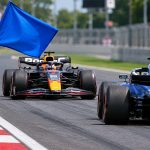
Formula 1 races are usually decided by tenths of a second. Sometimes, they are decided by two letters.
At the 2026 Spanish Grand Prix in Madrid, Lando Norris did everything right. He took pole, built a comfortable lead and controlled the race from the front.
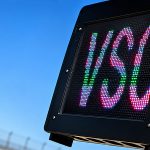
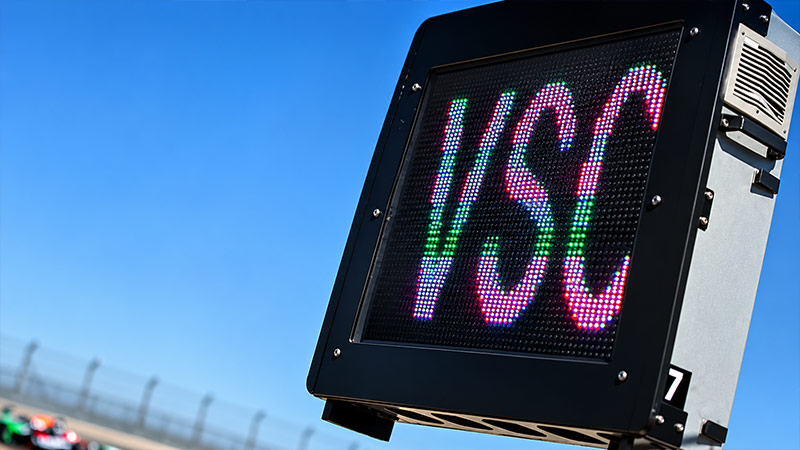
Then Lance Stroll’s Aston Martin stopped at the final corner, and every trackside panel flashed “VSC” just seconds after Norris had passed the pit entry.
Kimi Antonelli and Max Verstappen, still behind him, dived into the pits for a discounted stop. Norris had to wait a lap and pit under green flags. Antonelli won. Norris finished third.
That is the power of the Virtual Safety Car. It was created to protect the marshals who clear stranded cars and debris, yet it has also become one of the sharpest strategic weapons in the sport.
A well-timed VSC can hand a driver a nearly free pit stop. A badly timed one can wipe out a perfect weekend.
What Is the Virtual Safety Car in F1?
The Virtual Safety Car is an electronic system that slows every car on the circuit at the same time, without sending out a physical Safety Car. When Race Control activates it, the FIA light panels display “VSC”, and each driver’s steering wheel shows a live time target they must respect.
Race Control uses it for incidents that need marshals close to the track but can be cleared quickly, such as a car stopped with a mechanical failure or debris on the racing line.
The core idea is simple. Instead of bunching the field, the VSC freezes the race as it is. A ten-second gap before the VSC should still be close to ten seconds when it ends. The procedure sits in Article B5.12 of the 2026 FIA Formula 1 Sporting Regulations.
Why F1 Introduced the VSC: The Legacy of Jules Bianchi
The VSC was born from tragedy. On 5 October 2014, during a wet Japanese Grand Prix at Suzuka, Jules Bianchi lost control of his Marussia and struck a recovery vehicle that was removing another car. He suffered severe head injuries and died in July 2015.
The FIA’s Accident Panel found that drivers were not slowing down enough under double-waved yellow flags. “Slow down” was left to driver judgement, and racing drivers are not wired to give away time.
After trials in practice at the 2014 United States and Brazilian Grands Prix, the VSC became part of the rules for the 2015 season.
How the Virtual Safety Car Works
- Deployment. Race Control sends a “VSC DEPLOYED” message to all teams, and every light panel switches to “VSC”.
- The delta time. The circuit is split into short segments, each with a minimum time drivers must not beat. A running delta on the steering wheel shows whether they are on target. The stewards can penalise anyone who goes too fast. Since 2023, the target tightens further in double-yellow zones, exactly where marshals are working.
- No overtaking. Passing is banned, apart from narrow exceptions such as a car that has slowed with an obvious problem.
- Pit lane open. Teams can still change tyres. The pit lane speed limit stays the same while everyone on track slows down, so a stop costs far less time than usual.
- The restart. Race Control sends a “VSC ENDING” message, and the panels turn green at a random point 10 to 15 seconds later. The randomness stops anyone from timing a perfect jump on the car ahead.
Every lap under the VSC counts as a race lap. Since 2022, no points are awarded unless the leader completes at least two laps without a Safety Car or VSC.
VSC vs Safety Car vs Yellow Flags
| Feature | Yellow Flags | Virtual Safety Car | Safety Car |
|---|---|---|---|
| Area covered | One section of track | Whole circuit | Whole circuit |
| Physical car on track | No | No | Yes |
| How speed is controlled | Driver judgement, monitored | Electronic delta time | Following the Safety Car |
| Effect on gaps | Minimal | Largely preserved | Field bunches up |
| Typical use | Minor local hazard | Stopped car, debris, quick recovery | Heavy crash, major debris, barrier repairs |
| Pit stop time saving | None | Significant | Usually the largest |
Think of it as a ladder of severity. Yellow flags handle a local hazard, the VSC covers short clean-ups near the track, and the full Safety Car takes over when the danger is serious or the recovery will take longer.
The Strategy Game: Why a Cheap Pit Stop Changes Everything
A normal pit stop costs 20 seconds or more. Under a VSC, rivals lose time on track while the stopping car runs through the pit lane at the usual limit, so the net cost drops sharply.
The classic example is the 2018 Australian Grand Prix. Romain Grosjean’s Haas stopped on track, the VSC came out, and Ferrari called Sebastian Vettel in.
His stop cost about 11 seconds relative to leader Lewis Hamilton instead of the usual 20-plus. Vettel rejoined just ahead and won. Mercedes later blamed a software bug in the tool that calculated Hamilton’s safe gap.
In the first seconds of a VSC, strategists weigh a few key questions:
- Has the car already passed the pit entry?
- Is the driver close to the planned stop window anyway?
- Will the VSC last long enough to make the stop worthwhile?
- Could it become a full Safety Car, offering an even cheaper stop?
- Where will the car rejoin, and in what traffic?
This is why teams build “VSC gaps” into their race models. A leader wants a margin large enough to pit under a VSC and stay in front. Get that number wrong, and a race can flip in a single lap.
When the VSC Decides a Race: Madrid 2026
The first Formula 1 race at the Madring became the season’s biggest VSC debate. Antonelli and Verstappen pitted cheaply, while Norris stopped a lap later, rejoined fifth and recovered to third. The sequence cost him roughly 12 extra seconds.
McLaren team principal Andrea Stella noted that a normal stop at the Madring cost around 27 seconds, which shows the size of the swing. Norris called the rules “unfair”, and both Antonelli and Verstappen said afterwards that the win really belonged to him.
Can the VSC Be Made Fairer?
After Madrid, the topic went to the FIA’s Sporting Advisory Committee and the F1 Commission, but reports said no consensus emerged. Three main ideas are on the table:
- A minimum one-lap VSC. Backed by Norris and commentator Martin Brundle, it would let every car pass the pit entry before racing resumes. The risk is a crowded pit lane and longer neutralisations.
- Closing the pit entry. Stops would be allowed only for genuine problems such as punctures. This removes the lottery, but also a strategic element.
- A lower pit lane speed limit. A stop would cost about the same as under green flags. The challenge is calibrating it for every circuit.
Fans are split too. A RacingNews365 reader poll after Madrid showed 49% in favour of keeping the current rules. The honest answer is that every fix creates a new problem. Today’s rules put marshal safety and minimal disruption first, and luck is the price of that design.
Conclusion
The Virtual Safety Car is one of the smartest safety ideas in modern Formula 1. Born from the loss of Jules Bianchi, it gives marshals a protected window to work while keeping the race order largely intact.
For drivers, it demands strict discipline: follow the delta, hold position and stay ready for a random restart.
For strategists, it is a split-second decision that can win or lose a Grand Prix, as Vettel showed in 2018 and Norris learned in 2026. The debate over fairness will continue, and the rules may change again.
Until then, every VSC remains a test of timing, judgement and luck. Watch the pit entry, check the gaps, and you will read every race like a strategist.