Charles Leclerc is one of the top drivers in motorsport. He is known for his raw speed and fast qualifying laps. He also had great success before he reached Formula 1. Ferrari saw his skill early and helped him grow into one of its key stars.
Some fans question the hype around Leclerc. They point to the gap between his pole positions and race wins. But race wins do not tell the full story.
His speed over one lap, the pace of his car, and his results against his teammates all matter. These factors help show why many experts see Leclerc as one of the best drivers in the world.
1. The Foundation: Junior Dominance and the Ferrari Pipeline
Leclerc showed his skill long before he reached Formula 1. He won titles in his first full year in both GP3 and Formula 2. He won the GP3 title in 2016 and the F2 title in 2017. These wins showed his speed and skill at a young age.
He also had some great races in F2. One of his best came in Bahrain in 2017. He fought his way back through the field to win the sprint race. Drives like this made it clear that he had the pace and skill to reach Formula 1.
Leclerc also has a close link with Ferrari. He came through the Ferrari Driver Academy. He was the first driver from the program to earn a race seat with the main Ferrari F1 team.
This made his rise even more special for Ferrari and its fans. His path also had a deep link to his late friend and mentor, Jules Bianchi. Many saw Bianchi as a future Ferrari driver before his death.
As a result, Leclerc soon became a key part of Ferrari’s future. His rise from the team’s own academy helped make him a fan favorite. It also led some fans to call him the “prince” of Ferrari.
2. Qualifying Mastery: Extracting Speed Beyond Vehicle Limits
In single-lap performance, Leclerc is widely evaluated as one of the fastest drivers in modern motorsport history, possessing an ability to extract pole positions out of cars that are not intrinsically the fastest on the grid. Over his tenure at Ferrari, he has accumulated 27 pole positions.
A critical area of debate among commentators centers on his conversion rate of 5 wins from those 27 pole positions. Critics sometimes view this stat as an indicator of race-day inconsistency.
However, deeper technical evaluations suggest that achieving 27 poles in machinery that was frequently sub-optimal highlights his elite qualifications rather than a flaw.
Key elements of his single-lap qualifying performance include:
- Over-Driving Capability: The ability to push sub-optimal chassis and aerodynamic setups beyond their theoretical performance limits during single-lap qualifying sessions.
- High-Speed Precision: Exceptional car control across high-speed technical sectors, allowing him to manufacture time where chassis drag or tire degradation would otherwise hinder performance.
- Qualifying Extraction: Consistently placing a secondary or tertiary car onto the front row ahead of inherently faster opponent machinery.
During periods when Ferrari operated behind dominant rival teams, Leclerc repeatedly qualified higher than theoretical vehicle simulation models predicted.
Rather than showing race-day failures, the discrepancy between qualifying poles and race victories reflects the reality of over-qualifying an underperforming vehicle that inevitably succumbs to superior race pace and higher tire degradation over full race distances.
3. Teammate Benchmarks and Intra-Team Dominance
A good way to judge a driver is to compare him with his teammate. Both drivers have the same type of car. This can show who gets more from the car.
Leclerc has raced with some of the best drivers in Formula 1. He has often matched or beaten them.
Leclerc vs. Ferrari Teammates
- Sebastian Vettel: Leclerc beat the four-time world champion in 2019. He also had a clear edge over Vettel in 2020.
- Carlos Sainz: Leclerc had the upper hand for most of their time as teammates.
- Lewis Hamilton: Leclerc was paired with the seven-time world champion, giving him another top-level test.
Leclerc joined Ferrari in 2019. He soon proved that he could fight with Vettel. In his first year with the team, he finished ahead of Vettel in the points.
The gap became clearer in 2020. Ferrari had a poor car that year. Yet Leclerc was still able to find good pace. He often had a clear edge over Vettel.
Since joining Ferrari in 2019, Leclerc has rarely finished a full season behind his teammate. He has shown strong pace with different cars and rules.
His record against his teammates is one key reason why he is rated so highly. Like Max Verstappen and Lando Norris, Leclerc has shown that he can stay fast even when the car or rules change.
4. Operational Friction: Car Inconsistency vs. Driver Error
A central question surrounding Leclerc’s career is why narrative debates regarding his consistency persist. Critics point to periodic on-track mistakes or crashed chassis during qualifying sessions.
However, a comprehensive operational review demonstrates that much of this variance stems from structural team volatility rather than driver skill limitations.
Structural Challenges at Scuderia Ferrari
- Engine and Mechanical Regulations: Following technical directive adjustments that affected Ferrari’s power unit output in 2020 and 2021, Leclerc was forced to drive an underpowered vehicle near its absolute physical threshold just to remain in points contention.
- Strategy and Pit Wall Execution: In multiple seasons—most notably during the 2022 title battle—tactical strategy calls and pit wall delays repeatedly cost Leclerc secure race wins from leading positions.
- Reliability and Mechanical Failures: Engine reliability failures while leading races directly compromised championship point totals, creating an inaccurate impression of driver instability.
- Development Instability: Unlike competitors operating in stable technical environments, Leclerc has had to adapt to changing car concepts and unpredictable rear-end handling characteristics.
When comparing driver performance across the grid, the vehicle chassis remains the primary determining factor in modern motorsport. Even world champions like Max Verstappen and Lewis Hamilton experience performance drops and erratic results when operating in unstable or uncompetitive machinery.
Leclerc’s commitment to pushing an unstable car to its absolute limits can lead to occasional high-profile errors, but it also produces extraordinary results that mask underlying vehicle deficiencies.
5. Racecraft and Wheel-to-Wheel Versatility
Leclerc is not just fast over one lap. He is also very strong in close racing. He can race hard while still keeping his car under control.
His fights with Max Verstappen early in the 2022 season showed this skill. Leclerc knew when to attack and when to wait. He also used his battery power with care. He pushed Verstappen hard but often avoided contact.
Leclerc is also very good at changing his approach during a fight. He knows where to place his car when he needs to defend. This can help him keep faster cars behind him, even when they have more speed on the straight.
He has also become more direct on team radio. He will speak up when he thinks a team call does not fit what is happening on the track. This can help the team react to a race as it changes.
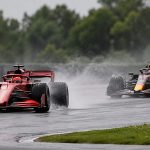
Wet races have not always been as strong for Leclerc as dry races. Still, his race pace is very good. He can also look after his tires well during long runs.
Many experts see Leclerc as a driver with the skill to fight for a world title. Some believe he could have won a title already if he had raced in the best car on the grid.
6. Personal Demeanor and Cultural Resonance
The public perception of Leclerc extends beyond raw lap times into his personal character and brand identity. In an era dominated by carefully managed corporate public relations, Leclerc’s authentic demeanor has built a deep connection with global fans.
- Public Self-Criticism: Leclerc is uniquely transparent regarding his own mistakes, frequently taking direct accountability over team radio or in post-race interviews when errors occur.
- Team Loyalty: Despite recurrent operational setbacks, mechanical failures, and strategic errors by Ferrari, Leclerc has remained deeply committed to the team, enduring team struggles where previous champions became exhausted.
- Authentic Charisma: His humble presentation, high personal appeal, and approachable media presence make him one of the most commercially valuable assets in global sports marketing.
This combination of transparent self-reflection, loyalty to Ferrari, and elite driving potential cements his status as a generational icon. Fans and industry insiders view him as an exceptional talent carrying an iconic team through operational and technical challenges.
Conclusion
The prestige surrounding Charles Leclerc is neither manufactured nor unwarranted. It is built upon elite single-lap speed, exceptional feeder series credentials, proven intra-team dominance over world champions, and an unmatched ability to wring performance out of compromised machinery.
While Ferrari continues its push to deliver a consistently dominant championship vehicle, Leclerc remains the benchmark driver capable of taking the fight to any competitor on the grid.
For brand partners, racing purists, and global sports analysts, Charles Leclerc represents the ultimate synthesis of raw athletic talent, relentless speed, and enduring sporting integrity.