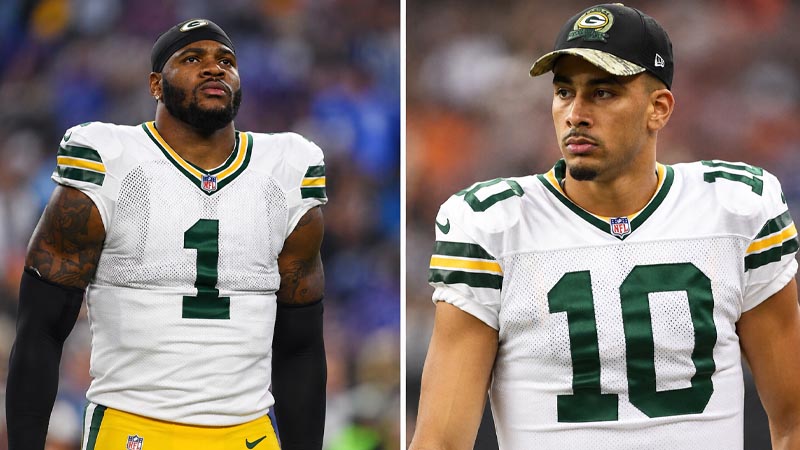
The opening month of the 2026 NFL regular season has presented the Green Bay Packers with an immediate, high-stakes structural challenge.
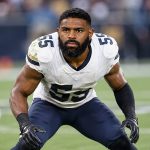
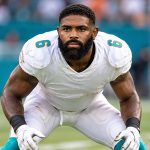
Micah Parsons, the defensive cornerstone and premier pass-rushing disruptor, has been placed on the reserve/PUP list for the first four games due to a knee injury.
This absence strips the defense of its primary engine, shifting the competitive weight entirely onto the shoulders of franchise quarterback Jordan Love and the offense.
Without Parsons anchoring the defensive front, Green Bay is projected to surrender significantly higher yardage and scoring outputs, forcing the team into high-scoring shootouts.
For Love—an elite young passer entering the season under intense MVP scrutiny—the next four games represent a crucial test of team elevation, game-script management, and tactical efficiency.
This analysis explores the strategic, tactical, and psychological implications of this defensive loss and how it fundamentally alters the offensive playbook.
1. The PUP List Reality: Parsons’ Injury and the Immediate Aftermath
The announcement that Micah Parsons will start the 2026 regular season on the reserve/PUP list due to a knee injury sent shockwaves through the league.
By rule, being placed on the PUP list sidelines the star defender for at least the first four games of the regular season, depriving the defensive unit of its most explosive weapon during a critical opening stretch.
Parsons is widely regarded as one of the most destructive defensive forces in modern football. His ability to line up at multiple positions, command double-teams, and consistently disrupt opposing passing games has provided a security blanket for the entire team.
His presence alone dictates how opposing offensive coordinators plan their protections, routinely forcing quarterbacks into rushed decisions, throwaways, and turnovers.
With Parsons sidelined, the pressure immediately shifts to Jordan Love and the Green Bay offense to carry the competitive load.
In the modern NFL, a team’s formula for winning is often balanced between a potent offense and a disruptive pass rush. When one side of that ledger is compromised, the other must over-index to maintain equilibrium.
Love is no longer merely tasked with executing a balanced game plan; he must actively outpace the defensive regression that naturally accompanies the loss of an elite pass-rusher.
2. Defensive Regression and the Rise of the Shootout
The loss of an elite edge rusher is not a minor adjustment; it is a fundamental shift in defensive identity.
Without Micah Parsons anchoring the pass rush, Green Bay’s defense is anticipated to surrender more points and yards early in the season.
A premier pass rush does more than just accumulate sacks; it protects the secondary. When a defense cannot generate consistent, quick pressure with four rushers:
- Extended Coverage Windows: Defensive backs are forced to cover opposing wide receivers for longer durations, leading to coverage breakdowns.
- Increased Blitz Rates: Defensive coordinators must scheme pressure by blitzing extra defenders, leaving fewer players in zone coverage or creating vulnerable single-coverage matchups on the back end.
- Higher Third-Down Conversion Rates: Opposing offenses face fewer negative plays (sacks, tackles for loss) and operate in highly manageable third-down scenarios.
Consequently, Jordan Love must prepare to lead a high-flying offense that can match opposing teams point-for-point in high-scoring shootouts.
Rather than playing with a comfortable lead or relying on the defense to secure critical stops late in games, the Packers must adopt a mentality where every offensive drive is designed to maximize scoring. Field goals may no longer be sufficient; touchdowns will become the benchmark of a successful possession.
This reality alters the tempo and aggressiveness of the offensive game plan. The coaching staff must balance the need to sustain drives and control the clock with the absolute necessity of hitting explosive plays downfield to keep pace with high-scoring opponents.
3. The Passing Volume Surge: Love’s Arm as the Primary Engine
In an ideal offensive environment, a team prefers a balanced attack that blends a robust running game with a highly efficient passing network. However, game scripts are heavily dictated by defensive performance.
Because Green Bay is likely to play from behind or find themselves locked in close, high-scoring contests, they will be forced to lean much more heavily on Love’s arm.
The statistical relationship between defensive regression and quarterback passing volume is clear:
- Chasing Deficits: When a defense surrenders early scores, the offense must abandon slow-developing run plays to save time on the game clock.
- Passing on Neutral Downs: To keep pace with efficient opposing offenses, the play-calling structure must prioritize high-yielding pass concepts even on first and second downs.
- Extended Two-Minute Situations: The team will frequently find themselves executing up-tempo, no-huddle passing series at the end of both halves.
While a spike in passing volume allows Love to put up massive statistical performances, it also exposes him to increased physical wear and tear.
Operating a high-volume passing attack requires precise timing, exceptional offensive line protection, and highly conditioned wide receivers.
The coaching staff must design a pass game that utilizes quick-release concepts, screens, and short-area targets to mitigate the physical toll on Love while still maintaining the capability to push the ball downfield when opportunities arise.
4. Erasing the Cushion: Why Stalled Drives are Now Fatal
One of the greatest benefits of an elite defense is the “margin for error” it provides the offense.
If a quarterback throws an interception, misreads a coverage, or the offense suffers a three-and-out, a stellar defensive unit can mitigate the damage by forcing a quick punt or securing a turnover of their own.
Without Parsons on the field, that vital margin for error is effectively erased. Early-game turnovers, pre-snap penalties that stall drives, or drops on third down carry an incredibly heavy weight.
[Offensive Stalled Drive] ──> [Weaker Defensive Stand] ──> [Opponent Score]
         │                                                        │
         └───> [Elevated Pressure on Next Drive to Match Score] ◄─┘
When the defense lacks its star game-wrecker to bail out the team, every stalled drive is highly likely to result in an opponent score. This reality places an immense cognitive burden on the quarterback. Love must exhibit supreme situational awareness and flawless decision-making:
- Protecting the Ball: Forcing passes into tight windows must be strictly managed. Turnover-worthy plays can lead directly to insurmountable deficits.
- Red-Zone Efficiency: Settling for field goals inside the 20-yard line will feel like a failure. The offense must convert red-zone appearances into touchdowns at a highly elite rate.
- Third-Down Conversions: Moving the chains on third down is no longer just about advancing the ball; it is about keeping the opposing offense off the field to protect a vulnerable Packers defense.
This lack of a safety net means that Love must play highly disciplined, mistake-free football while simultaneously maintaining the aggressiveness required to win high-scoring shootouts. It is one of the most difficult balancing acts for any starting quarterback in the professional ranks.
5. The MVP Crucible: Scrutiny and Roster Elevation
The true measure of an elite NFL quarterback is not how they perform when every variable is perfect, but how they elevate their team when adversity strikes.
National analysts and evaluators widely view Jordan Love as a premier MVP candidate, and this four-game stretch represents his ultimate proving ground.
When a franchise quarterback is surrounded by elite, healthy talent across all three phases of the game, skeptics often attribute their success to the supporting cast.
However, when a superstar defender like Parsons is sidelined, the spotlight intensifies.
Analysts and fans alike will watch closely to see if Love can elevate the entire roster and drag the team to victories despite a compromised defense.
Love has explicitly voiced his desire for a sharp, consistent start to the regular season. A fast start is always beneficial, but in this specific context, it is an absolute necessity while the defensive unit works to find its identity and footing without its primary pass-rusher.
If Love can guide the team through this challenging opening month with a winning record—all while maintaining high-level statistical production and efficiency—it will serve as a massive boost to his MVP resume.
It changes the narrative from “system quarterback” to “franchise elevator,” cementing his status among the absolute tier-one players at his position.
6. Tactical Playbook Adjustments: Protecting the Ball in High-Scoring Environments
To assist Love in navigating this high-pressure period, the coaching staff must implement specific tactical adjustments to the offensive playbook.
The objective is to maximize scoring output while simultaneously shielding the quarterback from excessive turnover opportunities and physical hits.
I. Enhanced Play-Action Integration
Even if the traditional running game is utilized less due to game script, the threat of the run must be maintained. High play-action rates can freeze opposing linebackers and safeties, creating wider throwing lanes for Love on intermediate routes.
This helps maintain high completion percentages and reduces the likelihood of defensive players undercutting passing routes for interceptions.
II. Maximizing Quick-Game Concepts
To counter the increased pass-rush focus that opposing defenses will place on Love, the offense should utilize a heavy dose of quick-game passing.
Slants, hitches, and quick outs get the ball out of Love’s hands in under 2.5 seconds, neutralising opposing pass rushes and keeping the offense ahead of the chains.
III. Strategic Use of the Screen Game
Running back, wide receiver, and tight end screens serve as an extension of the run game.
These plays are highly effective at slowing down aggressive defensive fronts that are teeing off on third-and-long situations, allowing the Packers to pick up chunk yardage with minimal risk.
7. Analytical Comparison: Navigating the Game-Script Shift
To visualize how the loss of a premier pass-rusher like Parsons fundamentally reshapes the environment in which Jordan Love must operate, we can examine the projected shifts in core team metrics:
| Game Attribute | With Micah Parsons (Baseline) | Without Micah Parsons (Projected First 4 Games) | Strategic Implication for Jordan Love |
|---|---|---|---|
| Defensive Yards Surrendered | Moderate / Below League Average | Elevated / Above League Average | Must prepare for sustained opponent drives and rapid scoring. |
| Opponent Scoring Average | Suppressed / Controlled | Higher Points Surrendered | Offense must prioritize touchdowns over field goals to match scores. |
| Offensive Game-Script | Balanced / Clock Management | High-Volume Passing / Trailing | Increased reliance on Love’s arm; elevated passing attempts. |
| Offensive Margin for Error | Generous (Defense forces stops/turnovers) | Minimal / High Stakes | Turnovers and stalled drives carry a heavier, potentially fatal weight. |
| Quarterback Scrutiny | Standard Elite QB Pressure | Elevated MVP Spotlight | Must prove ability to elevate the roster and win independently of defensive support. |
Conclusion
The first four games of the 2026 NFL season will not merely be a test of survival for the Green Bay Packers; they will serve as a defining chapter of Jordan Love’s leadership and quarterback legacy.
The reality of Micah Parsons’ knee injury placing him on the PUP list has stripped the team of its primary defensive shield. The cushion is gone, the margin for error has evaporated, and the game scripts are projected to be fast, chaotic, and high-scoring.
But within this immense challenge lies a historic opportunity. If Love can execute with surgical precision, embrace the high passing volume, protect the football, and navigate these inevitable shootouts successfully, he will do more than just keep Green Bay competitive.
He will solidify his standing as a premier tier-one quarterback, validate his status as a leading MVP candidate, and prove that he can carry a championship-caliber franchise on his back. The football world is watching, and the stage is set for Jordan Love to assert his dominance.