The modern National Football League operates on a razor-thin margin between sustained excellence and missed opportunities.
For the Houston Texans, a franchise that rapidly rebuilt itself into a premier contender, the expectations for the current campaign have reached a fever pitch.
With a roster designed to win immediately, every position group has been scrutinized under a championship lens.
Yet, the most pressing discussion surrounding this team does not involve their defense or their coaching staff. Instead, it centers on the most critical position in professional sports.
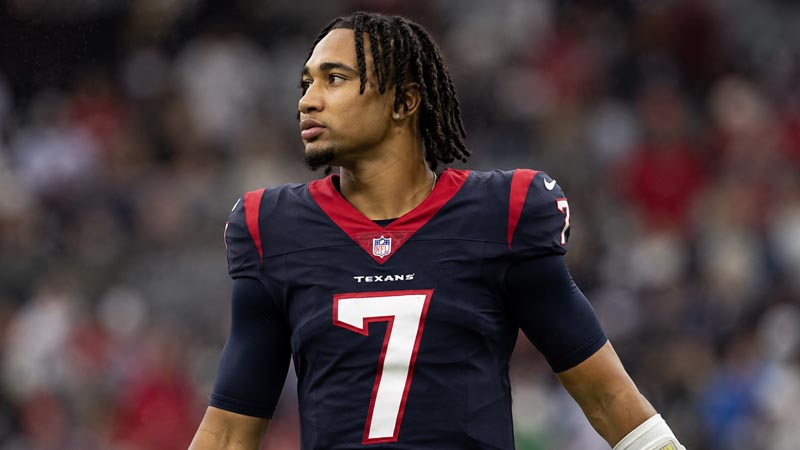
There is a growing consensus among analysts and league observers that quarterback C.J. Stroud has become the primary question mark on an otherwise loaded roster.
While the organization has constructed a championship-caliber foundation capable of competing at the highest level, the stalled trajectory of their young signal-caller has introduced a layer of volatility to their championship aspirations.
The Championship Paradox: A Roster Built to Win Now
In professional football, championship windows are notoriously difficult to open and even harder to maintain. The Texans’ front office recognized their opportunity and aggressively built a high-caliber roster.
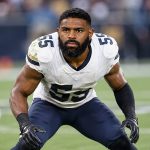
The cornerstone of this championship pursuit is a dominant, aggressive defense anchored by two of the premier edge rushers in the league: Will Anderson Jr. and Danielle Hunter.
This defensive tandem provides Houston with an elite pass rush capable of disrupting opposing passing games without relying on heavy blitz packages.
Supported by a disciplined secondary and a physical linebacker corps, the defense is widely viewed as ready to contend at a Super Bowl level.
| Roster Component | Key Contributors | Championship Readiness Rating |
|---|---|---|
| Pass Rush | Will Anderson Jr., Danielle Hunter | Elite / Championship-Ready |
| Secondary & Linebackers | Depth-focused, highly disciplined | High / Contender Level |
| Quarterback Position | C.J. Stroud | Question Mark / Stalled Trajectory |
This creates a fascinating tactical paradox. Traditionally, young quarterbacks are hampered by weak defenses or a lack of supporting talent, forced to play heroic football to keep their teams competitive. In Houston, the dynamic is reversed.
The defensive unit is prepared to carry the team to a championship today, meaning the ultimate success of the team rests squarely on whether the quarterback can play complementary, highly efficient football.
Deconstructing the Sophomore Slump: What the Data Shows
To evaluate whether the concerns surrounding Stroud are justified, we must examine the shift in his on-field performance.
His 2023 rookie season was a spectacular display of anticipation, accuracy, and poise, earning him league-wide praise and setting an incredibly high baseline for his career. However, his development has stalled during his sophomore campaign.
This regression is not merely a subjective observation; it is reflected in key performance metrics:
- Rising Interception Totals: During his rookie year, Stroud was celebrated for his elite decision-making and ball security. In his sophomore season, however, forced throws into tight windows and misread coverages have led to a noticeable spike in turnovers.
- Heavy Sack Numbers: Poise in the pocket was once a hallmark of Stroud’s play. Recently, he has shown a tendency to hold onto the ball too long, failing to navigate collapsing pockets or execute quick check-downs, resulting in high sack volumes that stall offensive drives.
- Drop in Overall Production: Across the board—including passing yards per game, touchdown-to-interception ratios, and third-down conversion rates—his statistical output has experienced a downward trend compared to his rookie campaign.
When a rookie quarterback enters the league, defensive coordinators have limited tape on their specific weaknesses, pre-snap tells, and mechanical preferences.
By a quarterback’s second year, professional coaching staffs have compiled exhaustive film libraries.
Opponents have adjusted to Stroud’s preferred passing lanes and timing structures, forcing him to adapt to post-snap coverage rotations that he did not regularly face during his rookie season.
The Great Debate: Systemic Failures vs. Individual Accountability
The decline in offensive efficiency has sparked intense debate among fans on platforms like r/Texans and within national media circles.
The arguments generally divide into two distinct viewpoints: those who blame the surrounding offensive infrastructure, and those who believe the quarterback must take ultimate responsibility for the unit’s output.
                  ┌─────────────────────────────────────────┐
                  │      C.J. Stroud's Sophomore Decline    │
                  └────────────────────┬────────────────────┘
                                       │
                     ┌─────────────────┴─────────────────┐
                     ▼                                   ▼
        【 Systemic Challenges 】            【 Individual Accountability 】
      - Offensive line leaks           - Elevated franchise expectations
      - Key injuries (Higgins)         - Costly turnovers under pressure
      - Stagnant running game          - Slow pocket processing speeds
The Supporting Cast Argument
Proponents of this view argue that no quarterback, regardless of talent, can succeed under the current operational conditions in Houston. They point to several critical issues:
- Persistent Offensive Line Leaks: Stroud has been subjected to consistent pressure, particularly from the interior of the line. When a quarterback is forced to throw off-platform or run for his life immediately after taking the snap, timing-based offensive designs break down.
- Injuries to Crucial Weapons: The loss of key targets, specifically playmakers like Jayden Higgins, has severely impacted the passing game. Higgins’ ability to stretch the field and win matchups on third down provided Stroud with a reliable security blanket. Without him, opposing defenses can compress their coverages and focus on shutting down shorter passing concepts.
- A Weak Running Game: A balanced offense relies on the threat of the run to keep defenses honest. Houston’s struggle to establish a consistent ground attack has put the offense in predictable passing situations. This allows defensive coordinators to unleash aggressive pass rushes and drop extra defenders into coverage, leaving Stroud in highly unfavorable third-and-long scenarios.
The Individual Accountability Argument
Conversely, a more critical group of observers argues that the standard for an elite franchise quarterback requires him to overcome these deficiencies.
- The Franchise Standard: Modern NFL franchises commit significant resources to the quarterback position with the expectation that the player will elevate the roster, not merely ride its coattails. Great quarterbacks must mitigate offensive line struggles through rapid pre-snap adjustments, quick processing, and throwing receivers open.
- Decision-Making and Turnovers: While pressure can explain physical mistakes, it does not excuse poor decisions. Critics argue that Stroud must clean up costly turnovers and make smarter business decisions on the field—such as throwing the ball away to live for another down rather than forcing a pass into double coverage or taking a coverage sack.
- Poise Under Pressure: Championship quarterbacks are defined by how they perform when the game script breaks down. To recapture his rookie form, Stroud must demonstrate better pocket navigation, improved internal clock management, and calmer decision-making when his initial reads are taken away.
Why “Above-Average” Play is Enough for a Super Bowl Run
The debate over Stroud’s play often overlooks a crucial reality: he does not need to play like an MVP for the Texans to win a championship.
Historically, several teams with dominant defenses have won Super Bowls with highly efficient, mistake-free quarterback play.
The 2000 Baltimore Ravens ( Trent Dilfer), the 2002 Tampa Bay Buccaneers (Brad Johnson), and the 2015 Denver Broncos (a late-career Peyton Manning) all captured titles because their quarterbacks prioritized ball security and stayed on schedule, allowing their historic defenses to dominate the game.
With players like Will Anderson Jr. and Danielle Hunter leading the defense, the Texans possess a similar blueprint. If Stroud can focus on a few key areas, Houston remains a formidable Super Bowl threat:
- Minimizing Negative Plays: The primary goal for the offense must be avoiding self-inflicted wounds. Reducing turnovers and taking fewer drive-killing sacks will keep the Texans in a position to win low-scoring, defensive battles.
- Third-Down Efficiency: Rather than focusing on deep, low-percentage explosive plays, the passing game should focus on high-percentage, short-to-intermediate targets to sustain drives and control the clock.
- Red Zone Execution: When the defense or special teams generate short fields, the offense must cash in on those opportunities with touchdowns rather than settling for field goals.
Analysts emphasize that if Stroud can simply limit mistakes and play at an efficient, above-average level, Houston’s elite defensive unit is more than capable of carrying the team to a Super Bowl championship.
The Financial Reality: Playing for the Extension
Beyond the immediate goal of winning a Super Bowl, there is a significant long-term business aspect to Stroud’s performance.
The NFL quarterback market has experienced unprecedented growth, with top-tier players securing massive, fully guaranteed extensions early in their careers.
Stroud finds himself at a critical career juncture, navigating these high-stakes expectations without the long-term financial security his high-draft peers have already secured.
┌────────────────────────────────────────────────────────┐
│               The Financial Crossroads                 │
├────────────────────────────────────────────────────────┤
│  - Peers from draft class have secured extensions       │
│  - Stroud enters critical career juncture without one  │
│  - Must reverse downward statistical trend to secure    │
│    long-term financial future with the franchise       │
└────────────────────────────────────────────────────────┘
The Texans’ front office must evaluate whether his current struggles are a temporary sophomore adjustment or an indication of his long-term ceiling.
For Stroud, reversing his downward statistical trend is not just about silencing critics—it is a financial necessity to secure a market-setting contract extension with the franchise.
The Final Verdict: A Legacy-Defining Crossroads
The Houston Texans stand at a critical crossroads. They have successfully assembled an elite, championship-ready roster supported by a dominant defense. Yet, their ultimate success remains tied to the development and performance of C.J. Stroud.
The debate surrounding his play highlights the fine line between supporting-cast limitations and individual quarterback accountability.
Whether Stroud can adjust to defensive schemes, protect the football, and deliver efficient play will define both the Texans’ Super Bowl window and his own financial future.
The stage is set, the roster is loaded, and the path forward is clear. The coming weeks will determine whether Stroud can rise to the challenge and lead Houston to its first Lombardi Trophy, or if this promising season will serve as a cautionary tale of a championship window cut short.