Modern NFL offenses are built around the passing game. Quarterbacks are increasingly asked to attack defenses through sophisticated route combinations, pre-snap motion, spread formations, and explosive downfield throws.
As passing offenses continue to evolve, cornerbacks have become some of the most valuable and demanding players on the defensive side of the ball.
The cornerback is primarily responsible for covering opposing receivers, disrupting passing lanes, creating turnovers, and defending the perimeter against the run.
Although pass rushers can pressure the quarterback, that pressure becomes far more effective when cornerbacks can prevent receivers from getting open.
Few positions require such a demanding combination of speed, technique, awareness, and mental toughness.
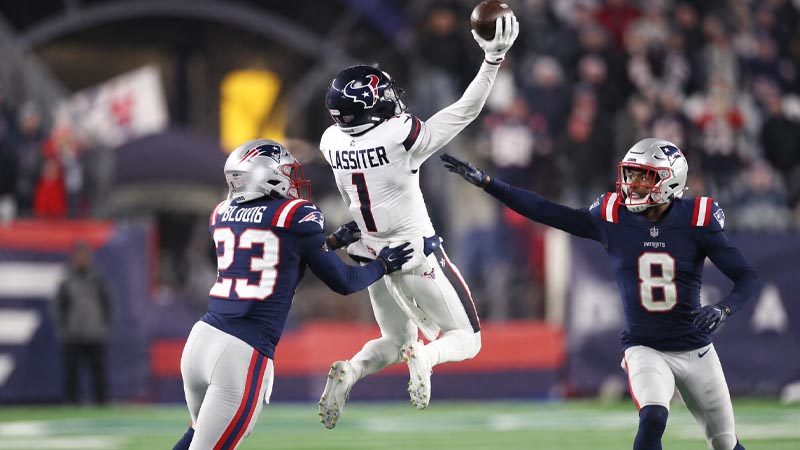
A wide receiver knows where a route is going before the snap, while the cornerback must react to it as it develops. A fraction of a second, a misplaced foot, or a missed read can turn tight coverage into a 40-yard completion.
That razor-thin margin for error is what makes elite cornerback play so difficult—and so valuable.
Where Cornerbacks Line Up and How Their Roles Change
Cornerbacks are not simply interchangeable defenders standing outside the formation. Their responsibilities change according to offensive personnel, defensive scheme, field position, and matchup.
Strong-Side Cornerback
The strong side of an offensive formation traditionally refers to the side containing the tight end. A cornerback aligned there may face larger receivers and must often contribute more aggressively to run defense.
This requires a combination of coverage ability, physicality, and tackling strength. The defender must be capable of maintaining coverage while also preventing outside runs from reaching the perimeter.
Weak-Side Cornerback
The weak side is generally opposite the tight end. This cornerback may have fewer immediate run-support responsibilities and can sometimes be used as the defense’s premier coverage specialist.
In man coverage, the weak-side corner may be asked to follow an opponent’s best receiver without safety assistance. That requires exceptional acceleration, change-of-direction ability, anticipation, and confidence.
Following Receivers in Motion
Modern offenses constantly use motion and formation shifts to create favorable matchups. When a receiver moves across the formation, defensive backs must communicate and adjust their responsibilities instantly.
Some defensive systems use a cornerback to shadow a particular receiver, allowing the defense to keep its best coverage defender attached to the offense’s most dangerous weapon.
Nickel Cornerback
When a defense adds a fifth defensive back, that player is commonly called the nickel corner.
The nickel typically operates inside against slot receivers. Because slot receivers have space to attack both inside and outside, nickel defenders need excellent lateral movement, acceleration, anticipation, and tackling ability.
Dime Cornerback
A defense may add a sixth defensive back in obvious passing situations, creating a dime package.
The dime defender provides another coverage body against multiple-receiver formations and can help protect against deep or intermediate passing concepts.
The Physical and Mental Requirements of an Elite Cornerback
A great cornerback needs far more than straight-line speed. The position demands a rare combination of athletic ability, technical precision, football intelligence, and emotional discipline.
| Key Trait | Tactical Application | Primary Objective |
|---|---|---|
| Speed & Fluidity | Match vertical routes and accelerate after breaks | Prevent explosive completions |
| Quick Feet | Maintain balance during transitions and route breaks | Stay attached to receivers |
| Route Recognition | Read receiver alignment, release, hips, and tendencies | Anticipate routes |
| Ball Skills | Locate, contest, deflect, and intercept passes | Create turnovers and incompletions |
| Tackling Ability | Defend screens, outside runs, and yards after catch | Limit offensive gains |
| Mental Toughness | Recover immediately after giving up a play | Maintain consistency |
The Backpedal
The backpedal is one of the foundational techniques of cornerback play. Instead of immediately turning and running, the defender moves backward while keeping the receiver in front of them.
This allows the cornerback to maintain a cushion while reading the receiver’s release.
The critical moment comes when the receiver changes direction. The cornerback must quickly open the hips, plant, transition, and accelerate without giving the receiver separation.
Reading the Receiver’s Hips
Elite cornerbacks do not simply stare at a receiver’s eyes, head, or hands. Those areas can be used to deceive defenders.
Instead, cornerbacks often focus on the hips and lower body, because a receiver’s hips provide important clues about the direction of an actual route break.
This allows experienced defenders to anticipate cuts rather than simply reacting after the receiver has already changed direction.
The Importance of a Short Memory
Cornerback may be one of football’s most psychologically demanding positions.
Even an elite defender will occasionally surrender a completion. The key is what happens on the next snap.
Great cornerbacks develop a short memory. They acknowledge the mistake, learn from it, and immediately move forward. Dwelling on a previous play can create hesitation—and hesitation can be fatal in coverage.
The Two Foundations of Coverage: Man vs. Zone
Most cornerback responsibilities fall within two broad coverage philosophies: man coverage and zone coverage.
1. Man-to-Man Coverage
In man coverage, the cornerback is responsible for a specific receiver. The defender must track that receiver throughout the play while preventing separation.
Press Coverage
In press coverage, the cornerback aligns close to the receiver before the snap.
At the snap, the defender attempts to disrupt the receiver’s release with legal contact within the first five yards. The objective is to destroy the timing between the receiver and quarterback.
A successful press can delay a route long enough for the pass rush to reach the quarterback.
Off or Soft Coverage
In off coverage, the cornerback begins several yards away from the receiver.
Instead of immediately attacking the release, the defender maintains a cushion and attempts to keep the receiver in front of them.
The primary objective is often to prevent explosive plays while allowing a short completion if necessary.
2. Zone Coverage
In zone coverage, the cornerback is responsible for an area of the field rather than one specific receiver.
The defender drops into the assigned zone, reads the quarterback and developing routes, and reacts to receivers entering the area.
Zone coverage can give defenders opportunities to see the quarterback and break toward the football. However, it also requires excellent communication because receivers can cross between different defensive zones.
3. Leverage: Controlling the Receiver’s Options
Leverage describes how a cornerback positions their body in relation to the receiver and the rest of the defense.
Outside Leverage
The defender positions themselves toward the outside, using the sideline as an additional defender.
This encourages the receiver to work inside, where other defenders may provide help.
Inside Leverage
The defender protects the inside portion of the field and encourages the receiver toward the sideline.
The boundary becomes a natural obstacle, reducing the amount of space available to the receiver.
The best leverage technique depends on the defensive scheme, route, down-and-distance situation, and location of safety help.
Understanding Cover 2, Cover 3, and Cover 4
Cornerbacks do not operate independently. Their responsibilities are closely connected to the safeties and linebackers around them.
Cover 2
Cover 2 uses two deep safeties, with each responsible for approximately half of the deep field.
The cornerbacks generally work underneath, defending the flat and short-to-intermediate areas while helping contain outside runs and quick passes.
One challenge for Cover 2 is defending certain throws into the areas between the cornerbacks and deep safeties.
Cover 3
Cover 3 divides the deep field into three primary sections.
The two cornerbacks and a safety typically handle the deep portions of the field while other defenders work underneath.
This structure provides a balanced approach against both the run and pass, although offenses can attack specific intermediate areas by creating conflicts between defenders.
Cover 4 — Quarters
Cover 4, often called Quarters coverage, uses four defensive backs to divide the deep field into four sections.
The two cornerbacks and two safeties each have deep responsibilities.
Although Cover 4 provides strong protection against vertical passing attacks, the defense must carefully manage the underneath areas and run support.
Cornerbacks Are Also Part of the Run Defense
The cornerback’s job does not end when the quarterback hands the ball to the running back.
Outside runs such as sweeps, stretches, and tosses can quickly reach the perimeter. The cornerback may be the final defender standing between the ball-carrier and open grass. One of the cornerback’s most important run-defense responsibilities is to set the edge.
The defender must maintain outside position and prevent the running back from bouncing the play toward the sideline. Ideally, the corner forces the runner back toward the middle of the field, where additional defenders can make the tackle. Cornerbacks must also defend screen passes.
Bubble screens, wide receiver screens, and quick passes can function almost like running plays. The cornerback must recognize the play quickly, defeat the receiver’s block, and make the tackle before the play develops into a major gain.
The Legends Who Redefined Cornerback Play
The history of the NFL cornerback position is filled with players who changed how coaches viewed coverage.
Deion Sanders
Deion Sanders became the ultimate symbol of shutdown coverage.
His extraordinary speed, recovery ability, confidence, and ball skills allowed him to challenge quarterbacks to throw in his direction. His ability to eliminate receivers from portions of the field fundamentally changed defensive strategy.
Charles Woodson
Charles Woodson was one of the most versatile defensive backs in football history.
He could cover receivers, play near the line of scrimmage, blitz, tackle, and create turnovers. His ability to contribute in multiple phases made him one of the defining defensive players of his generation.
Darrelle Revis
Darrelle Revis became synonymous with the concept of a lockdown corner.
At his peak, Revis could isolate himself against elite receivers with minimal safety assistance. The famous term “Revis Island” captured the idea that an offense could effectively lose one receiving option simply because Revis was covering him.
The Hall of Fame Standard
The position’s historical importance is reflected by the many legendary defensive backs whose careers have earned Hall of Fame recognition, including Mel Blount, Champ Bailey, Ty Law, Night Train Lane, Mike Haynes, Lem Barney, and Dick LeBeau.
These players demonstrated that elite cornerback play can influence an entire defensive system.
Why an Elite Cornerback Changes an Entire Defense
A great cornerback does more than stop individual receivers. They can fundamentally change what a defensive coordinator is capable of calling.
If a cornerback can consistently handle an elite receiver in man coverage, the defense can allocate additional resources elsewhere.
Safeties can rotate toward the middle. Linebackers can focus on the running game. Defensive coordinators can send creative blitzes without leaving the entire secondary exposed. Elite coverage also complements the pass rush.
If receivers cannot immediately get open, the quarterback must hold the ball longer. Even an additional fraction of a second can give defensive linemen enough time to collapse the pocket and produce a sack.
That relationship is crucial:
Coverage buys time for the pass rush, while the pass rush reduces the time available to the quarterback.
This is why elite cornerbacks are far more than defensive players who simply “cover receivers.” They are strategic pieces capable of influencing the entire architecture of an NFL defense.
Conclusion: The Ultimate One-on-One Defender
An NFL cornerback is far more than a player assigned to follow wide receivers.
They are coverage specialists, route diagnosticians, perimeter defenders, tacklers, communicators, and strategic weapons.
Their ability to eliminate separation can change the way an offense calls plays. Their tackling can prevent short passes from becoming explosive gains.
Their coverage can give pass rushers the extra time needed to reach the quarterback. And their ability to create interceptions can completely change the momentum of a game.
In an NFL increasingly defined by passing efficiency and explosive plays, the elite cornerback remains one of the defense’s most powerful assets—the player capable of turning the quarterback’s greatest advantage, the passing game, into a calculated risk.