In the high-stakes environment of the NFL, the battle for dominance begins long before the ball is actually snapped.
While fans often focus on the physical speed of wide receivers or the raw power of offensive linemen, a significant portion of a game’s outcome is decided in the tension-filled seconds at the line of scrimmage.
At the heart of this pre-snap psychological warfare is the hard count—a sophisticated, deceptive strategy used by quarterbacks to manipulate the defense and gain a competitive edge.
Understanding the nuances of the hard count is essential for any serious student of the game.
It is not merely a player shouting louder; it is a calculated disruption of rhythm designed to force errors, gather intelligence, and create “free” opportunities for the offense.
What Exactly is a Hard Count?
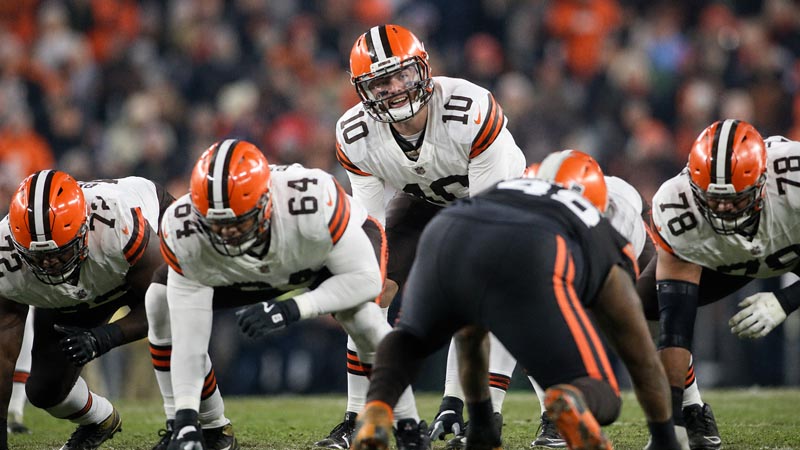
At its core, a hard count is a deceptive tactic where a quarterback intentionally alters their standard voice rhythm, volume, and inflection when calling out the snap cadence.
Every quarterback has a “primary” or “soft” cadence—a repeatable sequence of words and rhythms that the offensive unit uses to synchronize their movements. For example, a standard cadence might be a rhythmic “Set, Hut!”.
A hard count breaks this expectation. The quarterback might accent a specific syllable, repeat a command unexpectedly, or add an unusual pause.
By shifting from a predictable rhythm to an irregular, accented cadence, the quarterback aims to trick a defensive player into crossing the neutral zone before the ball is legally snapped.
The effectiveness of the hard count relies on the “on two” concept. In a standard play, the ball might be snapped on the first “Hut.”
In a hard count situation, the quarterback might call the primary cadence and then add a secondary, much more forceful “HUT!” shortly after.
The defense, primed to react to the first sound, often jumps the line, while the offense—who has been briefed on the plan in the huddle—remains perfectly still.
The Strategic Objectives: Beyond the Five-Yard Penalty
While the most visible result of a successful hard count is a five-yard penalty against the defense, elite quarterbacks use this tool for much deeper strategic purposes.
1. Information Gathering and “Tipping the Hand”
One of the most valuable aspects of the hard count is its ability to force the defense to reveal its intentions. Defensive coordinators spend all week disguising their coverages and blitzes.
However, when a quarterback uses a hard count, a linebacker might “creep” toward the line of scrimmage, confirming a planned blitz.
Similarly, a safety might rotate too early, exposing the coverage shell (such as shifting from a single-high safety to a two-deep look).
This pre-snap intelligence allows the quarterback to adjust protections or change the play entirely to exploit the newly revealed weakness.
2. Disrupting the Defensive Pass Rush
Edge rushers and defensive tackles are trained to launch themselves into the backfield at the earliest possible legal instant. Many of them try to “time” the quarterback’s rhythm rather than watching the ball itself.
By varying the cadence with a hard count, a quarterback introduces a seed of doubt. If a defender hesitates for even a fraction of a second to ensure they aren’t jumping offside, it gives the offensive tackle a massive advantage in establishing their block.
3. Situational Leverage: Fourth-and-Short
The hard count is perhaps most famous for its use in fourth-down situations. When an offense only needs a yard or two to keep a drive alive, they will often line up with no intention of actually snapping the ball.
The quarterback will unleash his most convincing hard count, hoping to “gift” his team a first down via a defensive penalty.
If the defense stays disciplined and the play clock nears zero, the offense will simply take a timeout or accept a five-yard delay of game penalty before punting.
Decoding the Rules: The Four Neutral Zone Penalties
To truly appreciate the hard count, one must understand the distinct penalties that can occur at the line of scrimmage.
Fans and even some announcers often use these terms interchangeably, but the 2026 NFL Rulebook makes clear distinctions based on movement, contact, and timing.
| Penalty Name | Triggering Action | Administrative Result |
|---|---|---|
| False Start | An offensive player makes an abrupt movement or simulates the start of a play. | Dead Ball: The play is stopped immediately. 5-yard penalty against the offense. |
| Encroachment | A defender enters the neutral zone and makes contact with an offensive player or the ball before the snap. | Dead Ball: The play is stopped immediately. 5-yard penalty against the defense. |
| Neutral Zone Infraction | A defender enters the neutral zone and has an unimpeded path to the QB, or causes a nearby offensive player to react. | Dead Ball: The play is stopped immediately. 5-yard penalty against the defense. |
| Offside | A defender is in or beyond the neutral zone at the exact moment the ball is snapped. | Live Ball: The play often continues. 5-yard penalty against the defense; offense can decline the penalty if the play result is better. |
The critical takeaway for fans is that sound is legal, but movement is restricted. A quarterback can scream as loud as they want, but if they or another offensive player uses a sudden head bob or shoulder jerk to trick the defense, the officials will call a false start on the offense.
The “Free Play” Misconception
One of the most exciting moments in football is when a defender jumps across the line, and the quarterback immediately launches a deep pass.
This is known as a “free play” because even if the pass is intercepted, the offense can simply choose to accept the offside penalty and erase the turnover.
However, there is a major misconception that every defensive jump results in a free play. In reality, officials are instructed to blow the whistle and stop the action immediately if:
- The defender makes contact with an opponent (Encroachment).
- The defender has a clear, unimpeded path to the quarterback, creating a safety risk (Neutral Zone Infraction).
- The defender’s movement causes an immediate reaction from an offensive lineman.
A quarterback must be disciplined enough to know when the play is actually “live” before taking a reckless shot downfield, as throwing a pick on a play where no flag was thrown—or where the defense legally retreated before the snap—can be catastrophic.
Advanced Cadence Techniques: Dummy and Silent Counts
As defenses have become better at scouting quarterback tendencies, the hard count has evolved into a more complex system of communication.
The Dummy Count
A dummy count involves the quarterback using specific words or phrases that are intentionally designed not to be the snap signal.
These are used to test the defense’s discipline. You might hear a quarterback yell “Rihanna!” or “Yellow!” or “Turbo!”. To the defense, these sound like urgent commands; to the offense, they are simply background noise.
The Silent Count
In extremely loud away stadiums, vocal communication becomes impossible. Teams then switch to a silent count, where the quarterback uses physical cues—such as a leg lift or a tap on the center’s hip—to signal when the ball should be snapped.
While this removes the “vocal” element of a hard count, offensive lines can still vary the timing of the snap within the silent system to keep the pass rush off-balance.
Mastery at the Line: The Aaron Rodgers Effect
No discussion of the hard count is complete without mentioning veteran masters like Aaron Rodgers. Rodgers has turned the pre-snap cadence into a weapon, frequently drawing defenses offside to earn free plays or critical first downs.
During the 2020 NFL season, when stadiums were at minimal capacity due to global circumstances, Rodgers’ hard count became even more lethal.
Without crowd noise to mask his voice, he was able to use subtle inflections and complex dummy counts to completely dismantle defensive timing.
His success demonstrates that the hard count is not just a trick—it is a skill that requires years of preparation and perfect synchronization between the quarterback and his offensive line.
Risks and Pitfalls: When the Tactic Fails
The hard count is a double-edged sword. Its primary risk is “friendly fire”—when the quarterback’s own teammates are fooled by the deception and jump early, resulting in a five-yard false start penalty.
This is why absolute discipline and comfort within the offensive unit are required. If a young quarterback tries to use a complex hard count with a rotating offensive line that hasn’t practiced it, they are often more likely to penalize themselves than the defense.
How to Spot a Hard Count as a Viewer?
When watching a game on television, you can identify a hard count by looking for these clues:
- Listen for Rhythm Shifts: Do not just listen for volume. Listen for a cadence that feels “off-beat” or has sudden, sharp accents.
- Watch the Play Clock: If the offense is in a fourth-and-short situation and the clock is ticking under five seconds while the QB is still yelling, they are almost certainly trying to draw the defense offside before taking a timeout.
- Observe the Linemen: If a defender crosses the plane of the ball but the offensive line remains frozen like statues, they have successfully executed their part of the hard count.
The Final Takeaway
The hard count is a testament to the fact that NFL football is as much a mental game as it is a physical one. It is a tool for controlled information gathering and tactical deception.
When executed with precision, it rewards a disciplined offense with free yardage and defensive exposure; when it fails, it serves as a reminder of the razor-thin margins for error at the professional level.
For the next generation of players and fans alike, mastering the nuances of the cadence is a vital step in understanding how the game is truly won and lost at the line of scrimmage.