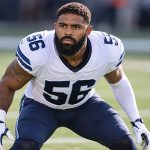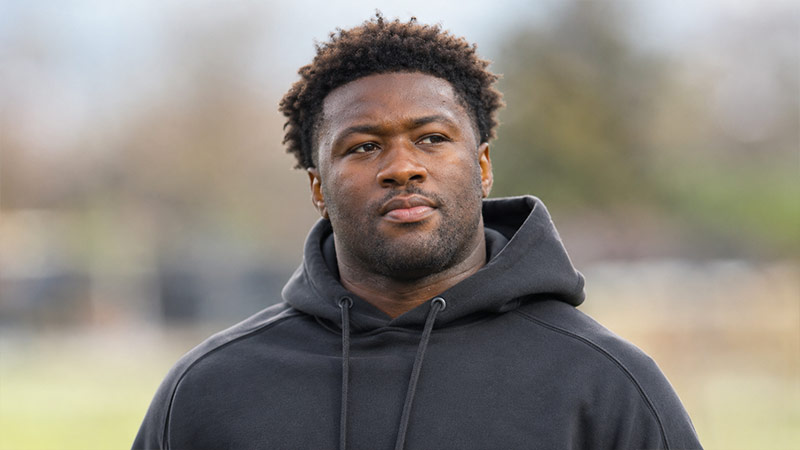
The mid-season trade of an All-Pro linebacker is a rare occurrence in modern professional football, making the movement of Roquan Smith one of the most widely discussed roster management decisions in recent years.
On November 1, 2022, the Chicago Bears officially traded linebacker Roquan Smith to the Baltimore Ravens.
This blockbuster move was driven by a fundamental breakdown in contract extension negotiations and a deliberate decision by Chicago’s new front office to commit fully to a comprehensive roster rebuild.
To understand why a franchise would part ways with an elite defensive anchor in his prime, one must evaluate the financial, strategic, and tactical pressures that shaped the decision.
The Anatomy of a Contract Impasse
Self-Representation and Negotiation Mechanics
A major factor in the split between Roquan Smith and the Chicago Bears was the structure of the contract negotiations themselves.
Smith chose to represent himself without an agent during extension discussions with Bears General Manager Ryan Poles. Negotiating directly with club leadership without an intermediary can introduce distinct communication and valuation challenges.
Throughout these contract extension talks, Smith and General Manager Ryan Poles were unable to find common ground on a long-term agreement.
When an elite player negotiates without an agent, disputes over contract structure and market positioning can quickly become public, impacting the ongoing relationship between the front office and the player.
Contract Structure Disputes: Backloading and De-escalators
The failure to reach an agreement stemmed from significant structural differences in how the contract proposals were formatted.
Smith publicly stated that the team’s contract offer did not value him properly. Specifically, he noted that Chicago’s proposal was heavily backloaded and contained unfavorable de-escalator clauses.
In professional sports contract design, backloaded deals place a higher percentage of total compensation in the later years of the agreement, which provides teams with financial flexibility but reduces immediate guaranteed security for the player.
Furthermore, de-escalator clauses reduce salary payouts if specific performance metrics or attendance thresholds are not met. Smith viewed these provisions as unacceptable for a player of his caliber, leading to an intractable stalemate.
The Public Trade Request and Pre-Season Hold-In
As negotiations stalled during the summer leading into the season, the dispute reached a public turning point. On August 9, 2022, Smith publicly requested a trade from the Chicago Bears.
Following his trade request, Smith staged a brief hold-in during training camp, attending team activities but abstaining from full practice participation.
Although he eventually ended his hold-in to play out the final year of his rookie contract with Chicago, the underlying core dispute remained entirely unresolved.
Playing under the final year of a rookie deal without a long-term extension placed both the player and the franchise on a temporary holding pattern that ultimately culminated in the deadline deal.
Strategic Rationale: The Mechanics of an Organizational Rebuild
Front-Office Philosophy and Positional Valuation
When General Manager Ryan Poles and the new front office took over management of the Chicago Bears, they embarked on a strategic pivot toward a full roster overhaul.
In building a sustainable roster under modern salary cap constraints, front offices must assign specific economic values to different positional groups.
Off-ball linebackers, while vital to defensive leadership and tackling consistency, generally receive lower financial prioritization in modern roster building compared to premium positions such as quarterbacks, offensive tackles, edge rushers, and perimeter cornerbacks.
Paying top-of-market salary to an off-ball linebacker during the early stages of a complete organizational reset did not align with the Bears’ macro-level rebuilding strategy.
Asset Maximization vs. Compensatory Draft Risk
From a strict asset-management standpoint, Chicago faced a strict deadline driven by Smith’s pending free agency at the end of his rookie contract.
Had the Bears kept Smith through the remainder of the season without reaching an extension, he could have walked in free agency.
While teams losing high-priced free agents can sometimes receive compensatory draft picks in subsequent drafts, compensatory picks are heavily delayed and restricted to late-round status, typically at the end of the third round at best.
Rather than risking losing an elite talent for a minimal late compensatory pick, Chicago chose to proactively trade him to maximize draft compensation and secure immediate high-value assets for their rebuild.
Dissecting the Trade Return: Evaluating Chicago’s Yield
Draft Capital and Player Compensation
On November 1, 2022, the deal was finalized between the Chicago Bears and the Baltimore Ravens. In exchange for trading Roquan Smith, Chicago received a structured compensation package consisting of draft capital and a veteran roster player:
- A 2023 Second-Round Draft Pick
- A 2023 Fifth-Round Draft Pick
- Linebacker A.J. Klein
This package allowed Chicago to immediately replenish its draft asset pool, converting an expiring player contract into multiple draft selections to support their defensive rebuilding blueprint.
Long-Term Draft Capital Utilization
The value of any trade is ultimately measured by how acquired draft capital is converted into long-term roster talent. Chicago utilized the acquired picks in the 2023 NFL Draft as follows:
- Gervon Dexter (Defensive Tackle): The Bears utilized the acquired 2023 second-round draft pick to select defensive tackle Gervon Dexter, addressing a central need along their interior defensive line.
- Noah Sewell (Linebacker): The Bears utilized the acquired 2023 fifth-round draft pick to select linebacker Noah Sewell, adding depth and youth to their linebacker corps on a cost-controlled rookie contract.
- A.J. Klein (Linebacker): Veteran linebacker A.J. Klein was included as part of the initial trade transaction but was subsequently waived by Chicago.
Through these moves, the front office converted a single high-cost contract situation into multiple young defensive players under long-term rookie scale deals.
Critical Executive Takeaways and Strategic Lessons
1. Contract Structure Alignment Is Essential
When negotiating complex long-term agreements, alignment between player expectations and front-office valuation models is non-negotiable. The inclusion of backloaded structures and de-escalators can alienate star players if not paired with sufficient guaranteed money.
2. Positional Economics Drive Roster Construction
Modern sports franchises must make difficult quantitative choices regarding salary allocation. Allocating top-of-market financial resources to non-premium positions can constrain flexibility during a full roster overhaul.
3. Proactive Asset Management Prevents Value Decay
Holding an expiring asset into free agency often leads to diminished returns. By executing the trade prior to the mid-season deadline, Chicago successfully converted a pending free agent into second- and fifth-round draft assets.
Conclusion
The trade of Roquan Smith represents a textbook case study in organizational strategy, salary cap management, and asset optimization during a professional sports rebuild.
While parting ways with an elite defensive leader is always a challenging decision for a franchise, the Chicago Bears prioritized long-term roster construction over short-term talent retention.
By recognizing the contract impasse, avoiding the risk of uncompensated free-agent loss, and securing meaningful draft capital, Chicago executed a strategic reset designed to reshape their defense for years to come.