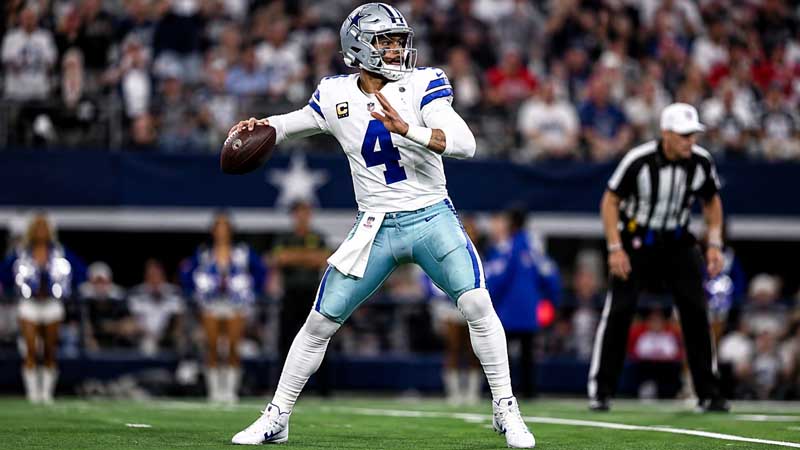
In the theater of professional sports, few roles carry the same strategic weight, public pressure, and intellectual complexity as the quarterback in American football.
Often described as the “field general” of the offense, the quarterback acts as the central hub through which every offensive action must pass.
They touch the ball on nearly every single play, dictating whether the offense will execute a pass, orchestrate a running play, or have the quarterback run the ball themselves to move the chains.
Yet, to define the quarterback simply by their physical output is to miss the true nature of the position. In modern sports, this role is a profound exercise in crisis management, split-second decision-making, and organizational leadership under extreme duress.
When a team succeeds, the quarterback is elevated to hero status; when a team fails, they shoulder the brunt of the public blame. It is an asymmetrical loop of high responsibility and unmatched scrutiny, requiring an athlete who is equal parts chess grandmaster and elite physical competitor.
To understand what a quarterback truly does in the NFL, we must strip away the stadium noise and dissect the position down to its historical roots, its strict operational timeline, its physical demands, and the cognitive load required to survive on the gridiron.
The Historical Evolution of the Offense
The modern quarterback position did not emerge overnight; rather, it is the result of over a century of tactical adjustments, rule innovations, and structural transformations.
The Father of American Football
In the 1870s, Walter Camp began refining the rules of rugby, laying down the foundational elements of American football.
By reducing the number of active players on the pitch from 15 to 11, establishing a defined line of scrimmage, and creating the initial concept of the quarterback position, Camp established a highly structured framework that diverged completely from rugby’s continuous lateral play.
In these early years, however, the quarterback looked vastly different from what they do today. The forward pass did not exist in any meaningful capacity, meaning the quarterback operated primarily as another running option.
They were expected to receive a lateral or a direct handoff and run into the defensive line, relying on sheer physical force rather than downfield accuracy.
The T-Formation Paradigm
As coaches realized the limitations of compressed, run-only offenses, structural innovations began to reshape the field. The introduction of the T-formation revolutionized offensive design.
In this setup, the quarterback lined up directly behind the center to take the snap, rather than taking it from several yards back in a deep Single T or single-wing alignment.
By the 1940s, this formation was adopted across the professional landscape. Placing the quarterback directly under center created a dual threat: it masked whether the play would be a handoff to a running back lined up behind the quarterback, a direct quarterback run, or a rapid dropback to pass the ball downfield.
Traditional T-Formation Geometry:

         [WR]       [OL][OL][C][OL][OL]      [TE]
                             [QB]
                         [RB] [RB] [RB]
The Shotgun Revolution
As passing games became the primary driver of offensive success, coaches sought to give quarterbacks more time to read defenses.
This led to the widespread adoption of the shotgun formation. In a shotgun alignment, the quarterback lines up approximately five yards behind the line of scrimmage, receiving a snapped ball that must travel through the air.
Modern Shotgun Formation Geometry:

         [WR]       [OL][OL][C][OL][OL]      [TE]
                             |
                             | (~5 Yards)
                             v
                     [RB]   [QB]
By receiving the ball at a distance, the quarterback bypasses the traditional five-to-seven-step dropback sequence.
This positioning allows them to throw the ball much quicker, gain an immediate panoramic view of the defensive alignment, and recognize blitzing defenders before they can disrupt the play. Today, the shotgun formation is a staple of almost every offensive playbook in professional and collegiate leagues.
The 40-Second Cognitive Crucible: Pre-Snap Operations
An NFL quarterback’s job begins long before the ball is snapped. In the National Football League, a strict 40-second play clock governs every single play.
Within this tiny window of time, the quarterback must lead their team through a multi-step intellectual checklist that determines the success of the upcoming play.
The 40-Second Pre-Snap Timeline:
[0:40] -------------------> [0:25] -------------> [0:15] -----------> [0:00]
Receive play call from     Gather 11 players     Line up, read       Ball must be
coach via headset.         in huddle; relay      defense, shift      snapped to
                           precise directions.   assets, audible.    avoid penalty.
1. Acquiring and Translating the Play Call
With approximately 40 seconds remaining on the play clock, the quarterback receives a play call from the offensive coordinator via a radio transmitter located inside their helmet.
The quarterback must instantly digest this complex stream of terminology and translate it to their teammates.
They call a huddle, gathering all eleven offensive players in a tight circle to relay the formation, protection schemes, receiver routes, and snap count.
The quarterback must convey this information clearly and authoritatively, ensuring that every player understands their specific assignment.
2. Formulating the Offensive Alignment
Once the huddle breaks, the quarterback takes their position behind the center (or in the shotgun). Before initiating the play, they must ensure all ten other players are lined up in their exact locations.
If a receiver or tight end is out of position, the quarterback must use hand signals and verbal cues to reposition them, avoiding illegal formation penalties.
3. Conducting the Pre-Snap Diagnostic
With the clock ticking down, the quarterback must conduct a comprehensive scan of the defensive alignment. They analyze the defensive front, noting the positioning of the defensive linemen and linebackers, and study the depth of the safeties and cornerbacks.
Defensive units are notoriously deceptive; they study film for weeks to disguise their intentions. The quarterback must identify these hidden tendencies:
- The Blitz Threat: Are extra defenders creeping close to the line of scrimmage, preparing to rush the quarterback?
- Coverage Shells: Is the secondary playing a single high safety (suggesting man-to-man coverage or Cover 3) or two deep safeties (suggesting Cover 2 or Cover 4)?
- Mismatch Exploitation: Is a slow linebacker matched up against a highly athletic receiver or tight end?
4. Executing the Audible
If the pre-snap diagnostic reveals that the called play is highly likely to fail against the current defensive alignment, the quarterback must make an executive decision to change the play. This is known as calling an “audible”.
Using vocal signals, dummy counts, and predetermined code words shouted over the roar of the stadium, the quarterback communicates an entirely new play to their teammates at the line of scrimmage.
In fast-tempo environments, teams may run a “no-huddle” offense, skipping the huddle altogether. In these situations, the quarterback calls the plays directly at the line, forcing the defense to remain on the field without substituting tired players.
Post-Snap Chaos: Split-Second Execution
Once the ball is snapped, the intellectual exercise transitions into a chaotic battle of survival and precision. A quarterback has roughly 2.5 to 3.0 seconds in the pocket to execute their task before the defensive rush arrives.
Post-Snap Decision Tree:
                          [ Ball is Snapped ]
                                   |
                     Is the defense blitzing/rushing?
                      /                         \
                   [Yes]                        [No]
                   /                               \
        Can the QB feel pressure?              Go through route
         /                  \                  progressions:
    [Step up /            [Throw hot /         1st -> 2nd -> 3rd.
    Escape pocket] Dump off]       |
                                               Deliver ball into
                                               tight window.
The “Feel” of the Pocket
A common misconception is that quarterbacks watch the defensive line block. In reality, elite quarterbacks keep their eyes focused entirely downfield on the coverage, navigating the pocket by “feeling” the pressure of oncoming pass-rushers.
Through peripheral vision and spatial awareness, they sense when a defender is breaking free from an offensive lineman. A great quarterback will step forward into the pocket to avoid edge rushers or, if athletic enough, break out of the pocket to keep the play alive.
Managing Route Progressions
When dropping back to pass, the quarterback does not simply stare at one receiver. They must go through a systematic sequence of progressions.
- Primary Target: The quarterback looks first to their primary target. If that receiver is covered, they must immediately move their eyes to the second option.
- Check-down Option: If the secondary and tertiary targets are blanketed, the quarterback must quickly locate their safety valve—often a running back or tight end waiting near the line of scrimmage—to gain positive yards and avoid a sack.
Anticipation and the Predictive Throw
In the NFL, the windows of space between defensive players are incredibly narrow. If a quarterback waits to throw the ball until a receiver is completely open, they have waited too long. The ball will either be batted down, intercepted, or the receiver will be tackled immediately.
Quarterbacks must throw the ball with anticipation—releasing the pass before the receiver has made their break, placing the ball into an empty spot of grass where the receiver is scheduled to arrive. This level of precision requires immense trust, perfect timing, and flawless throwing mechanics.
The Resilience Cycle
Over the course of a standard three-hour NFL game, a quarterback will make between 60 and 80 critical decisions. During this time, they must absorb high-velocity hits from defensive linemen who are significantly larger and faster than them.
The defining trait of an elite quarterback is their ability to endure a brutal physical hit, stand back up, forget their mistakes within seconds, and execute the same process on the very next play.
The Five Pillars of Quarterback Performance
What makes a professional quarterback successful? Professional teams spend millions of dollars every year scouting prospects, looking for five primary traits that define elite performance.
                  +-----------------------------------+
                  |   THE 5 PILLARS OF QB PERFORMANCE  |
                  +-----------------------------------+
                                    |
         +-----------------+--------+--------+-----------------+
         |                 |                 |                 |
  [Football IQ]       [Arm Talent]     [Awareness]        [Footwork]
  Deep tactical       Strength &       Progressions &     Pocket mobility
  insight; pre-snap   accuracy; 50-60  navigating the     & escapability
  audibles.  yd range. pocket.  .
                                    |
                        [Physical Durability]
                        Stature (6'2"+) & resilience
                        against massive hits.
Pillar 1: Football IQ and Cognitive Processing
A quarterback must possess an encyclopedic knowledge of offensive and defensive strategies. They must understand the strengths and weaknesses of every player on their offense, matching up their team’s assets against the vulnerabilities of the opposing defense. This mental processing must happen in real-time, under intense physical threat.
Pillar 2: Arm Talent and Downfield Precision
A standard professional quarterback is expected to possess the arm strength to throw a football 50 to 60 yards through the air. However, raw power is useless without micro-accuracy.
The quarterback must place the ball precisely where only their receiver can make the catch, often leading the receiver so they can continue running without losing momentum.
Pillar 3: Panoramic Field Awareness
Field awareness is the ability to see the entire gridiron simultaneously. When the play breaks down and the defense brings unexpected pressure, a quarterback with high field awareness will locate an open receiver who has broken off their original route, turning a disastrous play into a massive gain.
Pillar 4: Backfield Footwork and Agility
A quarterback’s throwing power and accuracy are generated from the ground up. Precise footwork allows them to set a stable throwing platform, step away from oncoming pass-rushers, and maintain balance while moving laterally. Even in chaotic situations, proper footwork ensures that the ball can be delivered with velocity.
Pillar 5: Stature and Physical Durability
Because quarterbacks must stand in the pocket and absorb hits from elite defenders, physical durability is non-negotiable.
While there are exceptions, the ideal height for an NFL quarterback is 6-foot-2 or taller. This height is not just for durability; it allows the quarterback to see over the heads of their towering offensive linemen, maintaining a clear view of the field of play.
The Scaling Complexity Bottleneck
One of the greatest challenges in professional football is projecting how a young quarterback will transition from amateur ranks to the NFL.
Many highly decorated college prospects struggle at the professional level. To understand why this happens, we must look at how the physical and intellectual demands of the position shift across different levels of play.
Complexity Shift Across Tiers of Play:

   High School:      [  10% Mental  |============= 90% Physical =============]
   College:          [====== 30% Mental ======|========= 70% Physical =========]
   NFL:              [========== 50% Mental ==========|========== 50% Physical ==========]
At the high school level, a quarterback’s job is heavily weighted toward raw athleticism. The most physically dominant player on the field is often put at quarterback simply because they can outrun and outthrow the opposition. At this level, the game is roughly 90% physical and only 10% mental.
As the athlete moves to the collegiate level, the ratio begins to shift. Defensive schemes become more structured, requiring the quarterback to read coverages and go through simple progressions. Here, the game is approximately 70% physical and 30% mental.
When an athlete enters the NFL, however, they hit a cognitive bottleneck. Every single player on an NFL defense is an elite athlete, meaning physical talent alone is no longer enough to win. The game becomes a 50/50 split between physical execution and extreme mental processing.
Many quarterbacks who dominated college football on raw physical traits fail in the NFL because they cannot process information at professional speed, read complex coverages, or adjust play calls on the fly.
Summary: The Modern Gridiron General
The quarterback is the ultimate expression of leadership on a football field. Operating as the central distributor of the ball, they are responsible for translating coach instructions, diagnosing complex defensive strategies in seconds, navigating a pocket under physical threat, and delivering accurate throws into tiny windows of space.
As the sport of football continues to grow in popularity and defensive coordinators develop increasingly complex schemes to pressure the pocket, the quarterback’s role will only become more challenging.
It remains one of the most intellectually taxing and physically punishing leadership positions in all of modern sports.