In the modern era of gridiron football, the evaluation of offensive skill players has undergone a profound paradigm shift.
No longer are running backs judged solely by their ability to navigate between the tackles or grind out tough yards in short-yardage situations. Instead, the modern elite backfield weapon is defined by versatility, spatial awareness, and multi-faceted utility.
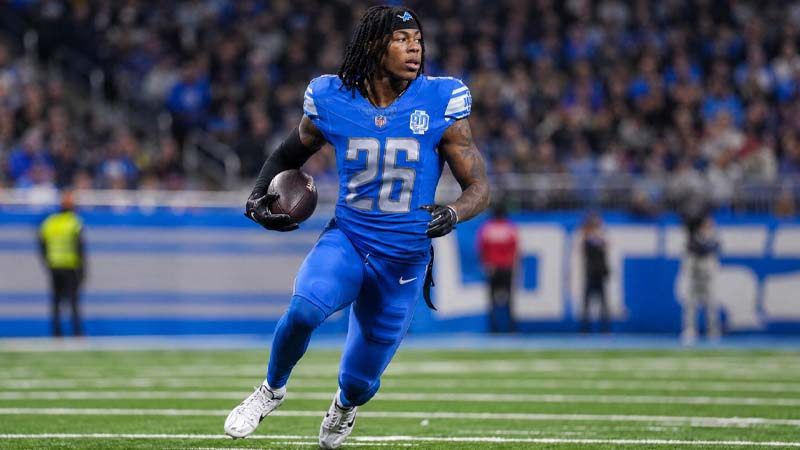
Among the most prominent modern examples of this athletic evolution is Jahmyr Gibbs, whose multi-phased collegiate journey provides a blueprint for how strategic development can prepare an athlete for high-level professional success.
This analysis explores the competitive environments and strategic transitions that shaped his collegiate path.
By examining his trajectory from an emerging playmaker in the ACC to a high-profile transfer in the SEC, and ultimately to a first-round selection, we can understand the key milestones of his development.
Through his tenure at two distinct institutions, Gibbs demonstrated how adaptability and diverse skill sets serve as the ultimate currencies in highly competitive environments.
Defining the Dual-Threat Running Back Archetype
To appreciate the significance of Gibbs’ collegiate career, one must first understand the tactical value of a dual-threat running back in contemporary offensive systems.
Historically, offensive coordinators segregated backfield duties between “power” backs, who carried the bulk of rushing attempts, and “third-down” backs, who specialized in pass protection and receiving.
Today, however, elite programs seek single-player solutions who can remain on the field across all three downs without telegraphing the offensive play call.
A dual-threat player creates significant defensive mismatches in several ways:
- Defensive Personnel Conflicts: When a running back is a highly competent receiver, defensive coordinators are forced to decide whether to cover them with a linebacker (creating a speed mismatch) or a defensive back (weakening the defense’s ability to stop the run).
- Formation Flexibility: Offensive systems can shift a versatile back from the backfield to the slot or out wide pre-snap, allowing the quarterback to diagnose defensive coverage (such as man-to-man versus zone) before the ball is snapped.
- Special Teams Impact: A player who can double as an elite kick returner adds a layer of explosive potential to transition phases, generating crucial hidden yardage and shifting momentum.
By mastering both the rushing and receiving aspects of the position during his formative years, Gibbs established himself as a highly valuable asset capable of dictating defensive alignments.
The Foundation: Georgia Institute of Technology (2020–2021)
The collegiate path of Jahmyr Gibbs began in the Atlantic Coast Conference (ACC), where he spent his first two seasons playing for the Georgia Institute of Technology, commonly known as Georgia Tech.
Joining the Yellow Jackets for the 2020 and 2021 seasons, Gibbs entered a program that allowed him to immediately showcase his raw athletic capabilities on a major stage.
During his tenure in Atlanta, Gibbs quickly established himself as a premier playmaker. His role was characterized by his extraordinary versatility, earning widespread recognition as a dynamic dual-threat running back and kick returner.
Playing in the ACC provided a rigorous testing ground, exposing him to diverse defensive schemes and highly athletic competitors.
The Georgia Tech phase of his career was vital for several developmental reasons:
- Diverse Touch Distribution: By splitting his contributions between traditional rushing attempts, pass-catching opportunities, and special teams return duties, Gibbs proved he could handle multiple responsibilities simultaneously.
- Open-Field Vision: As a kick returner, he developed an acute sense of timing, blocking schemes, and spatial navigation, which are critical traits for elite backfield players.
- Resilience: Operating in a developing offensive unit required him to maximize every opportunity, often creating positive yardage out of broken plays or tight spaces.
This initial two-year period laid the groundwork for his physical and tactical maturation, demonstrating to national observers that his skill set was highly adaptable and exceptionally explosive.
The Strategic Dynamics of the Collegiate Transfer Portal
In contemporary collegiate athletics, the transfer portal has revolutionized roster construction and player development.
While traditional paths often saw players remain at a single institution for their entire collegiate careers, the modern landscape allows elite athletes to make strategic moves to optimize their competitive exposure and development.
Gibbs’ decision to transfer after his sophomore season represents a classic example of career optimization.
By moving from Georgia Tech to a perennial championship contender, he placed himself in an environment designed to simulate professional-level preparation, scrutiny, and competition. For elite prospects, such a move is driven by several strategic objectives:
- Championship Exposure: Playing on a national stage in high-stakes games provides invaluable experience in pressure-cooker environments.
- Schematic Complexity: Transitioning to an offense that utilizes pro-style concepts allows players to master complex playbooks, pass-protection schemes, and pre-snap adjustments that mirror professional systems.
- Competition Level: Practicing daily against elite, blue-chip defensive talents refines a player’s skills and prepares them for the physical demands of the next level.
The Peak: The University of Alabama (2022)
In 2022, Gibbs transferred to The University of Alabama for his final collegiate season, entering the highly competitive Southeastern Conference (SEC).
This transition represented a significant step up in terms of media scrutiny, defensive competition, and expectation levels.
Rather than undergoing a lengthy adjustment period, Gibbs immediately emerged as the offensive engine for the Crimson Tide.
His single season in Tuscaloosa was a masterclass in efficiency and versatility. Most notably, Gibbs led the Alabama team in both rushing yards and total receptions during the 2022 season.
Leading an elite SEC program in both of these major statistical categories is an extraordinary achievement that highlights several key elements:
- Elite Receiving Capabilities: For a running back to lead an Alabama team in total receptions indicates exceptional route-running ability, reliable hands, and a high level of trust from the coaching staff and quarterback.
- System Adaptability: Quickly mastering a complex, pro-style offensive playbook and integrating seamlessly into a new locker room demonstrates high football intelligence and professionalism.
- Workload Management: Operating as both the primary ball carrier and a primary passing target requires exceptional physical conditioning and durability to withstand the rigorous contact of SEC defenses.
His time at Alabama confirmed that his dual-threat capabilities were not merely the product of a specific system, but rather an elite, transferable skill set that could excel against the best defensive units in college football.
Summary of the Collegiate Path
To visualize the progression of Gibbs’ collegiate career, the following table outlines the key phases, roles, and milestones across both institutions:
| Collegiate Institution | Active Seasons | Conference | Key Roles & Achievements |
|---|---|---|---|
| Georgia Institute of Technology (Georgia Tech) | 2020–2021 | Atlantic Coast Conference (ACC) | • Developed foundational backfield skills• Established national profile as a dual-threat running back• Served as an explosive kick returner |
| The University of Alabama | 2022 | Southeastern Conference (SEC) | • Transferred for final collegiate season• Led team in both rushing yards and receptions• Solidified first-round professional draft status |
The Transition to the Professional Ranks
The ultimate validation of Gibbs’ collegiate strategy occurred during the 2023 NFL Draft. Historically, professional franchises have been hesitant to select running backs high in the first round due to concerns over positional longevity and injury risk.
However, players who possess elite receiving capability and return game utility are evaluated differently; they are viewed as offensive chess pieces rather than traditional running backs.
Because of his proven multi-faceted production at both Georgia Tech and Alabama, Gibbs’ draft stock soared. The Detroit Lions selected him with the 12th overall pick in the 2023 NFL Draft.
This high selection was a direct reflection of his unique collegiate path:
- A Three-Down Weapon: The Detroit Lions recognized that his ability to lead Alabama in receptions meant he could be deployed in various personnel groupings, operating out of the slot or as a receiver in empty formations.
- Proven Against Elite Competition: His success in leading Alabama’s offense in the SEC proved that his athleticism was fully compatible with the speed and physical demands of the professional game.
- High-Value Touch Potential: A player who averages high yards per touch through both run plays and pass receptions offers a greater return on investment than a traditional, run-only back.
His high draft position underscored the wisdom of his transfer decision, proving that his year at Alabama was the final piece of evidence professional front offices needed to commit first-round draft capital.
Strategic Takeaways for Future Athletes
The path carved by Jahmyr Gibbs offers several valuable lessons for modern student-athletes navigating their collegiate careers:
- Diversify the Skill Set: Developing skills beyond a primary position—such as route running, pass catching, and return capability—dramatically increases a player’s utility and marketability.
- Leverage Strategic Mobility: When a player has demonstrated high performance, utilizing transfer opportunities to play in systems that align with professional designs can provide the necessary exposure to elevate draft stock.
- Focus on Efficiency Over Volume: Leading a team in receptions while also carrying the rushing load shows high efficiency per touch, which modern professional franchises prioritize over high-volume, high-impact running styles that lead to early wear and tear.
Conclusion
The collegiate journey of Jahmyr Gibbs is a compelling case study in modern athletic development.
By combining the developmental foundation established at Georgia Tech with the high-stakes, professional-caliber refinement offered at Alabama, Gibbs optimized his talent and maximized his draft value.
His trajectory from a standout ACC kick returner to the offensive leader of an SEC powerhouse, and ultimately to a top-15 selection in the professional draft, illustrates the power of adaptability and elite versatility.
For football enthusiasts and analysts alike, his collegiate career remains a masterclass in strategic career progression.