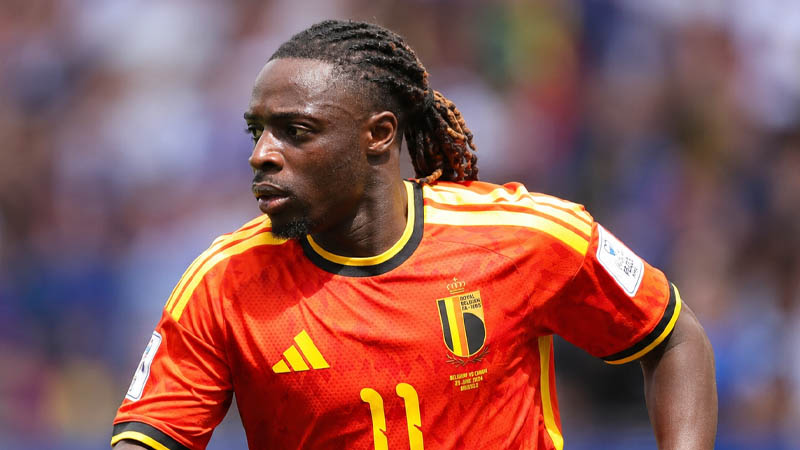
Jérémy Doku is more than just a name on a team sheet; he is a representation of the modern, multicultural football landscape.
While fans globally recognize him for his explosive speed and technical brilliance at Manchester City, questions regarding Jérémy Doku’s nationality often trend during international breaks.
Born in Antwerp, Belgium, Doku has solidified his status as a key figure for the Belgian national team.
However, his story is deeply intertwined with his Ghanaian ancestry, making him a dual citizen who honors both his European upbringing and his West African lineage through personal traditions and legal documentation.
Understanding Jérémy Doku’s Legal Nationality
The question of legal nationality in professional sports is often complex, but for Jérémy Doku, the foundation is rooted in his place of birth.
As a high-profile athlete on the global stage, his citizenship status dictates his eligibility for international tournaments and his status in European club competitions.
Born and Raised in Antwerp
Jérémy Doku was born on May 27, 2002, in Antwerp, the most populous city in Belgium. Growing up in the Flemish Region, he was immersed in Belgian culture and the country’s highly developed football youth systems from an early age.
His birth in Antwerp automatically granted him Belgian citizenship, providing the legal framework for his future career with the “Red Devils.”
This European upbringing allowed him to progress through the ranks of local clubs before making his mark on the professional world.
The Power of the Belgian Passport
Holding Belgian citizenship is a significant advantage in the world of professional football, as it allows players to move freely within the European Union.
For Doku, his Belgian nationality meant he did not face the same work permit hurdles that many non-European players encounter early in their careers.
His status as a Belgian national was confirmed early on by his consistent selection for Belgium’s youth national teams, where he displayed the flair that would eventually lead him to the Premier League.
Deep Dive into Doku’s Ghanaian Heritage
While his legal documents may say Belgian, Doku’s ethnic and cultural identity is strictly Ghanaian. This duality is a point of pride for the winger, who has never shied away from acknowledging the influence of his parents’ homeland on his life and career.
The Role of David and Belinda Doku
The story of Jérémy Doku’s nationality cannot be told without mentioning his parents, David and Belinda Doku.
Originally from Ghana, David and Belinda moved to Belgium before Jérémy was born, bringing with them a rich cultural heritage that they instilled in their children.
They provided a stable and supportive environment that allowed Jérémy to focus on football while remaining grounded in his roots. Their influence ensures that despite his European birthplace, the Ghanaian spirit remains at the core of his identity.
Preserving Culture through Language and Tradition
One of the most telling signs of Doku’s connection to his heritage is his linguistic ability. He frequently celebrates his roots and is known to speak the local language of his parents’ region in Ghana.
This cultural preservation goes beyond mere words; it is reflected in his lifestyle and the way he interacts with the Ghanaian community in the diaspora.
By maintaining these traditions, Doku bridges the gap between the streets of Antwerp and the coastal energy of West Africa.
The Dual Citizenship Reality: A Comparative Overview
Jérémy Doku officially holds dual citizenship, a status that allows him to navigate two different worlds with ease. This legal standing is more than just paperwork; it reflects his identity as a child of the diaspora.
| Feature | Belgian Connection | Ghanaian Connection |
|---|---|---|
| Place of Birth | Born in Antwerp | No (Second Generation) |
| Passport Held | Yes, Belgian National | Yes, Ghanaian Passport |
| Ethnic Heritage | No | Yes, Parents from Ghana |
| Language Spoken | Dutch/French (Local) | Local Ghanaian Language |
| International Team | Belgium Senior Team | Eligible (by heritage) but chose Belgium |
| Family Origins | Residents | Native Ghanaian Parents |
This table illustrates that while his professional allegiance belongs to the country of his birth, his personal identity is equally shared with the land of his ancestors. The possession of a Ghanaian passport is a clear legal signal of his commitment to his heritage.
International Career: Why He Chose the Red Devils
The decision to represent a national team is one of the most pivotal moments in a footballer’s life. For players like Doku, who are eligible for two strong footballing nations, the choice involves both professional strategy and personal sentiment.
Early Integration into Belgian Football
From a young age, Doku was integrated into the Belgian footballing infrastructure. The Royal Belgian Football Association identified his talent early, leading him to represent the nation at various youth levels.
By the time the Ghanaian Football Association expressed interest, Doku was already a mainstay in the Belgian setup. His progression felt like a natural evolution of his development in the country where he learned the game.
Major Tournament Impact with Belgium
Doku’s commitment to Belgium was cemented when he made his senior debut. He has since become a key member of the squad, often referred to as the “Red Devils”.
His performances in high-stakes environments, such as the UEFA European Championship, have validated his decision.
On the international stage, he provides a unique attacking threat that has made him indispensable to the Belgian tactical setup, proving that he is one of the most exciting Belgian talents of his generation.
Professional Excellence on the Premier League Stage
Doku’s nationality and heritage are frequently discussed in the context of his club career. Currently playing for Manchester City, he is performing in one of the most scrutinized leagues in the world.
A Star at Manchester City
As a winger for Manchester City in the English Premier League, Doku is an ambassador for Belgian football. His move to the Etihad Stadium was a testament to his world-class potential and his ability to compete at the highest level of European club football.
Under the guidance of top-tier coaching, he has refined his game, combining his natural Ghanaian flair with the tactical discipline expected in the Premier League.
Representing the Modern Global Athlete
Doku is a prime example of the “global athlete.” He possesses the technical training of a European academy, the work ethic of a Premier League professional, and the cultural depth of a West African.
This blend of influences makes him a marketable and relatable figure for fans across continents. Whether he is celebrating a goal for City or traveling back to visit family, he carries the weight of two nations on his shoulders with grace.
Navigating the Challenges of Dual Identity in Sports
The journey of a dual-national player is not without its pressures. Fans from both nations often have high expectations, and the player must balance their loyalty to their chosen team with their respect for their ethnic background.
The Ghanaian Fanbase’s Support
Despite Doku choosing to represent Belgium internationally, he maintains a massive following in Ghana. Fans in Accra and Kumasi closely follow his progress at Manchester City, viewing him as one of their own.
His decision to keep a Ghanaian passport and speak the language has earned him significant respect, ensuring that he remains a beloved figure in the West African nation.
Standing as a Role Model for Youth
Doku serves as an inspiration for thousands of young players in Belgium and Ghana who find themselves in similar positions. He proves that one does not have to sacrifice their heritage to succeed in a European national team.
His story encourages young athletes to embrace their full identity, showing that being “Belgian” and “Ghanaian” are not mutually exclusive categories but complementary parts of a whole.
Frequently Asked Questions About Jérémy Doku
Is Jérémy Doku Belgian or Ghanaian?
He is both. Legally, he is a Belgian citizen by birth, but he also holds a Ghanaian passport and identifies ethnically as Ghanaian.
Which national team does Jérémy Doku play for?
He represents the Belgium national team (the Red Devils) in international competitions.
Can Doku still play for Ghana?
As he has already played competitive senior matches for Belgium in major tournaments like the Euros, he is tied to the Belgian national team under current FIFA eligibility rules.
Who are Jérémy Doku’s parents?
His parents are David and Belinda Doku, who are both originally from Ghana.
What language does Jérémy Doku speak?
In addition to the languages he speaks in Belgium (such as Dutch), he also speaks a local Ghanaian language learned from his parents.
Conclusion: The Synthesis of Two Worlds
Jérémy Doku’s nationality is a beautiful tapestry of European opportunity and African legacy. While his professional career is defined by his contributions to the Belgian national team and Manchester City, his heart remains deeply connected to his Ghanaian roots.
He represents a new era of footballers who are proud of their dual identities, navigating the complexities of modern citizenship with talent and authenticity.
As he continues to dazzle fans in the Premier League, Doku stands as a symbol of how diverse backgrounds can merge to create something truly exceptional on the world stage.