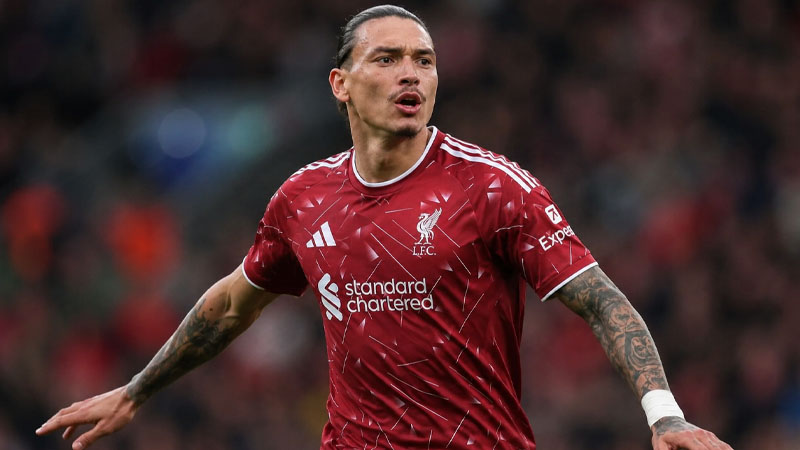
Darwin Núñez’s exit from Anfield in August 2025 marked the end of a chaotic yet captivating era. After three years of “Captain Chaos,” the Uruguayan striker moved to Saudi Pro League side Al-Hilal for £46.3 million.
While fans remained fond of his raw passion, his struggle to adapt to tactical shifts made a departure inevitable. This shift highlights the evolution of a club moving toward precision over unpredictability.
Understanding his exit requires looking at the tactical, personal, and financial factors that converged during a transformative summer at Liverpool.
The Tactical Shift Under Manager Arne Slot
The transition from Jürgen Klopp to Arne Slot was a turning point for many players. For Núñez, it meant adapting to a rigid system that valued ball retention and careful buildup.
Chaos Versus Control in the New System
Arne Slot implemented a more patient, possession-based style upon arrival. This approach favored precision and structured movement over the erratic energy Núñez provided. The striker’s “Captain Chaos” persona, which initially excited fans, began to feel out of place.
Jürgen Klopp had previously viewed Núñez as a “work in progress”. However, the new coaching staff sought players who could fit a more disciplined attacking mold. Consequently, Núñez found himself starting only eight Premier League games in his final season.
Mental Resilience and Defensive Contribution
Slot publicly addressed the forward’s reaction to missed opportunities. He noted that Núñez often allowed mistakes to “get too much in his head”. This mental struggle negatively impacted his overall work rate.
The manager emphasized the need for forwards who consistently helped the team defensively. When Núñez became discouraged by his own misses, his defensive contributions often diminished. This lack of consistency made it difficult for him to remain a starter.
The Statistical Reality of Performance
Analyzing the numbers provides a clear view of why the club considered a sale. Despite his physical gifts, the clinical edge required for a top-tier striker was often absent.
A Breakdown of Finishing Efficiency
| Metric | Darwin Núñez Statistics |
|---|---|
| Shot Conversion Rate | 11.1% (Lowest among forwards) |
| Expected Goals (xG) Performance | -8.5 xG (Second poorest in PL) |
| Big Chance Conversion Rate | 23.6% (Poorest among top 10) |
| Premier League Goals | 25 goals in 95 appearances |
The Record-Breaking Woodwork Factor
Núñez was famously plagued by misfortune during his time in England. He hit the post or crossbar a Premier League record 14 times since his debut. This including a single-game record of hitting the woodwork four times against Chelsea.
While fans shared his exasperation, the coaching staff viewed these near-misses as a lack of composure. The “what-if” nature of his play became a source of growing frustration. Eventually, the clinical requirements of a title-winning team outweighed his potential for brilliance.
Personal Motivations and Cultural Preferences
Beyond the pitch, individual factors played a significant role in the decision to move. Núñez himself began to look for opportunities outside of the United Kingdom.
Tiredness and Cultural Comfort
Reports indicated that Núñez had “grown tired” of living in England. He reportedly desired a move to a location closer to his Latin roots. Spain was frequently mentioned as his preferred destination.
This desire for a cultural reset coincided with the club’s tactical evolution. Both parties recognized that a fresh start might be the most beneficial outcome. This alignment made the transfer process smoother for all involved.
The Lure of the Saudi Reset
The move to Al-Hilal was initially framed as a way to escape intense media scrutiny. It offered a chance to regain confidence in a less pressured environment. The striker hoped to silence doubters by scoring heavily in the Saudi Pro League.
At 26, he still had time to revitalize his career and return to Europe. Financial incentives were likely a factor, though some viewed it as a step back for a high-pedigree player. Nevertheless, it provided the immediate exit he desired.
The Financial Landscape of the Transfer
The business side of football often dictates the timing of departures. Liverpool had to balance their initial massive investment with the reality of his declining market value.
Reclaiming Value from the Benfica Deal
Liverpool originally signed Núñez from Benfica for an initial fee of £64 million. With add-ons, the package had the potential to reach a record £85 million. However, not all those performance-related bonuses were ever activated.
Selling him for £46.3 million represented a significant financial loss on paper. Despite this, the club viewed the fee as a reasonable way to recoup some value. It allowed them to clear his wages and fund new targets.
The Impact of New Signings
The arrival of other high-profile attackers signaled the end for Núñez. Liverpool secured French forward Hugo Ekitike for £79 million during the same window. They also added playmaker Florian Wirtz for a record £116 million.
These moves effectively pushed Núñez further down the pecking order. The club hierarchy decided to cash in while there was still significant interest. This enabled a complete overhaul of the forward line as planned by the recruitment team.
Why the Saudi Move Eventually Soured
While the transfer was intended to be a fresh start, the reality in Riyadh proved difficult. Within months, the narrative of a successful reset began to crumble.
Struggles on the Pitch in Riyadh
Núñez managed only nine goals in his first twenty-four appearances for Al-Hilal. This return was deemed insufficient for a team of their stature. The inconsistency that plagued him at Anfield seemed to follow him to the Middle East.
The physical nature of the game did not automatically lead to high goal numbers. Instead of finding his rhythm, he continued to miss high-quality chances. This led to a rapid decline in his standing within the squad.
The Impact of Squad Restrictions
Saudi Pro League rules strictly limit the number of foreign players in a squad. Each team can only name eight foreign players born before 2003. Al-Hilal chose to omit Núñez to make room for 38-year-old Karim Benzema.
Being left out of the domestic squad was a massive blow to his professional standing. Although still eligible for the Asian Champions League, his role was greatly diminished. This situation quickly led to discussions regarding his future at the club.
The Final Termination and Free Agency
By early 2026, the partnership between Núñez and Al-Hilal reached its breaking point. A mutual decision was made to part ways through a contract termination.
Agreeing to a Mutual Exit
The termination allowed Núñez to become a free agent earlier than expected. For Al-Hilal, it cleared space for other international talents who fit their tactical needs. For Núñez, it offered a chance to find a club in Europe.
This rapid decline from an £85 million prospect to a free agent is a cautionary tale. It highlights how quickly fortunes can change in elite-level sport. He now faces the task of rebuilding his reputation from scratch.
Rumors of an Anfield Return
Following his release, speculation intensified about a potential return to Liverpool. Media in Uruguay heavily linked him with a move back to Merseyside. This sparked significant debate among the fanbase about a second chance.
However, prominent transfer journalists have clarified that no active negotiations are taking place. The club has moved on to a different tactical era under Arne Slot. A return seems highly unlikely given the circumstances of his initial departure.
Summary of the Farewell
Darwin Núñez remains one of the most debated figures in recent Liverpool history. He arrived with immense promise but left with a sense of unfulfilled potential. His departure was a result of tactical evolution and personal desire.
The move to Saudi Arabia failed to provide the “reset” he desperately needed. Now a free agent, his career sits at a critical crossroads. Whether he can rediscover his Benfica form remains to be seen.
Frequently Asked Questions
How much did Liverpool lose on Darwin Núñez?
Liverpool signed him for an initial £64 million and sold him for £46.3 million. This represents a direct loss of approximately £17.7 million on the base fee. If add-ons are considered, the gap between the potential cost and the final sale is even larger.
Why didn’t he stay and fight for his place?
The striker reportedly felt the need for a fresh start to shake his “misfiring” reputation. Additionally, the arrival of Hugo Ekitike made regular playing time unlikely. His own desire to live in a different climate also played a major role.
Was he considered a flop by the fans?
Opinions are divided on his legacy at Anfield. Many loved his passion and “heart on sleeve” attitude. However, others were frustrated by his inconsistency and high price tag. He left as a Premier League winner, which secures a positive spot in some fans’ memories.
What is the current status of Darwin Núñez?
As of early 2026, he is a free agent after terminating his contract with Al-Hilal. He is looking for a new club, with potential interest from Spain and Italy. There are currently no active talks for him to rejoin Liverpool.