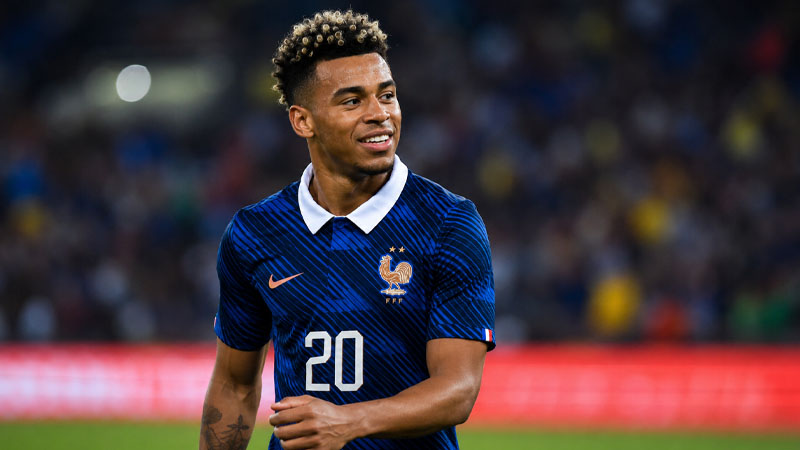
The 2026 FIFA World Cup cycle has officially found its first breakout global icon. While seasoned veterans often dominate the headlines during the build-up to football’s most prestigious tournament, the spotlight has shifted toward a young talent whose rise transcends the boundaries of the pitch.
Désiré Doué is not merely a rising star in the French national team; he has become a multifaceted cultural phenomenon.
His current trajectory is the result of a perfect alignment between elite athletic performance and a unique personal brand that resonates with a modern, digital-first audience.
To understand why his name is currently leading global conversations, we must examine the specific catalysts—from family drama on the international stage to prestigious individual honors—that have defined his journey.
Here are the 5 primary reasons why Désiré Doué is the most discussed name in global football today.
1. The Historical “Brother vs. Brother” International Narrative
One of the most compelling storylines in sports history involves siblings who find themselves on opposite sides of a competitive divide. For the Doué family, this narrative is playing out on the largest possible stage.
Désiré Doué has solidified his place as a cornerstone for the French national team, while his older brother, Guéla, has committed his international future to the Ivory Coast.
This divergence in national representation has created an unprecedented level of anticipation for the upcoming international fixture where France is set to take on Senegal.
The prospect of these two brothers facing off represents more than just a match; it is a story of family loyalty, national identity, and the complex choices faced by dual-national athletes in the modern era.
This “Brother vs. Brother” clash is a central pillar of the current media frenzy surrounding the 2026 World Cup preparations.
2. The Distinction of the “Golden Boy” Award
Recognition from the footballing establishment is a powerful validator of talent, and Doué has secured the highest honors available to players in his age bracket.
By winning the Golden Boy award, he has been officially recognized as the premier Under-21 player in European football.
This award carries significant weight, as previous recipients often go on to become the faces of the sport for a generation.
By joining this elite circle, Doué has signaled to the world that his talent is not merely a temporary flash of form but a sustained level of excellence that places him at the top of the global hierarchy.
This achievement has fundamentally altered his market value and the level of scrutiny—and admiration—he receives from analysts and fans alike.
3. Domestic Dominance with Paris Saint-Germain
While international storylines provide the drama, club performance provides the data. Doué is currently experiencing a massive surge in form while playing for Paris Saint-Germain (PSG), one of the most visible and high-pressure clubs in the world.
His impact in the French top flight was recently cemented when he was voted Ligue 1’s best young player. Succeeding in a league known for its physical intensity and tactical depth is no small feat for a player of his age.
His ability to perform consistently at the Parc des Princes has turned him into a central figure in PSG’s long-term strategy, further fueling the global narrative that he is the heir apparent to the greats of French football.
4. A Cultural Bridge: The “Anime Fan” Phenomenon
In the modern era, an athlete’s influence is often measured by their ability to connect with audiences outside of their primary sport. Doué has achieved this through his public passion for Japanese animation, specifically the series Hunter × Hunter.
He recently went viral across social media platforms after updating his profile picture to the character Gon Freecss, a move that immediately endeared him to the global anime community.
This personal touch has transformed him into “football’s ultimate anime fan,” allowing him to bridge the gap between elite sports and contemporary pop culture.
This relatability is a key driver of his rise in popularity among Gen Z fans who value authenticity and shared interests with their sporting heroes.
5. Tactical Versatility and the 2026 Launchpad
As the 2026 FIFA World Cup approaches, the tactical evolution of the French national team seems increasingly centered around Doué’s unique skill set.
His ability to operate under pressure and his technical proficiency make him a “must-watch” player for the tournament.
The combination of his viral off-pitch personality and his undeniable on-pitch production has created a “perfect storm” of visibility.
For sponsors, fans, and scouts, Doué represents the future of the sport—a player who is as comfortable in a high-stakes tactical battle as he is engaging with fans in the digital landscape.
Frequently Asked Questions (FAQ)
Why is the match between France and Senegal so significant for the Doué family?
The match is significant because it highlights the unique situation of the Doué brothers. Désiré represents France, while his brother Guéla represents the Ivory Coast, creating a rare family rivalry on the international stage that has captured the imagination of the global football community.
What are Désiré Doué’s most recent individual honors?
He has recently won two of the most prestigious awards in the sport for his age group: the Golden Boy award, naming him the best U21 player in Europe, and the title of Ligue 1’s best young player.
What is the “Anime Tribute” people are talking about?
Désiré Doué is an avid fan of Hunter × Hunter. He gained significant viral attention for updating his social media presence with tributes to the character Gon Freecss, solidifying his reputation as a crossover icon between sports and anime culture.
Which club does Désiré Doué play for?
He currently plays for Paris Saint-Germain (PSG), where he has been in exceptional form leading up to the 2026 FIFA World Cup.
Conclusion: The Era of the Multi-Dimensional Superstar
The rise of Désiré Doué is a masterclass in how modern stardom is constructed. It is no longer enough to be a gifted athlete; the global audience craves narrative, connection, and excellence. Doué provides all three.
Whether it is the emotional weight of a family rivalry, the prestige of being Europe’s “Golden Boy,” or the simple relatability of being an anime enthusiast, he has provided the world with multiple entry points into his story.
As we look toward 2026, Doué is not just a player to watch—he is the player who defines the current moment in football history. His trending status is not a temporary trend but the beginning of what promises to be a legendary career.