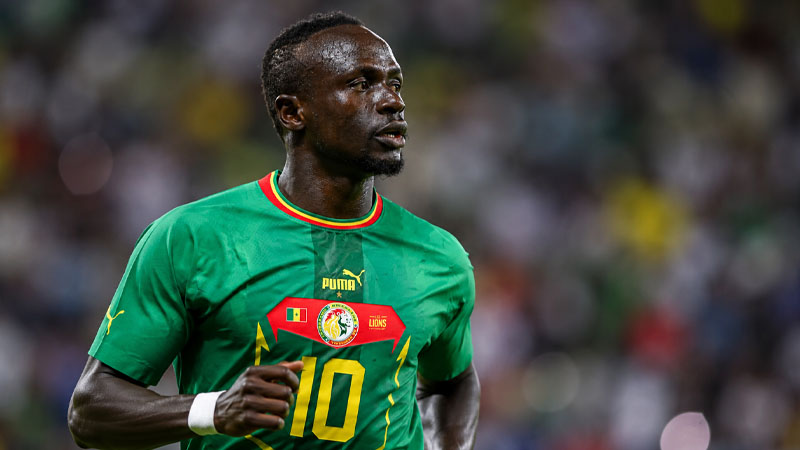
Sadio Mané is far more than a world-class footballer; he is a global symbol of persistence and the transformative power of a dream.
Born in the quiet, dusty village of Bambali, his journey to the pinnacle of international sports was paved with obstacles that would have deterred even the most determined individuals.
To understand the man who has captivated millions with his skill and humility, one must look back at the foundation of his character. This exploration into his early life, birth details, and the cultural landscape of his youth reveals the true architect of his success.
Sadio Mané Date of Birth and Current Age
The timeline of Sadio Mané’s life begins in the early 1990s, a period of significant transition for West African football. For fans and biographers alike, his birth details provide the starting point for a narrative defined by rapid ascent and enduring excellence.
As of 2026, Mané remains a prominent figure in the sporting world, his longevity a testament to the discipline he developed during his formative years in Senegal.
| Essential Biography | Data Point |
|---|---|
| Date of Birth | April 10, 1992 |
| Current Age | 34 Years Old |
| Birthplace | Bambali, Sédhiou District, Senegal |
| Zodiac Sign | Aries |
| Nationality | Senegalese |
The Roots of a Champion: Early Life in Bambali
To truly appreciate the rise of Sadio Mané, one must understand the geography and social fabric of his beginnings. Bambali is a small, remote village located in the Sédhiou district of Senegal.
Far removed from the urban infrastructure of Dakar, life in Bambali was characterized by simplicity, traditional values, and a lack of modern amenities.
Guinean Heritage and Cultural Identity
While Mané is a proud representative of Senegal, his family roots trace back to Guinea. This blend of cultural influences played a role in his upbringing, though he was raised primarily within the local customs of the Sédhiou region.
Growing up in a household with Guinean parents, he was immersed in a community that prioritized collective well-being over individual ambition, a trait that remains visible in his philanthropic efforts today.
The Remote Landscape of Sédhiou
The Sédhiou district, where Bambali is situated, was historically underserved in terms of sporting facilities and formal education. For a young boy with a passion for football, the environment offered little in the way of professional pathways.
Most children in the village were expected to follow traditional paths in agriculture or local trades, making Mané’s eventual focus on professional sports an anomaly within his community.
Family Dynamics and Religious Influence
The household in which Sadio Mané was raised was governed by deep religious convictions and a strict adherence to tradition. These early influences were both a source of strength and a primary obstacle in his quest to become a footballer.
The tension between family expectations and personal passion is a central theme in his early biography.
The Role of the Local Imam
Mané’s father served as the local village Imam, a position of great respect and responsibility within Bambali. In this environment, religious studies were considered the only valid pursuit for a young man.
His father was notably firm in his stance: he strictly forbade Sadio from playing football, viewing the sport as a distraction from a life of faith and scholarly devotion.
A Defining Family Tragedy
The trajectory of Mané’s life was irrevocably altered when he was only seven years old. His father passed away due to a sudden illness. This loss was not only an emotional blow but a financial catastrophe for the family.
Without the primary breadwinner and spiritual head of the household, the family’s survival became a daily struggle. This early encounter with mortality and hardship instilled in Mané a sense of urgency and a desire to provide for those he loved.
Overcoming Adversity: Childhood Struggles
The years following his father’s death were marked by extreme poverty. The sheer size of the family made it impossible for his mother to support everyone, leading to a major shift in his living arrangements.
These years of struggle served as the “refining fire” that shaped his legendary work ethic.
Living Under the Care of His Uncle
Due to the financial strain at home, Mané was sent to live with his uncle. While this provided a more stable environment, it did not erase the reality of their economic situation. Education, which many take for granted, was a luxury the family could not afford.
Because they were unable to pay school fees, Mané’s formal schooling was limited, leaving him with vast amounts of time to wander the streets of his village.
Kicking Stones in the Dusty Streets
In the absence of a proper football or even a pair of shoes, Mané’s early “training sessions” were humble. He spent his days kicking stones and any round objects he could find along the dusty paths of Bambali.
This rudimentary practice is often cited as the reason for his exceptional ball control and agility; if a child can master the unpredictable bounce of a stone, a leather ball becomes easy to manage.
The Turning Point: The 2002 World Cup
Every hero’s journey has a moment of realization, a catalyst that turns a hobby into a lifelong mission. For Sadio Mané, that moment occurred when he was ten years old.
The 2002 FIFA World Cup was a watershed moment for the nation of Senegal and for a young boy watching from the sidelines.
The Inspiration of the Teranga Lions
In 2002, the Senegal National Team, known as the Teranga Lions, made a historic run to the quarter-finals of the World Cup in South Korea and Japan. Their success on the world stage ignited a fire in the youth of Senegal.
For Mané, seeing players from his own country compete with—and defeat—global giants like France was the proof he needed that greatness was possible, even for someone from a village like Bambali.
Solidifying the Dream
The 1992-born athlete stopped seeing football as a pastime and began seeing it as his destiny. However, this realization put him at direct odds with his remaining family members, who still viewed football as a “waste of time” with no viable future.
The clash between the 2002-inspired dream and the traditionalist reality of his family would lead to one of the most daring decisions of his life.
The Great Escape: A 15-Year-Old’s Journey
By the age of 15, Mané knew that if he stayed in Bambali, his talent would wither away unseen. Driven by a quiet desperation and an unshakeable belief in his talent, he orchestrated a plan to leave the only home he had ever known in search of an opportunity.
The Secret Departure to Dakar
Without informing his family, Mané secretly ran away to the capital city of Dakar. The journey was perilous for a teenager with no money and no connections. He traveled with nothing more than old, torn boots and no proper sporting gear.
His goal was simple: to attend football trials and prove he belonged among the elite talents of the country.
The Family Intervention and the Ultimatum
His disappearance caused a panic in Bambali. His family eventually tracked him down in the capital and forced him to return home. It was at this juncture that Mané displayed his burgeoning maturity.
He struck a deal—an ultimatum—with his elders: he would return to the village and focus on his studies for one final year if they agreed to let him pursue football professionally afterward.
Recognizing that his passion was not a passing phase, his family reluctantly agreed.
The Breakthrough: From the Village to the Academy
The final year in the village was a test of patience. When the time came to honor the agreement, the family’s skepticism had turned into a collective effort to support their son. This period marked the transition from an amateur dreamer to a professional prospect.
Pooling Resources for a Shared Vision
Despite their limited means, the community and family in Bambali recognized Mané’s undeniable drive.
In a remarkable act of sacrifice, his family pooled their meager resources—even selling farm assets—to fund his relocation and the costs associated with top-tier training. This collective investment placed a heavy but motivating responsibility on Mané’s shoulders.
Joining Génération Foot
At the age of 15, Mané officially relocated to Dakar to join the renowned Génération Foot academy. This was the same academy that had produced many of Senegal’s finest exports.
It was here, under the watchful eyes of professional coaches, that the raw talent honed on the streets of Bambali began to be refined into the clinical, explosive player who would eventually conquer Europe.
Summary of Early Life Milestones
To visualize the progression of Mané’s early years, the following table highlights the critical ages and events that defined his path to stardom.
| Age | Milestone Event |
|---|---|
| 0 | Born in Bambali, Senegal (April 10, 1992) |
| 7 | Tragic passing of his father (the village Imam) |
| 10 | Inspired by Senegal’s 2002 World Cup performance |
| 15 | Ran away to Dakar for trials; returned for one year of study |
| 15/16 | Relocated to Dakar to join Génération Foot academy |
Frequently Asked Questions About Sadio Mané’s Origins
What is Sadio Mané’s actual date of birth?
Sadio Mané was born on April 10, 1992. This makes him 34 years old as of June 2026.
Where was Sadio Mané born?
He was born in the remote village of Bambali, which is located in the Sédhiou district of Senegal.
Did Sadio Mané’s parents support his football career?
Initially, no. His father, an Imam, forbade it for religious reasons. Later, after his father’s passing and seeing Sadio’s dedication, the family supported him by selling farm assets to pay for his training.
Why did Sadio Mané run away from home?
At age 15, he ran away to Dakar to attend football trials because his family viewed football as a waste of time and would not have allowed him to go otherwise.
What was Sadio Mané’s first football academy?
His first major step into professional football was joining the Génération Foot academy in Dakar at age 15.
The Enduring Legacy of a Bambali Boy
The story of Sadio Mané’s date of birth, age, and early life is not merely a collection of facts; it is a blueprint for overcoming systemic poverty and personal loss.
From the streets of Bambali to the world’s most famous stadiums, his journey proves that where you start does not define where you finish.
Mané’s early struggles with financial hardship and family opposition did not break him; instead, they built the “Architect of Bambali”—a man who now uses his success to ensure that the next generation of children in his village have the schools, hospitals, and opportunities he was once denied.
His life remains one of the most compelling narratives in modern sports history, reminding us that with enough grit, even a boy kicking stones can eventually move the world.