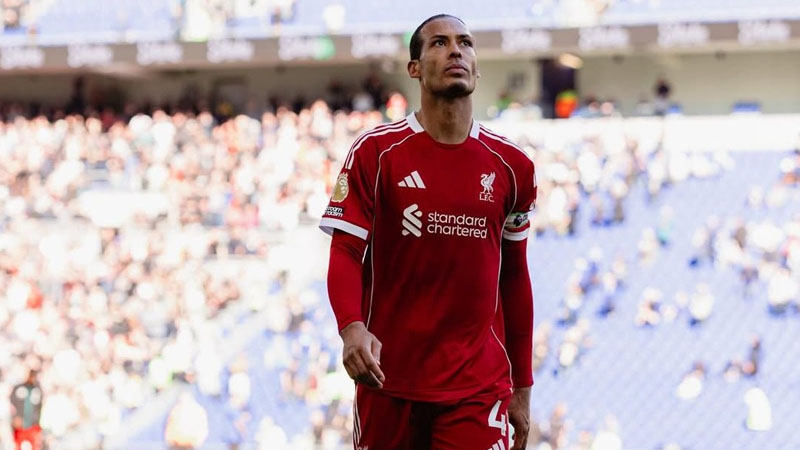
The landscape of elite European football is defined by eras of dominance, and few figures have personified Liverpool’s recent golden age more than Virgil van Dijk.
Since his arrival at Anfield, the Dutch center-back has not only redefined the art of defending but has served as the psychological and tactical anchor for one of the most successful periods in the club’s modern history.
However, as the global football market evolves and contract cycles reach their penultimate stages, a critical question looms over the Merseyside institution: Is the captain preparing for a final chapter elsewhere?
This analysis explores the multifaceted variables surrounding Van Dijk’s future, examining the contractual timelines, emerging international interests, and the strategic implications for a club currently undergoing a profound administrative and tactical transition.
The Contractual Horizon: The 2027 Deadline
In the business of professional football, the duration of a player’s contract is the primary lever of power for both the athlete and the employer.
Virgil van Dijk is currently bound to Liverpool by a deal set to expire in the summer of 2027. While this provides a degree of short-term security for the club, the “three-year window” is traditionally when high-level negotiations reach a crossroads.
From a strategic management perspective, allowing a world-class asset to enter the final two years of a contract without a renewal often signals one of two things: a planned transition or a disagreement on valuation.
While Van Dijk has not officially departed, the lack of a finalized extension has inevitably invited global speculation.
For Liverpool, the challenge is balancing the undeniable on-pitch value of their captain against the long-term financial logic of retaining a veteran defender into his mid-30s.
The Turkish Proposition: Galatasaray’s Strategic Ambition
The Süper Lig in Turkey has undergone a significant transformation, moving away from being a “retirement league” to becoming a destination for high-profile stars who still possess elite-level competitive drive. Among the clubs leading this charge is Galatasaray.
Recent reports indicate that the Turkish giants are positioning themselves as a primary suitor for Van Dijk, with preparations for a formal approach reportedly underway.
For Galatasaray, the acquisition of a player of Van Dijk’s stature would represent more than just a defensive upgrade; it would be a statement of intent on the European stage, particularly in the UEFA Champions League.
Key Strategic Drivers for a Move to Istanbul:
- Competitive Level: Galatasaray offers a consistent platform for Champions League football.
- Project Leadership: Van Dijk would likely be the centerpiece of their defensive identity.
- Cultural Experience: Istanbul remains one of the most attractive global hubs for elite professional athletes.
The Saudi Pro League and the Gerrard Connection
Perhaps the most significant financial challenge to Liverpool’s retention of Van Dijk comes from the Saudi Pro League.
The emergence of the Middle East as a powerhouse in football recruitment has shifted the global market’s equilibrium. Specifically, Al Ettifaq has been identified as a potential destination for the Dutch captain.
The link to Al Ettifaq is bolstered by the presence of Liverpool legend Steven Gerrard, who currently manages the side.
The “Gerrard Factor” cannot be overstated; the ability to work under a figure who understands the weight of the Liverpool captaincy provides a unique psychological draw.
Furthermore, the Saudi Pro League is known for offering “lucrative long-term deals” that are often difficult for European clubs to match, especially for players in the latter stages of their careers.
For a player who has already achieved the pinnacle of European success—including the Premier League and Champions League titles—the prospect of a high-value, long-term project in a rapidly growing league presents a compelling final act.
Tactical Implications: The Void of a Leader
If Van Dijk were to depart, Liverpool would face a challenge that transcends simple squad depth. He is the archetype of the modern “complete” defender. His influence is felt in three distinct areas:
1. The High-Line Security
Liverpool’s tactical identity under its recent management has relied heavily on an aggressive high defensive line. This system is only functional when anchored by a defender with elite recovery speed and impeccable positioning.
Van Dijk’s ability to neutralize counter-attacks single-handedly has allowed Liverpool’s midfielders and full-backs to push forward with confidence.
2. Aerial and Set-Piece Dominance
Beyond his defensive duties, Van Dijk is a primary offensive weapon during set-pieces. His presence in the opposition box creates gravity, drawing multiple defenders and opening spaces for others. Defensively, he remains one of the most efficient aerial duelists in the world.
3. The Psychological Anchor
As captain, Van Dijk provides a “calm in the storm.” In high-pressure environments, his composure dictates the temperament of the entire squad.
Replacing a 6’4” defender is a scouting task; replacing a captain who commands the respect of the entire league is a cultural challenge.
The Business Case: Retention vs. Reinvestment
From a corporate and boardroom perspective, Liverpool’s decision-making process will be data-driven. The club has historically been prudent with its wage structure, often prioritizing the “peak years” of a player’s career.
- The Argument for Retention: Van Dijk remains, by most metrics, one of the top three center-backs in the world. The cost of a replacement—both in terms of transfer fee and the risk of “adaptation failure”—likely exceeds the cost of a lucrative contract extension.
- The Argument for Sale: If an offer from Turkey or Saudi Arabia reaches a specific threshold, and with only a few years left on his deal, the board might view this as the last opportunity to recoup a significant fee for a player who will eventually leave as a free agent in 2027.
User Intent and Frequently Asked Questions
To provide further clarity on this developing situation, we have compiled answers to the most pressing questions shared by the global football community.
Is Virgil van Dijk still under contract at Liverpool?
Yes. His current agreement with the club is set to expire in the summer of 2027.
Which clubs are currently linked with him?
The most prominent links involve Turkish giants Galatasaray and the Saudi Pro League side Al Ettifaq.
Has he officially requested a transfer?
No. While there is significant speculation regarding his future and potential interest from other leagues, no official departure or transfer request has been confirmed.
Why is Steven Gerrard’s name mentioned in these rumors?
Steven Gerrard is the current manager of Al Ettifaq. His historical connection to Liverpool and his current role in the Saudi Pro League make him a logical bridge for players considering a move to that region.
What is the likely timeline for a decision?
Typically, if a contract extension is not signed by the time a player enters the final 18–24 months of their deal, clubs will look to finalize a decision during the summer transfer window to avoid the risk of a free-agency departure.
The Global Perspective: A Legacy in the Making
Whether Virgil van Dijk chooses to honor his contract until 2027, sign a new extension, or embark on a new adventure in Turkey or Saudi Arabia, his legacy at Liverpool is already secure.
He transformed a defense that was once seen as the club’s “Achilles’ heel” into a world-class unit.
However, football is an industry of constant movement. For the fans at Anfield, the sight of their captain leading the team out remains an immense pride.
For the scouts and directors in Istanbul and Dammam, he represents the ultimate prize—a player who brings instant credibility, elite performance, and championship-winning experience.
Strategic Conclusion and Recommendations
The current uncertainty surrounding Virgil van Dijk is a byproduct of his own excellence. High-value assets will always attract interest from emerging markets and traditional powerhouses alike. For Liverpool, the priority must be clarity.
If the club intends to build the next iteration of its squad around Van Dijk’s leadership, a contract extension should be the primary objective.
Conversely, if the long-term vision involves a transition to a younger defensive core, the club must manage his potential exit with the strategic foresight that ensures they receive maximum value—both financially and in terms of squad succession planning.
As we move toward the next transfer window, the eyes of the football world will remain fixed on the Dutch captain.
For now, he remains the heart of the Liverpool defense, but the whispers of Istanbul and the allure of the Saudi Pro League ensure that the conversation regarding his future is far from over.