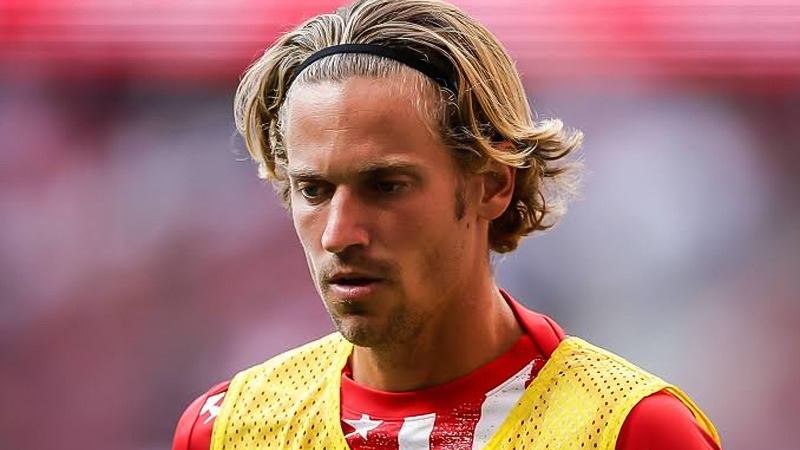
Marcos Llorente Moreno is more than just a footballer; he is the living embodiment of Spanish sporting excellence. Born in the heart of Madrid, his nationality is a central pillar of his identity, connecting him to a lineage that has defined European football for decades.
While fans often search for his background, the answer lies in a rich history that spans the city’s most iconic clubs.
From his “royal white lineage” at Real Madrid to his tactical evolution at Atlético, Llorente’s story is a masterclass in professional discipline and the pursuit of national glory.
The Defining Spanish Roots of Marcos Llorente
Marcos Llorente is a Spanish professional footballer who was born on January 30, 1995, in Madrid, Spain. His identity is deeply woven into the fabric of the Spanish capital, a city where football is not merely a sport but a cultural cornerstone.
Holding Spanish nationality, Llorente has spent the entirety of his professional career within the Spanish league system, specifically competing in La Liga.
His connection to his homeland is reinforced by his commitment to the Spanish national team, where he has become a symbol of modern versatility.
This section explores the environmental and cultural factors that shaped a player who was destined to represent his nation on the world stage.
The Madrid Upbringing
Growing up in Madrid provided Llorente with immediate access to the highest levels of football training. He began his youth career at local clubs such as Las Rozas and Rayo Majadahonda before entering the prestigious Real Madrid academy in 2008.
This local upbringing allowed him to stay close to the family influences that would eventually define his professional standards.
Cultural Identity in Spanish Football
In the context of Spanish football, Llorente represents a shift toward the “modern athlete.” While the traditional Spanish style often emphasizes “tiki-taka” and technical retention, Llorente combines this with elite physical attributes—speed, stamina, and strength—that have made him a unique asset for both his club and the Spain national team.
A Family Tree of Spanish Footballing Royalty
Marcos Llorente’s nationality and career are inseparable from his extraordinary family history. To understand his drive, one must look at a family tree that contains some of the most decorated names in the history of the sport.
The Paternal Legacy: Francisco and Paco Gento
His father, Francisco “Paco” Llorente, was a winger who successfully navigated the rivalry of the capital, playing for both Real Madrid and Atlético Madrid. However, the most legendary figure on his father’s side is his great-uncle, Francisco “Paco” Gento.
Gento remains a towering figure in global football as the only player to win six European Cups, a feat that cements the Llorente family’s status as Spanish sporting royalty.
The Maternal Lineage: Ramón Grosso
The heritage continues through his mother’s side of the family. His maternal grandfather was Ramón Grosso, a legendary forward for Real Madrid during the 1960s and 70s. Grosso was known for his versatility and commitment, traits that are clearly visible in Marcos’s own game today.
Having such high-achieving relatives has provided Marcos with what he describes as “extra motivation” to honor his family’s prestige while forging his own path.
The Real Madrid Chapter: Born into the White Crest
For years, Marcos Llorente was viewed as the “chosen son” of the Santiago Bernabéu. His deep-seated connection to the club led fans to describe him as being “literally born a Madridista”.
This section details his rise through the ranks and his initial breakthrough into the professional sphere.
Development at Castilla and Under Zidane
Llorente joined Real Madrid’s youth setup at age 13 and quickly rose through the Juvenil ranks. In 2014, he was promoted to the reserves, Real Madrid Castilla, by then-manager Zinedine Zidane.
His time in the reserves was marked by consistent performances and a professional attitude that caught the eye of club legends like Jorge Valdano, who praised his patience and dedication.
The Club World Cup Breakthrough
The 2018–19 season proved to be a pivotal year for Llorente at Real Madrid. Following an injury to Casemiro, interim coach Santiago Solari gave Llorente his first major run of starts in the first team.
He seized the opportunity, culminating in a dominant performance in the 2018 FIFA Club World Cup final. Llorente scored a spectacular goal in the 4–1 victory over Al Ain and was named the “Player of the Match,” proving that he was capable of succeeding on the biggest stage.
Crossing the Divide: The Move to Atlético Madrid
In the summer of 2019, Marcos Llorente made a decision that shocked the Madrid footballing world: he signed for cross-city rivals Atlético Madrid in a deal worth approximately £35 million.
This move was driven by a desire for more playing time and a realization that his path at Real Madrid was blocked by a crowded midfield.
The Tactical Metamorphosis
Initially signed by Diego Simeone as a defensive midfielder to replace Rodri, Llorente underwent a radical transformation. Simeone recognized his immense physical capacity and began pushing him further up the pitch.
This shift from a holding midfielder to an attacking threat turned Llorente into one of the most dangerous “allfielders” in La Liga.
The Night at Anfield
The definitive moment of his Atlético career occurred in March 2020 at Anfield. In a Champions League knockout match against the defending champions, Liverpool, Llorente came off the bench to score two goals in extra time.
This performance not only knocked out the English giants but also solidified his new role as a high-impact offensive player for the Colchoneros.
Representing the Spain National Team
Marcos Llorente’s international career is a testament to his versatility and dedication to his Spanish nationality. Since making his debut in 2020, he has become a reliable utility player for several national team managers.
Versatility on the International Stage
While he predominantly plays in midfield for his club, Llorente has frequently been deployed as a right-back for the Spain national team.
His physical attributes, particularly his speed (clocked at over 35 km/h), allow him to track back effectively while still providing an overlapping threat in attack.
- International Debut: November 11, 2020, against the Netherlands.
- Major Tournaments: Member of the squads for UEFA Euro 2020 and the 2022 FIFA World Cup.
- U21 Success: Helped Spain reach the final of the 2017 UEFA European Under-21 Championship.
A Summary of Professional Honors
| Competition | Title/Honor | Team |
|---|---|---|
| UEFA Champions League | Winner (2017–18) | Real Madrid |
| FIFA Club World Cup | Winner (2017, 2018) | Real Madrid |
| La Liga | Winner (2020–21) | Atlético Madrid |
| UEFA Euro 2020 | Semi-finalist | Spain |
The “Marine and Monk”: A Lifestyle of Discipline
The nickname “Marine and Monk,” bestowed upon him by Jorge Valdano, highlights the extreme discipline Llorente maintains to stay at the top of his game. His lifestyle choices are often cited as the reason for his incredible durability and physical performance.
The Strict Paleolithic Diet
Llorente is famously committed to a strict paleolithic diet, which focuses on whole foods that would have been available to early humans. He has stated that he intends to “live and die” with this diet.
Notably, it is reported that he has never tasted carbonated soft drinks or fast food in his entire life, a level of commitment that parallels the legendary discipline of Cristiano Ronaldo.
Physical Resilience and Performance
This discipline translates directly to the pitch. During the 2019-20 season, Llorente was the sixth fastest player in La Liga.
His stamina is equally impressive; at one point, he played the full 90 minutes for Atlético Madrid in 31 consecutive games, a rare feat for an outfield player in a high-intensity league.
Unconventional Health Views
In recent years, Llorente has faced scrutiny for his unconventional views on health, specifically regarding sun exposure and sunscreen.
While these views have drawn concern from medical professionals, they reflect a player who is deeply invested in personal wellness and who is not afraid to challenge conventional norms in his pursuit of health.
Frequently Asked Questions (FAQ)
What is Marcos Llorente’s nationality?
Marcos Llorente is a Spanish national, born in Madrid.
Which national team does Marcos Llorente play for?
He plays for the Spain national team, having made his senior debut in 2020.
Is Marcos Llorente related to Paco Gento?
Yes, the legendary Real Madrid winger Paco Gento was his great-uncle.
Why did he leave Real Madrid for Atlético Madrid?
He left in 2019 primarily for more first-team minutes and to grow as a player, as he was not a regular starter under Zinedine Zidane.
What is the “Marine and Monk” nickname?
It refers to his military-like training discipline (Marine) and his strict, almost ascetic lifestyle and diet (Monk).
A Legacy Forged in the Heart of Spain
Marcos Llorente’s journey is a powerful narrative of honoring tradition while embracing change. While his nationality and family ties initially defined him as a “Royal White,” his evolution at Atlético Madrid has proven that he is a player of immense individual character and talent.
He has successfully navigated the pressures of a legendary name, the challenges of a cross-city transfer, and the demands of representing the Spain national team in multiple roles.
As he continues to dominate the pitch with his trademark speed and discipline, Llorente remains a symbol of the enduring excellence of Spanish football.