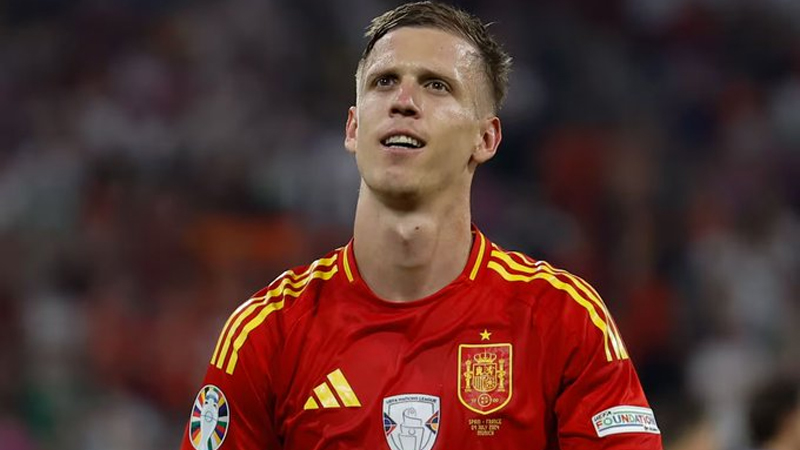
Dani Olmo remains one of the most enigmatic figures in modern football, particularly within the tactical landscape of FC Barcelona and the Spanish national team.
As a world-class attacking midfielder, he offers a level of technical brilliance that can unlock the world’s tightest defenses. Yet, his journey is often overshadowed by questions regarding his durability and performance fluctuations.
Evaluating his true value requires looking beyond simple goal tallies to understand the “Technical Genius and Tactical Paradox” that defines his career. Ultimately, determining his quality involves balancing his match-winning vision against his recurring availability hurdles.
The Technical Genius: Mastery of Space and Vision
To understand his quality, one must first appreciate his “La Masia” DNA, which manifests in his elite close control and spatial awareness. He is widely regarded as a “technical machine” who can find solutions in the most congested areas of the pitch.
Elite Ball Control and Pocket Navigation
Olmo possesses an exceptional first-touch orientation that allows him to receive the ball in tight pockets of space between the opposition’s midfield and defensive lines.
This mastery in tight spaces makes him better at ball retention and controlling the midfield than many of his peers. His ability to turn quickly and split open low-block defenses is considered a masterclass in modern playmaking.
This technical proficiency ensures that even under heavy pressure, he can maintain possession and drive the attack forward.
Tactical Versatility Across the Front Line
One of his most valuable assets is his ability to operate fluidly across multiple positions, including central attacking midfielder (CAM), winger, or even a false nine. This flexibility allows managers to alter attacking shapes mid-match without making a substitution.
For instance, while he thrives most as a traditional “Number 10,” his movement allows him to drift wide or drop deep to facilitate transition play. His high football IQ enables him to execute progressive, high-risk passes that other players often fail to see.
The Tactical Paradox: Navigating the Consistency Gap
Despite his undeniable talent, his career is defined by a paradox where his brilliance is frequently met with periods of invisibility. This inconsistency leads to significant debate among fans and analysts regarding his status as a guaranteed starter.
The Confidence and Momentum Factor
His impact on a match often depends heavily on how he starts the first few minutes of a game. If he finds his rhythm early, he can be a “beast” on the pitch, but a poor start can lead to a string of sloppy touches and a lack of involvement.
Some observers have noted that when he is not in a “flow state,” he can become a “cone on the field,” contributing very little to the overall play.
This reliance on immediate match momentum makes him a polarizing figure for those expecting 90 minutes of sustained dominance.
Challenges Against Physical Pressing
Analysts have pointed out that he can sometimes appear “lost” or easily out-bodied when facing elite-pressing teams with high physicality. In matches where the opposition’s defensive midfielder man-marks him closely, he must be “locked in” to stay relevant.
If he fails to adapt to this physical pressure, his effectiveness drops significantly. Ironically, this has led to a narrative that he is a far more explosive and lethal game-changer when introduced off the bench against tired legs rather than starting the match.
Comparative Analysis: Dani Olmo vs. Fermín López
A central theme in the discussion of his quality at Barcelona is the comparison with homegrown talent Fermín López. Both players bring unique profiles to the midfield, leading to a tactical dilemma for the coaching staff.
| Feature | Dani Olmo | Fermín López |
|---|---|---|
| Primary Strength | Technical control and vision | Intensity, pressing, and goal threat |
| Space Management | Elite in tight pockets | Better at defensive duels and duels |
| Consistency | Highly inconsistent | Shows flashes but also has “invisible” games |
| Market Context | €60 million price tag burden | Homegrown and unburdened by fees |
| Defensive Work | Better at tactical positioning | Superior pressing and defensive intensity |
The “Barca Style” Debate
There are conflicting views on which player fits the club’s philosophy better. Some argue that Olmo is superior at controlling the game and ball retention, which are core tenets of the club’s identity.
Conversely, critics suggest that Fermín provides necessary intensity and pressing that Olmo sometimes lacks. This debate is further complicated by the fact that Fermín is five years younger and is perceived by some to have more long-term potential.
The Burden of the Transfer Fee
His evaluation is inextricably linked to his €60 million transfer fee. When a club pays such a significant amount, fans expect a player to deliver “very good games” at least three out of five times, whereas critics argue Olmo currently provides that level of impact less frequently.
This financial pressure often leads to harsher criticism during his “down” periods compared to academy players like Fermín, who play unburdened by such expectations.
Statistical Deep Dive: The 2025/2026 Season
Looking at his performance data for the 2025/2026 season provides a clearer picture of his output and reliability during a competitive campaign.
Creative Output and Efficiency
Across 42 club appearances, he has recorded a highly respectable creative output of 8 goals and 9 assists. While his direct goal tallies were slightly lower than his debut season, his role evolved into one involving more deep-lying creative and transitional responsibilities.
His efficiency in possession remains world-class, maintaining an average pass completion rate of approximately 87.5% across LaLiga and the UEFA Champions League.
Performance by Competition
In domestic league play, he maintained a steady presence with 32 appearances, contributing 7 goals and 8 assists. His performance in the Champions League, while limited to 10 appearances, still yielded a crucial goal and assist, alongside a peak pass completion rate of 88%.
These numbers suggest that while he may have “quiet” games, his technical execution remains statistically elite throughout the season.
The Injury Narrative: Availability vs. Ability
The most significant hurdle in his career has been his recurring injury history, which has frequently broken his competitive rhythm. This has led to the common footballing adage that “availability is the best ability” being used as a critique against him.
Recurring Physical Setbacks
His injury list includes muscle strains and impact-related issues, such as a shoulder dislocation in late 2025. These setbacks make it difficult for him to achieve a long stretch of consecutive games, which is essential for any player to find consistent form.
Fans have noted that it is “hard to be consistent when you’re injured half the time,” as players need a rhythm that injuries constantly disrupt.
The Player’s Perspective on Fragility
For his part, he has pushed back against the narrative that he is “made of glass” or inherently fragile. He attributes his injuries to uncontrollable aspects of the sport and emphasizes that he is working hard to get past them.
Despite this, every time he goes to the ground during a match, it remains a source of anxiety for the coaching staff and supporters alike.
Search Intent and Tactical Fit under Hansi Flick
The current tactical setup at Barcelona presents both opportunities and challenges for a player of his profile. Understanding how he fits into the manager’s vision is key to evaluating his current standing.
The Challenges of the Attacking Midfield Role
Under Hansi Flick, the attacking midfield (AM) position is particularly demanding. Flick prefers to overload the middle of the pitch, which often results in the “Number 10” having very little space and low ball contact.
This system requires the player to perform constant dummy runs and operate under intense pressure, which can be difficult for a creative playmaker against teams that utilize a low block.
Is He a Necessary Signing?
A segment of the fanbase still questions if he was a necessary signing, given the club’s financial constraints and the abundance of midfield talent produced by the academy. Critics argue the funds could have been better spent on wide wingers, strikers, or fullbacks.
However, supporters of the signing point to his “big-game pedigree,” such as being the joint-top scorer at Euro 2024, as proof that he provides a level of experience and “clutch” quality that younger players cannot yet match.
Frequently Asked Questions
Is Dani Olmo considered a world-class player?
Yes, when fit and in form, he is widely regarded as one of the best “Number 10s” in football due to his elite vision, technical brilliance, and ability to decide big matches.
Why is he often criticized by fans?
The criticism usually stems from two factors: his lack of consistency—where he can be brilliant one week and “invisible” the next—and his frequent injury layoffs that prevent him from maintaining peak form.
How does he compare to Fermín López?
He is generally viewed as having superior technical control and game management skills, while Fermín is recognized for higher defensive intensity, pressing, and direct goal-scoring threat.
Final Verdict: The Value of a Specialist
Ultimately, his quality depends on what a team prioritizes in a midfielder. If the goal is game intelligence, intricate link-up play, and the ability to produce a decisive moment in a high-stakes match, he is a fantastic asset. He remains a player with a “special, unique skill set” that few in the world can replicate.
However, if a team prioritizes physical durability and weekly reliability, he can be a source of frustration. To truly silence his critics, he must find a way to maintain his physical fitness and sustain his “flow state” over longer stretches of the season.
Until then, he will likely remain football’s most talented paradox—a technical genius whose greatest opponent is often his own consistency.