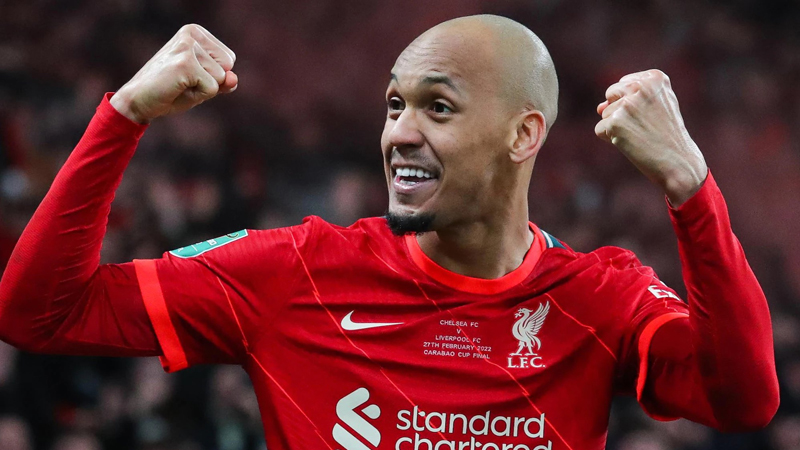
The summer of 2023 represented a watershed moment in the modern history of Liverpool Football Club. For five years, the midfield had been anchored by a player affectionately known as “The Lighthouse”—a tactical focal point whose presence allowed the team’s high-risk, high-reward system to flourish.
Yet, in a move that caught much of the sporting world by surprise, the Brazilian international finalized a £40 million transfer to Al-Ittihad.
Understanding why a cornerstone of Jurgen Klopp’s most successful era departed requires a multifaceted analysis of physical performance metrics, financial pragmatism, and a broader organizational pivot toward a “Midfield 2.0.”
This analysis examines the confluence of factors that led to the end of one of the most successful partnerships in Premier League history.
The Physical Threshold: Analyzing the 2022-2023 Performance Dip
To understand the decision-making process at Anfield, one must first look at the 2022-2023 season, which served as the primary data set for the club’s recruitment and retention team.
During this period, a noticeable decline in physical sharpness and pace became the central narrative surrounding the midfield anchor.
The Burnt-Out Anchor
The demands of Jurgen Klopp’s “heavy metal” football are famously taxing. For half a decade, the Brazilian had been the primary defensive filter, tasked with covering vast horizontal and vertical spaces to break up counter-attacks.
However, as the 2022-2023 campaign progressed, the player increasingly looked “burnt out”. The high-intensity pressing style that defined Liverpool’s identity requires a “Number 6” with elite recovery speed and the ability to win second balls consistently.
When those physical attributes began to wane, the entire defensive structure of the team was compromised.
The Impact on Defensive Stability
The drop in physical output had tangible consequences. Liverpool’s failure to secure Champions League qualification for the following season was, in many ways, a direct result of a porous midfield that could no longer protect the back four as it once had.
Internal performance reviews likely highlighted that the veteran was struggling to keep pace with the evolving speed of the Premier League, leading to a realization that a change was not just beneficial, but necessary for the team’s tactical survival.
The Financial Logic: A Lucrative Window of Opportunity
In professional sports management, timing the sale of a declining asset is as critical as the initial acquisition. When Al-Ittihad presented a £40 million bid, it shifted the internal calculus from a discussion about tactical rotation to one about strategic reinvestment.
Maximizing Market Value
At the time of the offer, the player was entering a stage of his career where his market value would likely only depreciate. Finding a buyer willing to pay £40 million for a defensive midfielder coming off a physically challenging season was a rare occurrence.
This “lucrative” offer provided Liverpool with the liquidity needed to fund a comprehensive overhaul rather than a piecemeal fix.
The Opportunity Cost of Retention
Had Liverpool rejected the bid, they would have been left with an aging specialist who was already being earmarked for a secondary role. Jurgen Klopp’s revised plan for the 2023-2024 season involved rotating the Brazilian more heavily, moving him away from being an undisputed starter.
By accepting the transfer fee, the club chose to prioritize the long-term health of the squad’s age profile over the short-term comfort of veteran experience.
The Strategic Pivot: Engineering the Midfield Rebuild
The departure was not an isolated incident but rather the centerpiece of a “massive midfield rebuild”. Following the disappointment of a fifth-place finish, the coaching staff and ownership group reached a consensus: the aging core of the team needed to be completely refreshed.
Klopp’s Vision for “Liverpool 2.0”
The manager’s decision-making was driven by a need for rejuvenation. While the player had been instrumental in winning every major trophy available, the 2023 summer window was viewed as the right time to move on.
This rebuild was not merely about replacing one player with another; it was about shifting toward a more dynamic, versatile, and physically capable engine room that could sustain Klopp’s tactical demands for the next three to five years.
The Manager-Player Dynamic
One of the most revealing aspects of this transition was the conversation between Klopp and his player.
When the bid arrived, the manager did not block the exit. Klopp has long maintained a philosophy of not forcing any player to stay if they are not fully committed to the project or if a move represents a superior path for all parties involved.
By making it clear that he would not stand in the way of a transfer, Klopp signaled that the era of the “Lighthouse” had reached its natural conclusion.
The Human Element: Acceptance and Realization
From the player’s perspective, the move was initially unexpected. Despite the physical struggles of the previous season, he did not initially harbor a desire to leave Merseyside and expected the club to reject the incoming bid.
The Realization of an Open Door
The psychological shift occurred when the player realized the club was genuinely open to selling him. In professional football, once a player senses that the hierarchy is prepared to move forward without them, the “right time” to move on becomes a reality.
This realization, coupled with the financial incentives and the prospect of a fresh start in the Saudi Pro League, ultimately led the player to accept that his chapter at Anfield was closed.
The Legacy of the “Number 6”
While the exit was driven by a dip in form and strategic necessity, it does not diminish the historical importance of the player’s tenure. He was the final piece of the puzzle that enabled the Champions League win in 2019 and the Premier League title in 2020.
However, the 2023 transfer window proved that even the most vital components of a system have a shelf life within a high-performance environment.
Expert Analysis: Frequently Asked Questions
Why didn’t Liverpool keep him as a squad player for his experience?
While his experience was highly valued, the £40 million offer changed the equation. The club opted to use those funds to sign younger, more mobile players who could execute the high-press system more effectively over a full 90 minutes.
Jurgen Klopp’s plan to rotate him more heavily suggested he was no longer viewed as a “must-start” player, making a high-value sale the more pragmatic choice.
Did the player’s performance issues cause the move?
It was a primary factor. His physical decline and struggle to keep up with the pace of the game during the 2022-2023 season made the midfield vulnerable. This decline coincided with a period where Liverpool needed a total refresh to return to the top of the table.
Was the move purely motivated by money from the Saudi Pro League?
For the club, the move was a strategic financial decision to fund a rebuild. For the player, while the contract was undoubtedly significant, the move only became an option once he realized Liverpool were willing to let him go and that his role in the team was set to diminish.
Final Assessment: A Necessary Conclusion
The departure of the midfield anchor in 2023 was a clinical, data-driven decision that prioritized the future of the collective over the sentimentality of the past.
Driven by a decline in physical metrics, a desire for a tactical refresh, and an irresistible financial proposal, the move allowed Liverpool to accelerate their transition into a new era.
It remains a textbook example of how elite organizations manage the decline of legendary figures to ensure long-term competitiveness.