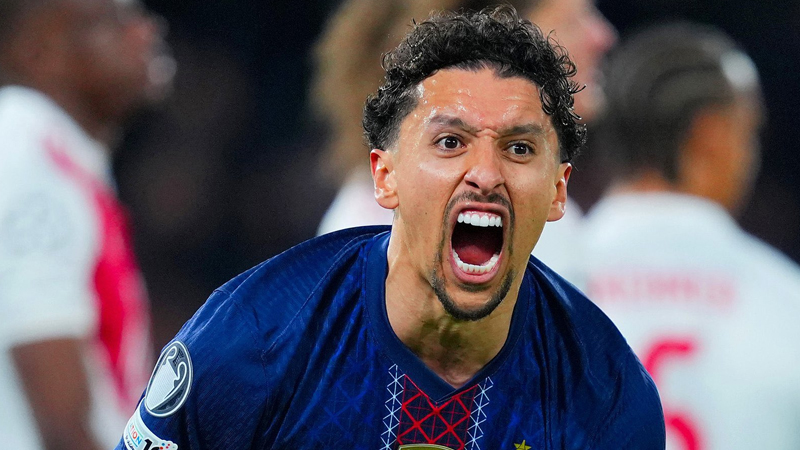
In the landscape of modern football, where the lines between national borders and professional commitments often blur, few figures represent the bridge between South American flair and European stability as effectively as Marcos Aoás Corrêa, known globally as Marquinhos.
As the captain of Paris Saint-Germain (PSG) and a foundational pillar of the Brazil national team, Marquinhos is more than just a central defender; he is a case study in how heritage and legal identity shape a world-class career.
Understanding the nationality of a player at this level requires looking beyond the jersey they wear on international match days. It involves examining the strategic, personal, and legal frameworks that allow a player born in the heart of Brazil to become a legendary figure in European football.
The Brazilian Foundation: Roots in São Paulo
The story of Marquinhos begins in São Paulo, Brazil, where he was born on May 14, 1994. For any aspiring footballer, being born in the largest city of Brazil carries a specific weight of expectation.
São Paulo is a cradle of defensive and midfield talent, and it was here that Marquinhos developed the technical composure and tactical discipline that would later define his game.
From a young age, his identity was firmly rooted in the Brazilian “futebol” culture. His rise through the youth ranks was characterized by a precocious ability to read the game—a trait that earned him early comparisons to some of the greatest defenders in the nation’s history.
While his professional journey has taken him across the Atlantic, his primary identity remains tied to his birthplace and the national team he now leads.
The Portuguese Connection: Navigating Dual Citizenship
One of the most frequent points of inquiry for fans and analysts alike is the nature of Marquinhos’ dual nationality. While his heart and his international career belong to Brazil, he also holds Portuguese citizenship.
This dual status is not uncommon among elite Brazilian athletes, yet it serves as a critical component of his professional profile in Europe.
Dual citizenship often arises through ancestral lines (Jus Sanguinis), and for many Brazilians, Portuguese heritage provides a direct legal link to the European Union.
By holding a Portuguese passport, Marquinhos is not merely a “foreign” player in the eyes of European football regulators; he is a citizen of an EU member state. This distinction is vital in the administrative corridors of clubs like Paris Saint-Germain and his former club, AS Roma.
The Strategic Value of the European Passport
In the competitive world of European club football, squad composition is often dictated by “non-EU player” quotas. Most major leagues, including Ligue 1 in France and Serie A in Italy, limit the number of players a club can register who do not hold a passport from an EU country.
By possessing dual Brazilian and Portuguese citizenship, Marquinhos provides his club with immense tactical and administrative flexibility.
- Squad Registration: Because he holds a Portuguese passport, he does not occupy one of the limited “non-EU” spots on the PSG roster. This allows the club to recruit other talents from South America, Africa, or Asia without exceeding regulatory limits.
- Market Mobility: Early in his career, his European citizenship made him a highly attractive prospect for Italian scouts. When he moved to AS Roma, his ability to be registered as a domestic/EU player streamlined the transfer process and increased his market valuation.
For a Fortune 500-level organization like PSG, these marginal gains in roster management are worth millions of Euros in strategic planning.
National Loyalty: Choosing the Seleção
Despite his Portuguese citizenship, there was never any doubt about which nation Marquinhos would represent on the pitch.
In the world of FIFA eligibility, a player with dual nationality often has a choice to make during their developmental years. For Marquinhos, the decision was driven by his deep connection to his home country.
As a professional footballer for the Brazil national team, he has become one of the most capped and respected defenders in their recent history.
His commitment to the Seleção has seen him compete in multiple World Cups and Copa América tournaments, often wearing the captain’s armband.
This choice reinforces the distinction between “legal citizenship” used for professional mobility and “national identity” used for international competition.
He represents the modern “Global Brazilian”—a man whose work is in Europe, whose legal status is dual, but whose sporting soul is undeniably tied to the yellow and green.
Leadership and the Captaincy in Paris
Marquinhos’ role as the captain of Paris Saint-Germain is perhaps the greatest testament to his integrated identity. Leading a club that boasts a truly international dressing room requires more than just defensive skill; it requires a bridge-builder.
Being a Brazilian with a European passport allows him to navigate the cultural nuances of a French club owned by Qatari interests, featuring players from every corner of the globe.
He is the stabilizing force in the locker room, a leader who understands the pressures of South American expectations and the tactical rigors of the European game.
His longevity in Paris—spanning over a decade—is a rarity in the modern era and speaks to his ability to adapt his identity to the needs of a global sporting brand.
Frequently Asked Questions: Understanding the Profile of Marquinhos
Is Marquinhos eligible to play for the Portuguese national team?
No. While he holds Portuguese citizenship, he has been a mainstay of the Brazil national team for years. Under FIFA regulations, once a player has competed in a competitive “A” international match for one nation, they are generally tied to that nation for the remainder of their career.
Where was Marquinhos born?
He was born in São Paulo, Brazil, on May 14, 1994.
Why does he have Portuguese citizenship if he is Brazilian?
Dual citizenship is common for Brazilians with European ancestry. It provides significant professional advantages for athletes playing in Europe, particularly regarding league registration rules for non-EU players.
What is his full legal name?
His full name is Marcos Aoás Corrêa.
The Legacy of a Dual Identity
The profile of Marquinhos is a masterclass in how modern athletes manage their personal and professional identities. By embracing his roots in São Paulo while securing his status as a Portuguese citizen, he has optimized his career for maximum impact on the world stage.
He remains a symbol of excellence for aspiring players in Brazil and a model of consistency for fans in Paris. In an era where football is a truly global business, Marquinhos stands as a reminder that identity is not just about where you are from, but how you navigate the world to reach the pinnacle of your profession.