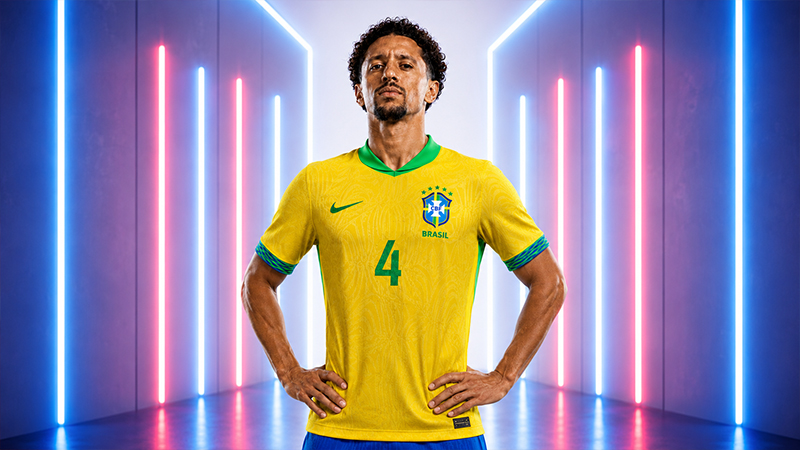
In the complex economy of global football, few variables are as scrutinized as the market valuation of a centerpiece defender.
For over a decade, the individual at the heart of both Paris Saint-Germain and the Brazilian national team has served as a benchmark for defensive excellence and leadership.
However, as the transfer market evolves through shifting fiscal regulations and changing squad building philosophies, the financial profile of this elite athlete offers a compelling study in asset depreciation versus intangible leadership value.
Currently, the captain of Paris Saint-Germain and the Brazil national team maintains an estimated market value of approximately €30 million. While this remains a significant figure for a veteran in his position, it represents a substantial departure from his historical financial ceiling.
To understand the current standing of this defensive stalwart, one must examine the intersection of performance data, age-related market trends, and the specific metrics used by leading financial analysts in the sport.
The €92 Million Benchmark: A Retrospective on Peak Market Dominance
To provide context for the current valuation, it is necessary to look back to 2020, a year that marked the player’s peak financial standing. At that stage of his career, his market value reached an all-time high of nearly €92 million.
This valuation did not merely reflect his on-field performance; it was a synthesis of several high-value factors that made him arguably the most coveted center-back in the world.
During the 2020 period, several variables converged to drive this valuation toward the hundred-million-euro threshold:
- Age Profile: At 26, he was entering the traditional prime years for a central defender, offering both immediate world-class capability and high resale potential.
- Contract Security: Long-term commitments to the Parisian club gave the selling team immense leverage.
- Versatility: His ability to transition seamlessly between central defense and a defensive midfield role added a premium to his market price.
- Continental Success: Leading a team to a Champions League final significantly inflates an asset’s global visibility and perceived value.
The decline from a €92 million peak to a €30 million current estimate is not necessarily an indictment of skill, but rather a reflection of the natural lifecycle of a professional athlete’s transferability.
Breaking Down the Modern Metrics: €30 Million and Beyond
The current valuation of €30 million is corroborated by several industry-standard platforms, each utilizing distinct methodologies to arrive at their conclusions.
Transfermarkt Methodology
The most widely cited public valuation tool currently pegs the player at exactly €30 million. This figure is derived from a community-driven yet expert-vetted process that considers factors such as:
- Transfer history: The historical fees paid for the player.
- Age: The diminishing window for future high-value transfers.
- Injury history: Physical durability over a long career.
- Market demand: The number of clubs with the financial capacity to afford his salary and a potential transfer fee.
FootballTransfers (ETV) Analysis
The Estimated Transfer Value (ETV) provides a slightly more nuanced range, placing the player between €26.6 million and €32.5 million. This algorithmic approach often weighs performance data and “Expected Transfer Value” more heavily than traditional market sentiment.
The fact that the ETV range sits so closely to the €30 million mark suggests a high level of market consensus regarding his current worth.
The Leadership Discrepancy: Elite Status vs. Market Price
One of the most intriguing aspects of this financial profile is the apparent gap between the player’s “market value” and his “functional value.”
As the captain of both his club and his country—two of the most pressured environments in world football—his role extends far beyond defensive metrics.
The Captaincy Premium
In a corporate or sporting sense, leadership is often an undervalued asset in purely quantitative models. While a valuation of €30 million suggests a player in the twilight of his prime, his role as the on-pitch general for PSG and Brazil implies he is indispensable.
For a club like Paris Saint-Germain, the cost of replacing a captain who understands the club’s culture and tactical requirements often far exceeds his nominal market value.
Age and the “Veteran Discount”
As players cross the age of 30, transfer models begin to apply a “veteran discount.” This is because the purchasing club is unlikely to recoup their investment in a future sale.
While the player remains a top-tier performer, the €92 million valuation of 2020 was built on the prospect of future years; the €30 million valuation of today is built on current utility and short-term reliability.
Comparative Market Analysis: The Center-Back Landscape
To truly grasp the significance of a €30 million valuation, it must be compared to the broader market for central defenders.
- Emerging Talents: Younger defenders with less experience often command fees in the €60-€80 million range due to their potential longevity.
- Established Veterans: Compared to other defenders in his age bracket, a €30 million valuation remains high, signaling that he is still viewed as part of the global elite.
The shift from the €92 million peak reflects a transition from being a “market-mover” (a player who defines the transfer window) to a “pillar asset” (a player who provides stability and leadership but is no longer the primary focus of high-stakes transfer speculation).
Strategic Financial Implications for Stakeholders
For stakeholders looking at these metrics, the data suggests a period of stabilization. The sharp decline from the 2020 peak has slowed, and the current range of €26.6 million to €32.5 million represents a realistic “fair market value” for a player of his stature.
For Paris Saint-Germain, the decision-making process is no longer about maximizing resale value. Instead, the focus is on the “return on leadership.”
Even if his market value were to drop further as he nears the end of his current contract, his value in maintaining squad discipline and tactical execution as captain remains a high-yield investment for the organization.
Expert Analysis: Frequently Asked Questions
Why has his value decreased so significantly since 2020?
The primary driver is the natural aging process and the reduction in the number of years remaining on his elite-level career.
In 2020, at a €92 million valuation, he was a long-term investment. At €30 million, he is a “win-now” acquisition for a club seeking immediate stability.
Is the €30 million valuation a reflection of declining performance?
Not necessarily. Market value tracks transferability and resale potential. A player can maintain world-class performance levels while their market value decreases due to external factors like age and contract length.
His continued role as captain for both PSG and Brazil suggests his performance remains at a high level.
What could cause his valuation to increase again?
In the current market, it is rare for a veteran’s value to see a major upward trajectory. However, a move to a league with different financial structures (such as the Saudi Pro League) or an exceptional performance in a major international tournament like the World Cup could lead to a temporary spike in perceived market value.
Conclusion: The Legacy of a Financial Powerhouse
The financial journey of Marquinhos, from a record-breaking peak of €92 million to a stable veteran valuation of €30 million, mirrors the trajectory of the modern elite athlete.
He remains a vital asset for both club and country, proving that while market valuations are a useful tool for accountants and directors, they cannot fully capture the intangible essence of leadership and consistency.
As the captain of two of the most prestigious teams in football, his influence cannot be reduced to a single number.
However, for those tracking the business of sport, his €30 million market standing serves as a masterclass in how elite talent transitions through the various stages of the professional lifecycle.