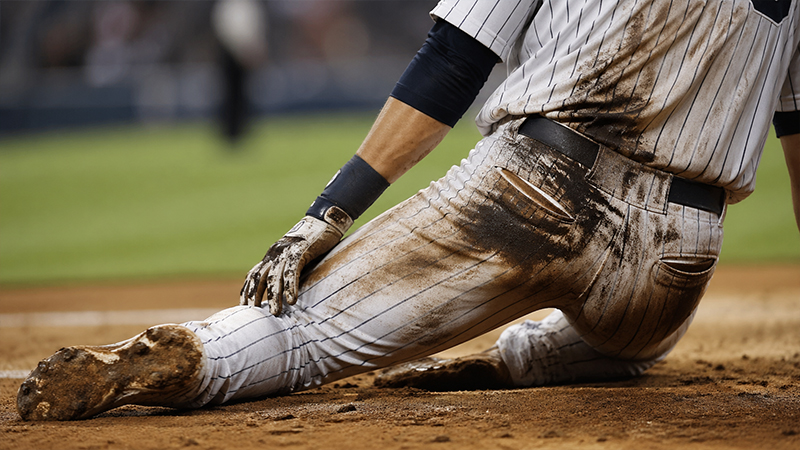
In the multi-billion-dollar landscape of Major League Baseball (MLB), where every jersey is pressed to perfection, and every blade of grass is precision-cut, a glaring visual anomaly persists: the batting helmet.
To the uninitiated observer, the thick, dark, and often nauseating buildup of filth on a superstar’s helmet looks like a failure of equipment management.
However, in the world of elite athletics, this “grime” is a curated, functional, and deeply symbolic element of the game known as the Pine Tar Patina.
Fans aren’t just asking, “Why are MLB helmets dirty?” They are looking for the intersection of sporting utility, traditional superstition, and the “gamer” identity.
This comprehensive deep dive explores why the most elite hitters in the world choose to wear a “filthy” badge of honor.
The Anatomy of the Grime: How the Patina Forms
The transition of a pristine, high-gloss helmet into a matted, dark-brown relic is not an overnight occurrence. It is a slow, methodical accumulation of substances that tells the story of a 162-game season.
1. The Primary Transfer Mechanism
The journey begins at the plate. To maintain a secure grip on a wooden bat—which can reach exit velocities exceeding 110 mph—players apply pine tar, a sticky, tacky resin, to the handle of the bat. This substance inevitably coats the hitter’s batting gloves.
Throughout a game, a player will adjust their helmet dozens of times: pulling the brim down to shield their eyes from the sun, securing the earflap after a sprint to first base, or simply fidgeting between pitches.
Every touch transfers a micro-layer of pine tar from the gloves to the helmet. Over months of daily use, these layers fuse with infield dust, sweat, and atmospheric debris to create a thick, caked-on shell.
2. Beyond Pine Tar: The Chemistry of the Stick
While “pine tar” is the catch-all term used by broadcasters, the modern patina is often a cocktail of advanced grip enhancers.
- Tiger Sticks: Many players prefer “Tiger Stick,” a proprietary wax-based substance that provides a more consistent tack in high humidity.
- Color Profile: Unlike traditional pine tar, which is dark brown, these synthetic sticks can turn a distinct burnt orange or reddish-brown as they oxidize, contributing to the unique multi-toned appearance of the helmet.
The Functional Advantage
In MLB, the helmet serves as a mobile resource station, a concept known as the “Pine Tar Rag” effect.
The Efficiency of the On-Demand Grip
The rules of baseball are designed to keep the game moving. Walking back to the on-deck circle to use a communal pine tar rag or a “rosin bag” during an at-bat is time-consuming and can break a hitter’s rhythm.
By intentionally placing extra pine tar on the crown or the brim of their helmet, players create a portable reservoir of grip.
If a player feels their hands slipping during a high-tension at-bat, they can simply tap their helmet, re-tack their gloves, and step back into the box without ever leaving the dirt.
This functional utility transforms the helmet from a piece of protective gear into a performance-enhancing tool.
The Psychology of the Patina: Superstition and the “Gamer” Identity
In a sport where a 70% failure rate (batting .300) makes you a Hall of Famer, psychology is as important as physical skill. The pine tar buildup is deeply rooted in the unwritten codes of baseball culture.
1. The “Lucky” Look
Baseball is famously the most superstitious sport in the world. When a player is on a hitting streak, they become terrified of changing anything in their environment.
A helmet that was present during a four-hit game is viewed as “hot.” To clean that helmet—to “wash away the grime”—is seen by many as washing away the luck.
Consequently, players allow the filth to accumulate for an entire season, fearing that a pristine helmet will lead to a slump.
2. The Mark of a “Gamer.”
Traditional insights within the clubhouse suggest that a clean helmet is the mark of a rookie or a bench player. Conversely, a heavily weathered helmet is the visual resume of a “hard worker” or a “gamer”.
- The Message: It signals to the opposition and the fans that the player is focused on the “grit” of the game rather than the aesthetics of the uniform.
- The Veteran Status: A thick patina suggests a player who has spent a significant amount of time in the trenches of the batter’s box, prioritizing hitting performance over equipment maintenance.
The 162-Game Grind: Why It Isn’t Cleaned
A common question from casual observers is: “Why don’t the clubhouse managers just wash them?” In any other professional industry, equipment maintenance is standard. In MLB, the lack of cleaning is a deliberate choice.
The accumulation is viewed as a chronicle of the season. The dirt on the helmet in September represents the sweat of April, the humidity of July, and the pressure of the pennant race.
Most players do not allow their helmets to be cleaned until the offseason, at which point the equipment is either retired to a trophy case or scrubbed down to begin the cycle anew next spring.
FAQ: Understanding the “Dirty Helmet” Phenomenon
Q: Is it legal for MLB players to have that much pine tar on their helmets?
A: Yes. While Rule 3.02(c) limits the amount of pine tar on a bat (no more than 18 inches from the handle), there is currently no specific MLB rule that limits the accumulation of pine tar on a batting helmet, provided it does not interfere with the game or the umpire’s ability to see the ball.
Q: Do all players use the same substance?
A: No. While pine tar is the classic choice, many modern players use Tiger Sticks, Mota Sticks, or custom rosin blends. These substances react differently to temperature and moisture, leading to the varied brown, black, and orange colors seen on helmets across the league.
Q: Why do some teams have more “dirty” helmets than others?
A: This often comes down to clubhouse culture. Some organizations or veteran leaders emphasize a “clean-cut” look, while others embrace the “dirtbag” aesthetic (a term of endearment in baseball for high-effort, gritty players).
Conclusion: Embracing the Grit
The Pine Tar Patina is more than just a mess; it is a visual manifestation of the professional baseball player’s work ethic.
It represents a fusion of tactical necessity—maintaining the best possible grip in a high-stakes environment—and the deep-seated traditions that make baseball unique.
For the fan, seeing a grimy helmet should be a sign of reassurance. It means the player is locked in, utilizing every tool at their disposal (including the helmet itself) to gain a competitive edge. In the world of Major League Baseball, perfection isn’t found in a clean uniform; it’s found in the patina.