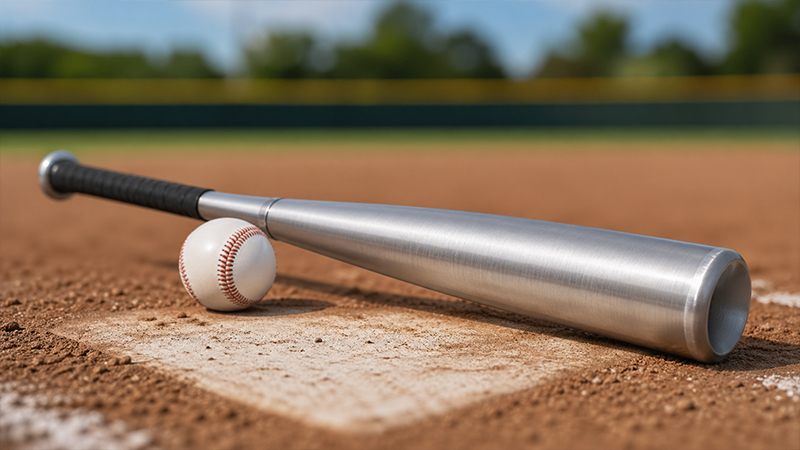
In the world of competitive baseball and softball, the arrival of a new bat is a milestone. Whether you are a power hitter looking for that extra exit velocity or a contact hitter aiming for a consistent “pop,” the equipment you carry to the plate matters.
One of the most common questions players and parents ask after unboxing a shiny new piece of hardware is: “How do I break in my aluminum baseball bat?”
There is a significant amount of misinformation circulating in dugouts and online forums regarding bat preparation. To ensure you get the most out of your investment, it is vital to understand the material science of your bat.
This guide will debunk common myths and provide actionable steps to ensure your aluminum bat performs at its peak from the very first swing.
The Short Answer: Aluminum vs. Composite
Before diving into the technical details, it is important to address the core of the question directly. Aluminum and alloy bats do not require a break-in period.
Unlike composite bats, which are constructed from carbon fiber layers that must be “loosened” or compressed through repetitive impact, aluminum bats are engineered to be “hot out of the wrapper”.
This means the moment you remove the plastic seal, the bat is already at its maximum legal performance level.
Why Aluminum Bats Don’t Need Breaking In
To understand why a “break-in” is unnecessary for metal bats, we have to look at how they are manufactured.
1. Material Rigidity
Aluminum and alloy bats are made from high-strength metal. Metal does not have the same “settling” period that fiber-based materials do.
While composite bats may require a break-in period to reach their full potential, the molecular structure of an alloy barrel is set during the forging process.
2. The “Hot Out of the Wrapper” Advantage
The phrase “hot out of the wrapper” is the gold standard for alloy bats. It signifies that the bat has already achieved its peak “trampoline effect”—the efficiency with which the bat barrel compresses and returns energy to the ball.
Because metal does not become more flexible or powerful over time through use, there is no performance benefit to hitting 500 balls off a tee before a game.
3. Immediate Game Readiness
Because no break-in is required, these bats are game-ready right away. This makes alloy bats the preferred choice for players who need a replacement bat in the middle of a season or just before a big tournament.
You can take an alloy bat directly from the sporting goods store to the batter’s box with full confidence in its power.
If You Don’t “Break It In,” What Should You Do?
While you don’t need to “break in” an aluminum bat to improve its pop, you should perform a “Performance Readiness Check” to ensure you are comfortable with the new tool. Instead of focusing on changing the bat’s material properties, focus on your synergy with the bat.
Step 1: The Initial Contact Phase
Even though the bat is ready, your swing might not be. Take 25–50 swings with high-quality leather baseballs. The goal here isn’t to change the bat, but to:
- Acclimatize to the swing weight and balance point.
- Get a feel for the vibration dampening (or lack thereof) in the handle.
- Identify the exact location of the sweet spot.
Step 2: Grip Inspection
Check the factory grip. Some players prefer a thinner grip for more feel, while others want more cushion to reduce “sting” on off-center hits. If the factory grip doesn’t feel right, now is the time to replace it with a custom wrap.
Step 3: Sound Verification
A new alloy bat should have a distinct, crisp “ping” sound. During your initial practice swings, listen to the barrel.
If the bat sounds “dull” or “thuddy,” it could indicate a rare manufacturing defect. Since alloy bats are game-ready immediately, any lack of “pop” or sound quality is a sign to check your warranty.
Maximizing the Lifespan of Your Alloy Bat
Since aluminum bats start at peak performance, your goal is to maintain that level for as long as possible. Aluminum bats don’t “break in,” but they can “wear out” or dent if mistreated.
1. Avoid Dimpled Practice Balls
Many batting cages use yellow dimpled balls. These are significantly denser and harder than regulation leather baseballs. Using a high-end alloy bat with these balls can cause “flat spots” or denting. To keep your bat “hot,” only use regulation balls.
2. Temperature Awareness
Metal is sensitive to temperature. In cold weather (typically below 50–60 degrees Fahrenheit), baseballs become harder and denser.
Hitting a cold, hard ball with a metal bat significantly increases the risk of denting the barrel. If you are playing in cold climates, keep your bat in a warm bag between innings.
3. Rotate the Bat
Even though the material doesn’t need to be broken in, it is a good habit to rotate the bat a quarter-turn after every hit.
This ensures that the impact is distributed evenly around the entire circumference of the barrel, preventing one side from taking all the stress and potentially developing a flat spot.
Alloy vs. Composite: Making the Choice
When deciding between these two materials, timing is often the deciding factor.
- Choose Alloy if: You need a bat that can be used in a game right away. You prefer a stiffer feel and a traditional “ping” sound.
- Choose Composite if: You have the time (and patience) to perform a proper break-in period. You prefer a dampened feel with less vibration and a larger sweet spot that develops over time.Summary: Game Day Preparedness
The most important takeaway for any player is that aluminum/alloy bats do not require a break-in period.
Attempting to “break in” an alloy bat by hitting it against a post or using a mallet will not increase its performance; it will only damage the metal and void your warranty.
By understanding that your bat is “hot out of the wrapper,” you can focus your energy where it belongs: on your swing mechanics and your approach at the plate.