Maintaining your baseball bat is more than just a matter of aesthetics; it is a critical component of performance, rule compliance, and equipment longevity.
While pine tar is a beloved tool for enhancing grip and control—especially in the sweltering heat or humid conditions—it eventually reaches a point of “diminishing returns” where the buildup becomes a hindrance rather than a help.
This comprehensive guide explores the best professional and household methods for removing pine tar from your bat, ensuring your wood, metal, or composite equipment remains in peak condition.
Understanding the Role of Pine Tar in Baseball
Before diving into the removal process, it is important to understand why we use pine tar in the first place. Historically derived from shipbuilding practices used to seal wood, pine tar is a sticky, resinous substance applied to the tapered section of a bat.
The Performance Benefit
Players apply pine tar between the handle and the barrel to create a tacky surface. This allows a hitter to maintain a relaxed but firm grip, preventing the bat from slipping during a high-velocity swing.
This is particularly vital during wet or humid games where sweat and moisture can make a handle dangerously slick.
The Famous 18-Inch Rule
No discussion of pine tar is complete without mentioning the 1983 “Pine Tar Game” involving George Brett.
After hitting a crucial home run, Brett’s bat was challenged by the opposing manager for having pine tar extending beyond the legal 18-inch limit from the handle.
While the initial ruling called him out, it was later overturned because the excess tar did not actually improve the bat’s performance.
However, the 18-inch rule remains a standard in many leagues today to prevent the sticky substance from coming into contact with the ball during a hit.
When and Why Should You Clean Your Bat?
You might be tempted to let the pine tar build up season after season, but there are four primary reasons why professional players and equipment managers prioritize regular cleaning:
- Performance Decay: Over time, pine tar accumulates dust, dirt, and debris from the dugout and the field. This mixture creates a “crust” that actually reduces tackiness, making your grip worse than if the bat were clean.
- Rule Compliance: As seen in the George Brett incident, excessive buildup can lead to a bat being ruled illegal in specific tournament play or professional leagues.
- Longevity: For wood bats, old tar can trap moisture or lead to the wood drying out unevenly; for metal and composite bats, it can hide structural issues like cracks or stress marks.
- The “Fresh Start” Mentality: Many elite players prefer to clean their bats at the conclusion of a tournament to ensure they have a fresh, reliable surface for the next series.
Method 1: The Isopropyl Alcohol Technique (The Gold Standard)
According to professional maintenance guides, 90% to 91% Isopropyl Alcohol is the most effective and safest solvent for general pine tar removal.
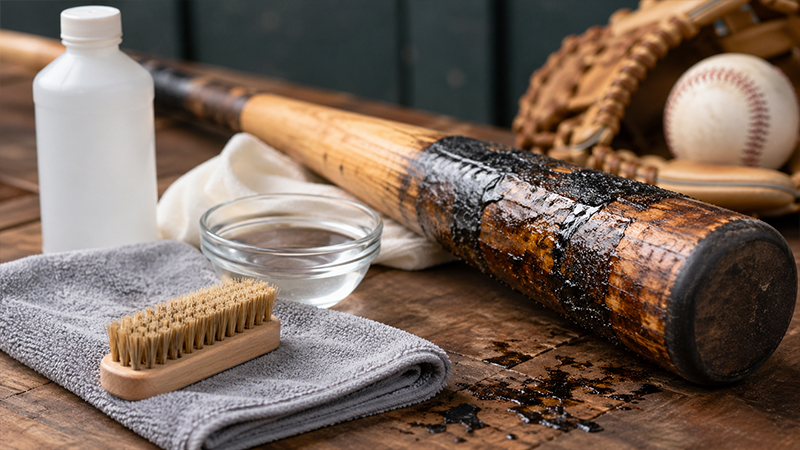
What You Will Need:
- Isopropyl alcohol (91% preferred)
- Microfiber cloth or soft old T-shirt
- Mild soap and warm water
Step-by-Step Instructions:
- Prep the Cloth: Apply a small amount of the alcohol directly to the cloth rather than the bat to avoid over-saturation.
- Circular Rubbing: Work in small, circular motions starting from the top of the tarred area and moving down toward the handle.
- Rotate the Rag: As the cloth picks up the brown residue, switch to a clean section of the fabric to avoid simply spreading the tar back onto the bat.
- Final Wash: Once the stickiness is gone, wipe the area with a damp cloth and mild soap to remove any chemical residue.
- Dry Thoroughly: Always ensure the bat is completely dry before storage to prevent warping (wood) or corrosion (metal).
Pro Tip: High-percentage alcohol evaporates quickly, which is ideal because it avoids adding unnecessary moisture or weight to the bat.
Method 2: Commercial Solvents and Heavy-Duty Cleaners
For bats with years of baked-on buildup, household alcohol might not be enough. In these cases, stronger commercial solvents are required.
Effective Solvents:
- Goo Gone / Goof Off: These are specifically formulated to break down adhesives and resins.
- WD-40: Highly effective at dissolving the chemical bonds in pine tar.
- Specialized Bat Cleaners: Products like the “Resin Razor” are designed to safely lift debris without scratching the finish.
Application Safety:
When using these chemicals, always work in a well-ventilated area. Apply the cleaner to a rag first, rub until the tar dissolves, and then wash the bat immediately after with warm water to ensure no residue remains that could degrade the bat’s finish over time.
Method 3: The Heat and Scrape Approach
If you have a thick, “caked-on” layer of tar, liquid solvents alone can be messy. Softening the tar first makes the process much faster.
- Apply Low Heat: Use a hair dryer on a low setting to gently warm the pine tar. Avoid high-heat industrial guns, as excessive heat can damage the resins in composite bats or cause wood bats to become brittle.
- Wipe or Scrape: Once the tar becomes shiny and liquid, wipe it away with a soft cloth.
- The Scraper Tool: For the thickest layers, use a plastic putty knife or a plastic scraper. Never use metal scrapers, especially on composite bats, as they can cause structural gouges and ruin the bat’s integrity.
Method 4: The Freezing Technique (For Stubborn Cases)
In some scenarios, making the pine tar brittle is more effective than making it liquid.
- Chill the Bat: Place the bat in a large freezer for 1–2 hours or apply ice packs directly to the heavily tarred sections.
- Chip it Away: Once the tar is frozen and brittle, use a plastic scraper to gently “pop” the flakes of tar off the surface.
- Solvent Finish: Follow up with a quick alcohol wipe to remove any remaining microscopic residue.
Material-Specific Care: Wood vs. Metal vs. Composite
Different bat materials require different levels of caution during the cleaning process.
Wood Bats
Wood is porous and sensitive to moisture.
- Avoid Soaking: Never submerge a wood bat in water or cleaning solutions.
- Fast Work: When using alcohol, work quickly so the solvent doesn’t seep deep into the grain and dry out the wood.
- Drying: Ensure the bat is dried immediately to prevent warping.
Metal (Aluminum/Alloy) Bats
Metal bats are the most durable and can handle stronger cleaners like WD-40 or Goo Gone. However, be sure to clean inside the barrel edge where tar often collects and can lead to corrosion if left uncleaned.
Composite Bats
Composite bats are made of complex carbon fibers and resins that can be sensitive to harsh industrial chemicals.
- Safest Option: Stick to 90% Isopropyl Alcohol.
- Warning: Avoid “brake cleaner” or other harsh automotive degreasers unless you have tested them on a small, inconspicuous area first.
- No Metal: Again, never use a metal scraper on a composite bat.
Rule Compliance and League Differences
It is crucial to know your league’s specific rules regarding grip enhancers.
- Little League: Pine tar is generally illegal in Little League. If a player brings a bat with pine tar to a Little League game, it must be removed entirely before use.
- High School/College: Rules typically mirror the 18-inch professional standard, though enforcement can vary by umpire.
- Cleaning for Inspection: If you are playing in a major tournament where bats are inspected, a clean bat is less likely to be scrutinized for illegal modifications or hidden cracks.
Pro Tips for Better Pine Tar Application
To avoid difficult cleanup sessions in the future, follow these “less is more” principles:
- Use a Applicator: Instead of pouring liquid tar, use a pine tar stick or rag to control the volume.
- Proper Placement: Always apply below the 18-inch mark.
- Batting Gloves: High-quality batting gloves can reduce the amount of pine tar you actually need on the bat handle.
- Storage: Store your bat in a sleeve or specialized bag to prevent tar from transferring to your other gear or collecting dugout dirt.
- Premium Products: Modern solutions, such as BRUCE BOLT Premium Pine Tar, use a proprietary blend of natural pine tar and rosin. This formula is designed to stay tacky longer through an entire tournament, meaning you apply less and clean up less frequently.
Conclusion
Cleaning your bat is a hallmark of a professional-minded player. Whether you are using the Isopropyl Alcohol technique for a quick refresh or the Freezing method for a deep clean, taking the time to maintain your equipment ensures that your only focus at the plate is the next pitch.
By following these steps, you will extend the life of your bat, stay within league regulations, and maintain the perfect “tack” for every swing.