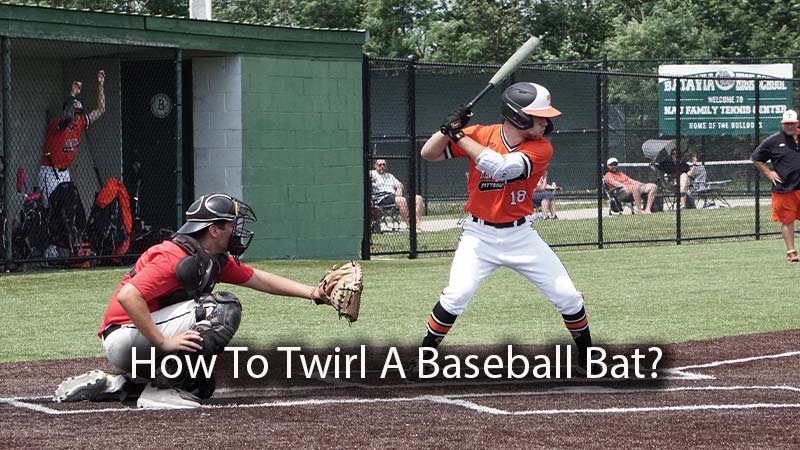
There is a distinct kind of electricity that runs through a ballpark when a player does something unexpected with absolute flair.
While the primary objective of stepping into the batter’s box is driving a baseball past the infield, baseball has always harbored a rich culture of style, rhythm, and showmanship.
From Ken Griffey Jr.’s signature swing finish to modern bat flips that ignite social media feeds, players are constantly looking for ways to express their personality on the diamond.
Enter the baseball bat twirl—often referred to by players as the levitation trick or the barrel spin.
When executed correctly, it looks like magic. The bat seems to briefly defy gravity, floating and rotating smoothly around the player’s hands before being caught cleanly mid-air.
Beyond looking incredible on highlight reels, learning this move offers genuine athletic benefits: it deepens your kinesthetic awareness, builds exceptional wrist and forearm flexibility, and helps you understand the complex physics of weight distribution and momentum.
Whether you are an aspiring player looking to add some personality to your pre-at-bat routine, a coach looking to engage youth players with fun coordination drills, or a baseball enthusiast fascinated by the hidden mechanics of the game, this comprehensive guide will walk you through everything you need to know to master the bat spin safely and stylishly.
Understanding the Physics: Why the Bat Twirl Works
Before diving into the physical mechanics, it helps to understand what is actually happening from a physics perspective.
A standard baseball or softball bat is an unevenly weighted lever. Most of the mass is concentrated heavily in the barrel at the distal end, while the handle and knob provide a lighter counterweight.
When you swing a bat, you are generating kinetic energy. A bat twirl leverages this momentum by introducing a sudden pivot point and a clever shift in hand positioning.
By briefly halting the forward linear motion of your hands while allowing the heavier barrel to continue its path through angular momentum, you create a natural axis of rotation.
When you pull your hands backward toward your center of gravity at the exact right micro-second, you counteract the heavy pull of the barrel.
This creates the optical illusion that the bat is hovering or “levitating” right in front of you. Mastering this trick isn’t about brute strength; it is entirely about timing, leverage, and respecting the weight of your equipment.
Step-by-Step Technical Blueprint: How to Execute the Twirl
Learning how to twirl a bat requires breaking down a fluid movement into discrete, deliberate components. Do not attempt a full-speed spin on your first try. Work through these sequential phases systematically.
Step 1: The Setup and Initiation
Every great trick starts with proper posture and rhythm.
- Establish an athletic stance: Stand with your feet slightly wider than shoulder-width apart, knees comfortably flexed, and core engaged just as you would when preparing to hit.
- Initiate an upward trajectory: Begin with a slow, controlled swing moving upward rather than chopping downward or swinging flat. A slight upward plane gives the bat the necessary vertical momentum to transition into the spin phase.
Step 2: The Grip Release and Apex
This is the most critical transition point in the entire sequence.
- Locate the apex: As the bat reaches the mid-point or peak of your upward swing path, your hands should be roughly chest-high.
- Loosen the top hand: Slightly relax your top hand’s grip on the handle. You are not letting go of the bat entirely; rather, you are creating a frictionless sliding mechanism where the handle can turn smoothly against your palm and fingers without catching.
Step 3: The Wrist Snap and Torso Pull
This is where the optical illusion happens.
- Snap your wrists backward: Quickly flex your wrists backward to redirect the energy of the swing.
- Pull toward your body: Simultaneously draw your arms and hands slightly inward toward your chest. This inward pull is the secret safeguard—it keeps the spinning barrel close to your body and prevents it from swinging wildly outward into an uncontrolled arc. The heavy barrel’s own momentum will carry it through the circular rotation.
Step 4: Tracking and the Seamless Catch
The final step requires complete visual focus.
- Keep your eyes locked: Never close your eyes or look away. Keep your gaze fixed on the knob or the end of the handle throughout the entire rotation.
- Re-grip with authority: As the handle completes its rotation and comes back around into your waiting palms, clamp down firmly with both hands. Absorb the kinetic energy smoothly and transition right back into a balanced, ready stance.
Essential Practice Tips and Safety Guidelines
Because you are essentially manipulating a heavy wooden or composite object spinning through the air, safety and controlled progression are paramount. Keep these core principles in mind every time you step out to practice.
Safety First: Always practice outdoors in wide-open spaces, safely away from other people, vehicles, batting cages, and fragile objects. If you lose control of the grip during the learning phase, the bat will travel. Give yourself a wide perimeter.
1. Start Small with Micro-Drills
Do not attempt a full 360-degree rotation on day one. Begin by practicing simple half-rotations or loose wrist-flicks. Get a feel for how your specific bat balances in your hands.
Remember that a heavy ash or maple bat will feel vastly different from a lightweight youth aluminum or composite bat. Match your timing to the specific swing weight of the tool you are using.
2. Overcome the Mental Barrier
It is completely natural for beginners to feel a bit hesitant. The most common mistake new learners make is pushing the bat away from their body out of an instinctual fear of hitting themselves.
Train your muscle memory to do the exact opposite: keep your hands pulled inward toward your torso. This ensures the rotation stays tight, predictable, and entirely safe.
3. Build Wrist and Forearm Strength
The fine motor skills required for smooth bat handling rely heavily on forearm endurance and wrist flexibility.
Incorporating wrist curls, reverse wrist curls, and resistance band exercises into your regular conditioning routine will make the twirl feel effortless and controlled over time.
Integrating Style into Your Game
Style in baseball has always been a reflection of confidence. While mastering a bat spin is a fun way to showcase coordination, remember that execution on the field always comes first.
Use these skills during warm-ups, batting practice sessions, or pre-at-bat routines to loosen your muscles and dial in your mental focus.
By treating the bat not just as an instrument of force, but as an extension of your own athleticism, you elevate your entire approach to the game. Take it slow, respect the mechanics, and enjoy mastering one of baseball’s most mesmerizing visual arts