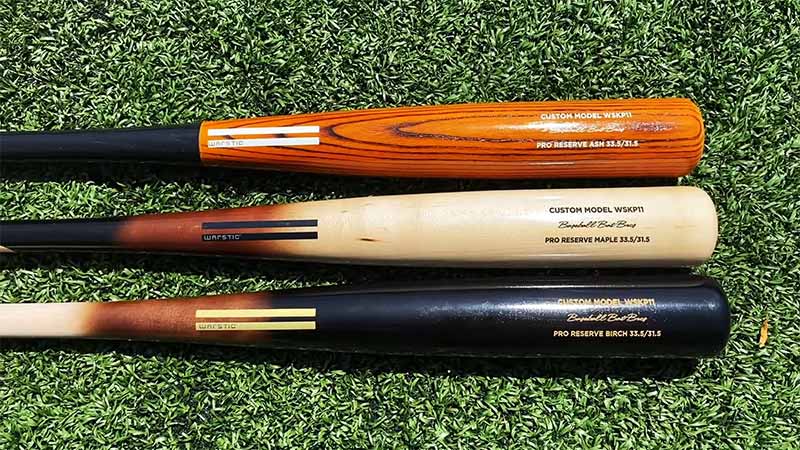
When you step into the batter’s box, the piece of timber in your hands is your ultimate weapon.
For generations, the debate between maple and ash bats has divided clubhouses, ignited dugout arguments, and challenged hitters at every level of the game.
Choosing the right bat isn’t just about personal preference; it fundamentally alters your swing mechanics, power output, and how your hands feel after catching a fastball off the end of the barrel.
Neither wood is universally superior. Maple reigns supreme for power hitters chasing maximum hardness and distance, while ash shines for contact hitters seeking a lighter, more flexible bat with a forgiving sweet spot.
Your ideal choice ultimately depends on your unique swing style, physical strength, and experience level.
The Evolution of Wood Bats in Modern Baseball
For decades, Northern White Ash was the undisputed king of the professional and amateur wooden bat markets. Its natural grain structure, flexibility, and lightweight feel made it the standard choice for legendary hitters throughout baseball history.
However, the landscape shifted dramatically in the late 1990s with the introduction of hard maple bats.
Power hitters quickly realized that maple’s dense grain structure could launch baseballs further and harder than traditional ash.
Today, maple dominates Major League Baseball and trickles down to collegiate and high school ranks. Yet, ash remains a fiercely defended favorite for players who value bat speed, whip, and flexibility.
Understanding the structural differences between these two woods requires looking beneath the surface at how they grow, how they are harvested, and how they perform under high-velocity impacts.
Maple Bats: The Power Hitter’s Choice
Maple is a closed-grain, extremely dense hardwood (typically sugar maple or hard rock maple). Its cellular structure is tightly packed, which gives the bat its legendary rigidity.
+-------------------------------------------------------------+
|                     MAPLE BAT PROFILE                       |
+----------------------+--------------------------------------+
| Primary Advantage    | Maximum energy transfer & distance   |
| Durability Style     | Clean fractures, minimal flaking     |
| Common Drawback      | End-loaded feel, severe hand sting   |
| Ideal User           | Strong power hitters, veterans       |
+----------------------+--------------------------------------+
Hardness and Energy Transfer
Because maple is exceptionally dense and stiff, it flexes very little upon impact. When a maple bat meets a baseball traveling at 90 miles per hour, less energy is lost to the bending of the wood.
Instead, almost all of the kinetic energy transfers directly into the ball, resulting in higher exit velocities and greater overall distance.
Durability and Fracture Characteristics
Maple does not flake or splinter easily along the grain lines. However, when a maple bat structural limit is reached—usually from an inside pitch hitting near the handle—it tends to snap cleanly in half.
While broken bats are always dangerous, maple’s tendency to fracture rather than peel apart makes it predictable under catastrophic stress.
The Drawbacks of Maple
End-Loaded Weight: Maple is heavy. To achieve standard drop weights, manufacturers often leave the barrel dense, creating an end-loaded feel that requires significant core and forearm strength to control.
Mishit Feedback: Because the wood has virtually no give, hitting a ball off the handle or the end of the barrel sends a harsh, stinging shockwave straight into your hands and wrists. On cold days, this sting can be painful enough to sideline a player temporarily.
Who Should Choose Maple?
Maple is best suited for strong, experienced hitters who generate high swing speeds naturally and want to maximize their home-run power.
If you have solid plate discipline, consistently hit the ball on the sweet spot, and possess the upper-body strength to handle an end-loaded bat, maple will reward your swing with explosive results.
Ash Bats: The Contact Hitter’s Ally
Ash is a ring-porous hardwood. This means the tree grows in distinct rings, alternating between spring wood (which is lighter and more porous) and summer wood (which is dense and strong). This unique biological structure gives ash its signature elasticity and spring-like performance.
+-------------------------------------------------------------+
|                      ASH BAT PROFILE                        |
+----------------------+--------------------------------------+
| Primary Advantage    | Whip effect, lightweight, flexible   |
| Durability Style     | Flakes or splinters over time        |
| Common Drawback      | Loses moisture, grain separation     |
| Ideal User           | Contact hitters, gap hitters, youth  |
+----------------------+--------------------------------------+
Flexibility and the “Whip” Effect
The defining characteristic of an ash bat is its flexibility. As you pull the bat through the hitting zone, the wood bends slightly under the G-forces of the swing and then snaps back forward just before contact.
This creates a natural “whip” effect that can boost bat speed, helping you catch up to high-velocity fastballs or inside pitches.
Forgiveness and Sweet Spot Feedback
Ash is softer and more elastic than maple. When you miss the sweet spot, the wood absorbs some of the shock instead of transmitting the full vibration into your hands.
Furthermore, ash features a slightly larger effective hitting area in terms of vibration dampening, making it much more forgiving on mishits.
The Drawbacks of Ash
- Flaking and Splintering: Because ash is ring-porous, the wood tends to dry out over time. As it ages or experiences repeated impacts, the grain layers can begin to separate, causing the bat to flake, splinter, or “web” on the barrel surface.
- Loss of “Pop”: As an ash bat dries out and loses moisture, it gradually loses its elasticity and crisp response, meaning the bat’s performance degrades faster than a comparable maple bat.
Who Should Choose Ash?
Ash is the ideal choice for contact hitters, gap-tooters, and players who prefer a lighter, more balanced swing.
If you rely on bat speed, quick hands, and spray-hitting techniques rather than raw power, ash provides the maneuverability and comfort you need to excel through a long season.
Head-to-Head Comparison: Key Performance Metrics
To make an informed decision at the retail counter or custom bat shop, evaluate how maple and ash stack up across the four critical pillars of hitting performance:
Environmental and Manufacturing Factors
When purchasing a wooden bat, understanding the craftsmanship behind the product helps ensure quality. Both maple and ash require careful timber selection, but the manufacturing processes differ slightly based on grain integrity.
Grain Straightness
For both wood types, the most critical quality indicator is the slope of the grain. A bat with straight grain running from the knob to the barrel is exponentially stronger than one with cross-grain timber, which is prone to immediate failure.
Bone Rubbing
Many professional players still use a technique called “bone rubbing,” where a smooth bone or hard steel cylinder is compressed against the barrel of the bat.
This process crushes the wood fibers slightly, closing the pores, hardening the outer shell, and increasing overall durability—a practice particularly beneficial for softer woods like ash.
Frequently Asked Questions
Can youth players use maple bats?
While youth leagues often permit wood bats, players transitioning from aluminum or composite bats should exercise caution with maple.
The heavy, end-loaded feel of maple can disrupt a developing swing mechanic, and the severe sting from mishits can discourage young players.
Many coaches recommend starting with ash or a balanced birch hybrid before moving to heavy maple.
Why do some players prefer birch bats as a middle ground?
Yellow birch has emerged as a popular alternative that bridges the gap between maple and ash.
Birch offers the hard surface and high power transfer of maple combined with the flexibility and forgiveness of ash. It flakes slightly like ash initially, but packs the durability of maple once the outer layers compress.
How can I make my wood bat last longer?
To maximize the lifespan of your bat:
- Store it at room temperature, avoiding extreme heat or damp basements that dry out or swell the wood fibers.
- Rotate the bat slightly in your hands between pitches so you consistently hit with the label facing either up or down. This ensures the impact forces are distributed across the strongest part of the grain alignment.
- Avoid using weighted training balls or hitting heavy practice implements with game bats, as this accelerates structural fatigue.
Conclusion: Making Your Final Decision
The choice between maple and ash ultimately comes down to an honest assessment of your athletic profile at the plate.
If you step into the box looking to drive the ball over the fence, possess strong hands, and can handle an end-loaded swing, maple is your definitive choice.
Its unmatched hardness and energy transfer will reward your power with maximum distance.
If your game is built on high bat speed, exceptional plate coverage, spray hitting, and comfort on mishits, ash remains a timeless classic.
Its forgiving sweet spot and whip-like flexibility will keep your swing fluid and your hands pain-free all season long.