In the high-stakes environment of competitive slowpitch softball, the difference between a game-ending out and a costly error often comes down to the split-second interaction between the ball and the leather.
As the “anchor” of the infield, the first baseman is tasked with neutralizing erratic throws, digging balls out of the dirt, and providing a large, reliable target for teammates.
However, a fundamental question persists among both novice and elite players: Should you use a specialized first base mitt or a standard 13-inch fielding glove?
This comprehensive guide analyzes the mechanical advantages, sizing nuances, and market realities of first base equipment.
Drawing on community insights from the front lines of the sport, we explore why many players consider the transition to a specialized mitt to be “huge” for their defensive performance.
The Anatomy of Impact: Engineering a Better “Trash Can”
To the uninitiated, a glove is just a glove. But for the specialist at first base, the structural divergence between a standard utility model and a dedicated mitt is profound. In the sources, players describe the difference as being “literally” huge in terms of feel and function.
1. The Curved Perimeter and the “Scoop”
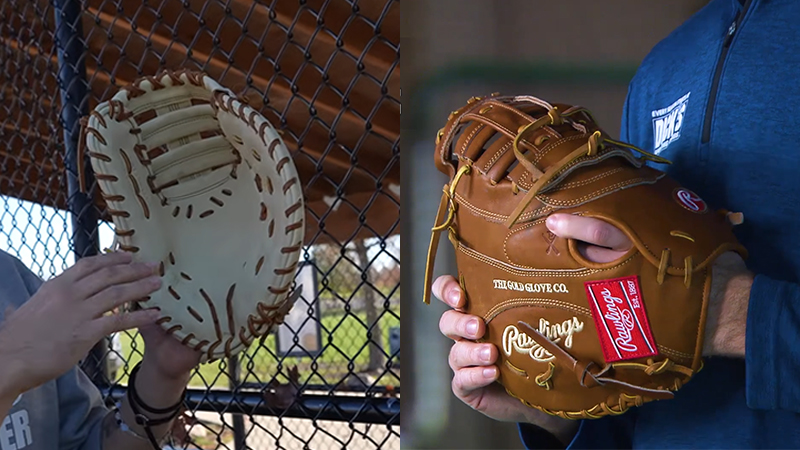
Standard fielding gloves feature individual finger stalls, which provide the dexterity needed for middle infielders to transition the ball quickly for double plays. In contrast, a first base mitt is designed with a solid, curved perimeter known as the “scoop”.
This architecture is purpose-built for the primary task of the position: digging. The scoop acts as a ramp, guiding low or offline throws into the heart of the pocket rather than letting them deflect off the tips of individual fingers.
2. Pocket Depth and Retention Dynamics
Search intent for slowpitch gear often centers on “ball retention.” A common complaint with standard utility gloves is the “pop-out,” where a high-velocity throw hits the palm but fails to seat.
The sources highlight that a dedicated first base mitt offers a significantly deeper pocket. This depth creates a “vacuum effect,” allowing the mitt to collapse around the 12-inch softball and secure it firmly, even when the catch isn’t perfectly centered.
3. Palm Protection for High-Volume Receiving
A first baseman may receive 50 to 100 throws in a single tournament day, many of them coming at high speeds from the “hot corner” or shortstop. Regular gloves prioritize lightness and flexibility, often at the expense of padding.
First base mitts, however, feature extra padding. This is a critical ergonomic advantage, as it makes receiving much less taxing on the hand, particularly when catching balls in the palm rather than the pocket.
The Half-Inch Debate: Sizing for Success
A primary concern for players is whether a slightly smaller mitt can outperform a larger standard glove. For example, a common query is whether a 12.5″ first base mitt offers an advantage over a 13″ regular glove.
1. The “Snowcone” Theory
In the competitive landscape of B-level to A-level slowpitch, the “snowcone” catch—where the ball is caught in the very tip of the webbing—is a frequent occurrence.
According to the sources, a mere half-inch is often the difference between a successful snowcone catch and the ball falling out of the glove.
For advanced players, the recommendation is clear: if you are skilled enough to handle the extra weight, take the largest glove possible to maximize your reach and save potential.
2. The Novice Exception
While bigger is often better for elites, the sources suggest a different path for beginners. For novice players (below B-level), a 12.5″ glove or mitt is often recommended.
These smaller models are easier to handle and control, preventing the equipment from becoming a hindrance during the learning phase of defensive mechanics.
3. The UK Market Constraint
Players in the United Kingdom face a unique challenge: equipment availability. It is often difficult to find first base mitts larger than 12.5″ in the UK market.
In these instances, players must weigh the specialized shape of the 12.5″ mitt against the raw surface area of a 13″ utility glove.
The Physics of the Break-In: Why Initial Size is Deceptive
One of the most valuable insights from experienced players is that a glove’s “out-of-the-box” size is not its final size.
1. Web Stretching and Effective Size
A 12.5″ first base mitt may initially feel smaller than a 13″ fielding glove, but the break-in process changes the geometry of the tool. As the laces on the web stretch and the pocket forms, a 12.5″ mitt will eventually “play” more like a 13″ glove.
2. Quality Over Dimensions
Experienced first basemen often prioritize the quality of the leather over the raw measurement. A high-quality 13″ glove that maintains its structure and offers a superior feel can be preferable to a lower-quality 13.5″ mitt that lacks the rigidity needed for consistent scooping.
The Complete First Base Loadout: Synergizing Defense and Power
A world-class first baseman isn’t just a defensive wall; they are a critical component of the offensive lineup. To dominate the field, your specialized mitt should be paired with elite-tier bats that align with current performance standards.
Based on performance data and community feedback from the sources, here are the top-tier bats to consider for your 2024-2025 arsenal:
1. The Power-Hitter’s Choice: Miken Freak Series
- Miken Freak 23 Maxload: Celebrated for its massive endload power, this bat is the gold standard for players looking to drive the ball deep.
- Miken Freak KP23: A perennial favorite that offers a familiar feel for long-time Miken loyalists.
2. The Consistency King: Easton Tantrum
- Easton Tantrum 1-Piece: Often cited as the “best bang for your buck” in the USSSA market.
- Easton Tantrum (2024): Notable for its “beach ball” sized barrel, providing a massive sweet spot that minimizes “mishits”.
3. The Durability Specialist: Easton Fire Flex
- Easton Fire Flex 240: Known for durability and consistent performance over hundreds of swings.
- Easton Fire Flex CXN: Delivers excellent pop right out of the wrapper, ideal for players who need immediate results.
4. The Elite Tier: Louisville Slugger Genesis
- Louisville Slugger Genesis Iron Man: A top-tier choice for performance, especially when hitting high-compression balls like “gold dots”.
- Miami Nights 4 (2025): Currently a hot item in the market, often available with a warranty for added peace of mind.
Enhanced FAQ: Expertise and Trust Signals
Is a first base mitt actually necessary for recreational play?
While not strictly “necessary,” the specialized “scoop” shape and deeper pocket provide a measurable advantage in ball retention. If you plan on playing the position long-term, the transition is widely considered “huge” for defensive consistency.
Why is it so hard to find large mitts in the UK?
Regional inventory often favors multi-purpose utility gloves. However, UK players should remember that a 12.5″ mitt will eventually stretch to play more like a 13″ model as the laces break in.
Can I use my first base mitt at other positions?
In most sanctioned slowpitch leagues (USSSA/USA), first base mitts are only legal for the first baseman and the catcher. Using a mitt at shortstop or in the outfield may result in an equipment violation.
What is the best way to maintain a new mitt?
Proper maintenance is key to ensuring the leather stretches correctly without losing its structural integrity. This includes regular cleaning and using small amounts of glove conditioner to keep the leather supple.
Conclusion: The Verdict
For the player dedicated to the “garbage disposal” of the diamond, the evidence is overwhelming: The specialized first base mitt is the superior tool. While a 13″ utility glove offers versatility, it cannot replicate the scooping ability, pocket depth, and palm protection of a dedicated mitt.
If you are a B-level player or higher, prioritize the extra half-inch of a 13.5″ model to secure those game-changing snowcone catches. If you are a novice, start with a 12.5″ model to master your hand-eye coordination before moving up to the heavy-duty leather.