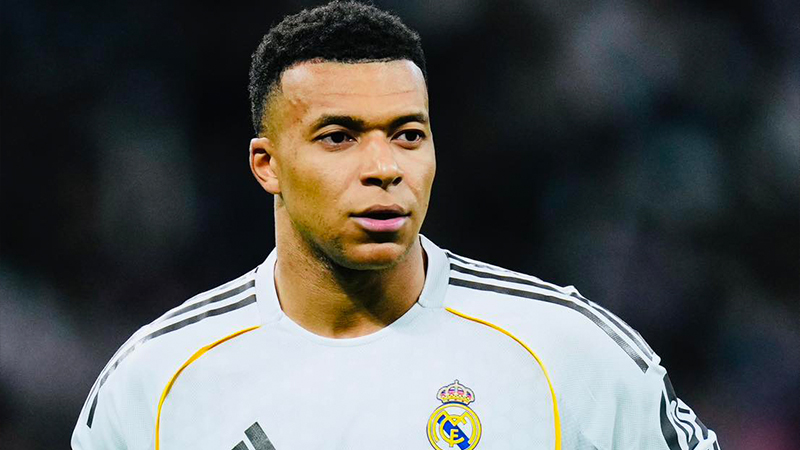
As of May 2026, the footballing world finds itself at a crossroads regarding one of the most high-profile transfers in sporting history.
What was once heralded as the definitive union between the world’s most prestigious club and its most clinical attacker has evolved into a complex case study of tactical misalignment and structural imbalance.
The performance of Kylian Mbappé at Real Madrid is currently categorized as below the high expectations set upon his arrival. This analysis examines the multi-dimensional factors—tactical, defensive, and psychological—contributing to this period of discord.
1. The Tactical Misfit: Position vs. Profile
The primary tension in the current Real Madrid setup stems from a fundamental mismatch between player profile and tactical deployment.
Mbappé is currently being utilized as a central striker, the traditional “No. 9” role, rather than his preferred position on the wing.
The Limitation of the Central Channel
In the central corridor, Mbappé’s most lethal attributes—explosive speed over distance and elite 1v1 dribbling—are effectively neutralized.
When operating from the wing, he has the peripheral vision and space to accelerate into “half-spaces,” forcing defenders into difficult recovery runs.
In the center, he is often crowded by two physical center-backs, reducing his opportunities to face the goal and drive at the heart of the defense.
The Loss of Balance
This positional shift has created a lack of equilibrium within the squad. Reports from various platforms suggest that forcing a world-class winger into a central role does more than just stifle the individual; it disrupts the natural flow of the team’s offensive rotations.
The absence of a traditional focal point who can hold up the ball or dominate aerially has left Madrid’s attack feeling one-dimensional and easier for low-block defenses to contain.
2. The Defensive Deficit: A Structural Breakdown
Modern elite football requires eleven-man participation in the defensive phase. A significant point of contention in the 2026 season is Mbappé’s perceived lack of defensive work rate.
The Pressing Vacuum
When a lead attacker fails to initiate the first line of the press, the entire defensive structure behind them begins to erode.
Documentation indicates that Mbappé does not contribute enough defensively, which essentially breaks the team’s intended shape. This creates “passing lanes” for the opposition that should not exist in a high-performing system.
The Bellingham Compensation Model
The burden of this defensive inactivity has fallen heavily on teammates, most notably Jude Bellingham. To maintain the team’s integrity, Bellingham and other midfielders are forced to expend excessive energy covering the ground that the front line is neglecting.
This “compensatory running” is not a sustainable model for a 60-game season; it leads to late-game fatigue and diminishes the offensive impact of the players who are forced to do the extra work.
3. Synergistic Friction: The Vinícius Júnior Factor
In elite sports, the “sum of the parts” must exceed the individual talent. However, current assessments suggest that Mbappé’s presence may actually be disrupting the effectiveness of other established stars.
Positional Redundancy
The most visible friction exists between Mbappé and Vinícius Júnior. Both players thrive in similar areas of the pitch—primarily the left-wing and left-half-space.
With Mbappé occupying central areas but naturally drifting toward the left to find comfort, the spacing becomes congested.
Instead of complementing one another, they often occupy the same zones, making it easier for opposition full-backs to double-team the threat.
The “Cohesion Gap”
There is a growing narrative, supported by tactical critics and social media discourse, that Real Madrid appears more cohesive and fluid when Mbappé is absent from the lineup.
This suggests that while his individual talent is undeniable, his integration has come at the cost of the collective rhythm that previously defined the team’s success.
4. The Psychological Weight of the White Shirt
Beyond the tactical board, the mental pressure of playing for Real Madrid is a factor that cannot be overlooked. The expectations at the Santiago Bernabéu are not just high; they are often described as unrealistic.
The Shadow of Legends
Mbappé arrived with the Herculean task of replacing past legends who defined eras of dominance. This historical weight, combined with the intense scrutiny of the Madrid media and global fanbase, has seemingly contributed to a decline in his confidence.
When a player of his caliber begins to second-guess his instincts, the fractional delay in decision-making results in the “declining form” observed since late 2023.
Locker Room Dynamics
High-pressure environments often exacerbate interpersonal tensions. Suggestions from various community platforms indicate that a perceived “poor attitude” from Mbappé has caused friction within the locker room.
In a team-oriented sport, even a slight fracture in the social fabric can manifest as a lack of coordination on the field.
5. Strategic Recommendations: Navigating the Crisis
To resolve this “Paradox,” the management at Real Madrid must consider several high-level adjustments:
- Tactical Reconfiguration: A move toward a more fluid front three where Mbappé can rotate into wide positions might restore his confidence and 1v1 effectiveness.
- Defensive Accountability: Implementing strict defensive triggers for all players, regardless of stature, to ensure the workload is shared and players like Bellingham are not overextended.
- Mental Performance Support: Addressing the “unrealistic expectations” through internal sports psychology to help the player separate his individual value from the historical legacy of the club.
Enhanced FAQ: Addressing the Global Discourse
Q: Is Mbappé’s decline a matter of age or tactics?
A: Based on the timing of the decline starting in late 2023, it appears more closely linked to tactical misfitting and a loss of confidence rather than a physical decline. His elite speed is still present, but is being utilized in the wrong zones.
Q: How does his work rate impact the rest of the midfield?
A: It creates a domino effect. When the front line doesn’t press, the midfielders must cover more ground to close gaps, leading to structural breakdowns and physical exhaustion for players like Bellingham.
Q: Is there a rift between Mbappé and Vinícius Júnior?
A: While “rift” is a strong term, reports suggest his presence has disrupted the effectiveness of Vinícius, leading to a team that is less cohesive than it was before his arrival.
Q: Can the “Real Madrid Paradox” be solved?
A: It requires a balance between accommodating a superstar’s instincts and maintaining the collective defensive integrity of the squad.
Conclusion: The Path to Redemption
The story of Kylian Mbappé at Real Madrid is not yet finished, but the May 2026 status report serves as a stark reminder that talent alone does not guarantee success in a complex ecosystem.
For Mbappé to reclaim his status as the world’s premier player, he must adapt to the defensive demands of the modern game and find a tactical compromise that allows his teammates to flourish alongside him.
The “Price of Tactical Discord” is currently high, but the potential reward for solving the paradox remains the greatest in world football.