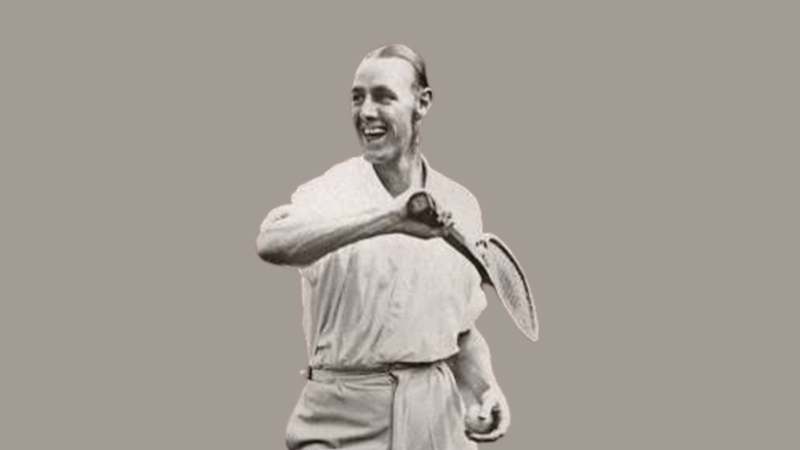
James Anderson is famous in tennis as a four-time Grand Slam champion who dominated the sport’s golden era in the 1920s. Known as “The Greyhound” for his incredible court speed, he secured three Australian Championships and a Wimbledon doubles title.
Anderson’s fame stems from his lethal flat forehand and his status as an International Tennis Hall of Fame inductee. Beyond stats, he won hearts by placing a large toy kangaroo on the court for luck.
As a world-class player-captain, he achieved a career-high World No. 3 ranking, cementing his legacy in tennis history.
Major Career Achievements and Grand Slam Success
James Anderson’s rise to prominence was marked by his consistent performance at the highest levels of international competition during a decade defined by rapid athletic evolution.
His dominance was particularly evident in his home country, where he became a household name by winning multiple titles at the Australian Championships.
These victories were not merely statistical milestones; they represented his ability to overcome the best players of his generation under immense pressure.
The following table highlights the core statistical milestones that define his professional excellence:
| Tournament | Singles Titles | Doubles Titles | Key Milestone |
|---|---|---|---|
| Australian Championships | 3 (1922, 1924, 1925) | 0 | Defeated Gerald Patterson in back-to-back finals |
| Wimbledon | 0 (Semifinalist 1925) | 1 (1922) | Won doubles with partner Randolph Lycett |
| US Championships | 0 (Semifinalist 1922, 1923) | 0 | Reached consecutive singles semifinals |
| Davis Cup | N/A | N/A | 77.8% win rate (28–8 overall record) |
The Triple Crown of Australian Singles
Between 1922 and 1925, Anderson established himself as the premier force in Australian tennis by securing three singles championships. His 1922 victory was a turning point, proving he could compete with the established elites of the era.
He followed this with successful campaigns in 1924 and 1925, showing remarkable longevity and consistency.
His ability to defeat Gerald Patterson in consecutive finals is often cited as a testament to his mental fortitude and tactical superiority on the grass courts of the time.
Wimbledon and International Recognition
While his singles success was most prominent in Australia, his 1922 Wimbledon doubles title alongside Randolph Lycett proved his versatility on the world stage.
This victory in London solidified his reputation as a global star, leading to high-profile appearances in the United States.
Reaching the semifinals of the US Championships in both 1922 and 1923 demonstrated that his game translated effectively to different environments and against diverse playing styles.
These international runs were crucial in earning him the World No. 3 ranking in 1923.
Why Was J.O. Anderson Called “The Greyhound”?
The nickname “The Greyhound” was more than just a catchy moniker; it was a precise description of James Anderson’s physical approach to the game.
In an era where many players relied on stationary, elegant stroke-making, Anderson introduced a level of athleticism that was ahead of its time.
His mobility allowed him to stay in points that other players would have conceded, making him a frustrating opponent for even the most aggressive baseline hitters.
Unmatched Agility and Court Coverage
The primary reason for the “Greyhound” label was Anderson’s lightning-fast speed and comprehensive court coverage. He possessed the rare ability to transition from a defensive position to an offensive one in a single stride.
This agility was essential because his backhand was often described as merely “average,” requiring him to use his feet to run around balls and set up his preferred shots.
His speed ensured that opponents could rarely find an opening on the court that he could not reach.
The Technical Power of the Flat Forehand
The physical speed of the Greyhound was perfectly complemented by his primary weapon: a unique, ultra-flat forehand drive.
Unlike the heavy topspin used by modern professionals, Anderson hit the ball with a shoulder-high trajectory that carried immense pace and stayed very low after the bounce.
This shot was considered one of the most lethal weapons of the 1920s. It allowed him to dictate play and put immediate pressure on his opponents, compensating for any perceived weaknesses in other areas of his technical game.
The Davis Cup Legacy of James Anderson
For many tennis historians, Anderson’s most significant contributions occurred while representing Australia in the Davis Cup. He was not just a participant; he was the cornerstone of the national team during some of its most competitive years.
His commitment to the team format helped elevate the profile of the sport in Australia and established a tradition of international excellence that persists to this day.
- Overall Dominance: Anderson maintained a stellar 28–8 record across 15 ties.
- Singles Proficiency: He secured 16 wins out of 23 singles matches.
- Doubles Reliability: He was nearly unbeatable in doubles, boasting a 12–1 record.
- Leadership Role: He served as a player-captain, leading the team to the Challenge Round finals in 1922 and 1924.
- National Heroism: He is credited with winning 28 out of 35 international matches he participated in, effectively carrying the team’s prospects on his shoulders.
Leading Australia as a Player-Captain
James Anderson’s role as player-captain was a heavy responsibility that required him to manage team strategy while maintaining his own world-class performance level. Under his guidance, Australia reached the prestigious Challenge Round finals twice in three years.
His leadership was defined by a lead-by-example philosophy, where his high win percentage provided the necessary stability for his teammates to perform.
This period is remembered as a time when Australia was one of the few nations capable of challenging the dominant American teams.
Breaking the American Dominance
In the early 1920s, American tennis was dominated by the legendary duo of Bill Tilden and Bill Johnston. Anderson became famous for being one of the few players globally who could consistently challenge this American hegemony.
A defining moment in his career came in 1923 when he defeated the previously unbeaten American star, William “Little Bill” Johnston.
This victory was a massive upset that resonated throughout the sporting world and was the primary catalyst for his peak ranking as the third-best player on the planet.
What Were the Unique Quirks of James Anderson?
Beyond his trophies and rankings, James Anderson is famous for the personality and charisma he brought to the court.
He understood the value of engaging with the public and became a fan favorite through a combination of eccentric habits and a genuine connection with his audience.
These quirks helped humanize a player who was otherwise seen as a nearly untouchable athletic force.
The Iconic Toy Kangaroo Mascot
Perhaps the most famous story regarding Anderson’s personality involves his large plush toy kangaroo. He would carry this mascot onto the court and place it carefully next to the net post before every match for good luck.
This gesture captured the public’s imagination and became a signature part of his identity. Fans would often look for the kangaroo as a signal that “The Greyhound” was ready for battle, making him one of the most recognizable figures in the sport during the 1920s.
Transition to Professional Life and Coaching
Anderson’s fame continued even after he moved away from the amateur circuit in 1926. Unlike many players who struggled with life after competition, he successfully transitioned into the business side of the sport.
He pursued a career in sports retail and became a respected coach, passing on his knowledge of the “Greyhound” style to the next generation.
This move into the professional and commercial sectors ensured that his name remained relevant in the tennis community long after his final championship match.
Frequently Asked Questions About James Anderson
What was James Anderson’s highest world ranking?
James Anderson achieved a career-high ranking of World No. 3 in 1923. This ranking was bestowed by A. Wallis Myers, a prominent journalist of the era whose rankings were considered the gold standard for assessing international talent.
His rise to the top three followed his historic victory over American star Bill Johnston.
How many Grand Slam titles did he win in total?
In total, James Anderson won four Grand Slam titles. This includes three singles titles at the Australian Championships (1922, 1924, 1925) and one men’s doubles title at Wimbledon in 1922.
His success spanned both singles and doubles formats, showcasing his comprehensive skill set.
Why is he in the International Tennis Hall of Fame?
Anderson was posthumously inducted into the International Tennis Hall of Fame in 2013. This honor was given to recognize his role as a pioneer of Australian tennis, his four major titles, and his extraordinary Davis Cup record.
His induction permanently cemented his legacy as one of the all-time greats of the sport.
Who were James Anderson’s main rivals?
Anderson was part of Australia’s original “Big Three,” alongside Gerald Patterson and Pat O’Hara Wood. He also had a significant international rivalry with American legends Bill Tilden and Bill Johnston.
His matches against Patterson in the Australian finals are among the most celebrated in the tournament’s early history.
What happened to him after his tennis career?
After effectively retiring from the amateur circuit following the 1926 season, Anderson turned his focus to sports retail and professional coaching.
This transition allowed him to remain a central figure in the tennis world, contributing to the development of the sport in Australia beyond his time as a competitive athlete.
The Enduring Legacy of an Australian Icon
James Anderson’s fame is a multi-layered tapestry woven from athletic brilliance, tactical innovation, and a unique personality.
He was the engine that drove Australian tennis during the 1920s, proving that a player from the southern hemisphere could not only compete with but also defeat the best in the world.
Whether it was through his “Greyhound” speed, his “deadly” forehand, or the lucky kangaroo sitting by the net, Anderson left an indelible mark on the sport.
Today, he is remembered not just as a champion, but as a founding father of the modern Australian tennis tradition, a legacy that was rightfully recognized by his induction into the Hall of Fame.
His story continues to inspire as a reminder of how speed, skill, and a touch of character can define a sporting era.