The NFL remains one of the most highly pressurized environments in professional sports. In this intense landscape, the margin between competitive intensity and a sportsmanship violation is incredibly thin.
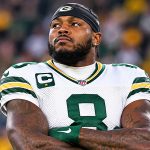
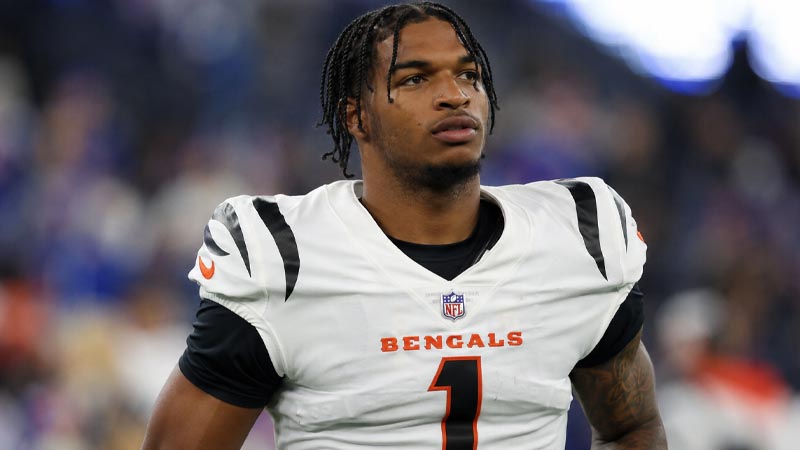
This reality was highlighted by the league’s decision to hand down a one-game suspension without pay to Cincinnati Bengals star wide receiver Ja’Marr Chase.
The suspension, stemming from an on-field altercation with Pittsburgh Steelers defensive back Jalen Ramsey, serves as a significant case study in player conduct, the league’s disciplinary review process, and the immediate operational and financial consequences that follow elite athletes when emotions override professional boundaries.
Key Details of the Suspension
For a quick overview of the incident and its primary outcomes, the table below outlines the core facts surrounding the disciplinary action taken by the league:
| Category | Disciplinary Action & Case Details |
|---|---|
| Player Disciplined | Ja’Marr Chase (Wide Receiver, Cincinnati Bengals) |
| Opponent Involved | Jalen Ramsey (Defensive Back, Pittsburgh Steelers) |
| Infraction Type | Sportsmanship Violation (Spitting at an opponent) |
| Timing of Incident | Fourth Quarter |
| League Penalty | One-game suspension without pay |
| Evidence Utilized | Official video footage review |
| Appeal Status | Appealed by player; appeal denied and suspension upheld |
| Financial Penalty | Forfeiture of weekly game check and active roster bonus |
| Retaliatory Action | Jalen Ramsey punched Chase’s helmet, resulting in immediate ejection |
1. Anatomy of the Altercation: What Happened in the Fourth Quarter
The incident occurred during a highly charged game between division rivals, a setting where physical play often tests the limits of the rulebook. In the fourth quarter, as tensions reached a boiling point, an altercation broke out between Ja’Marr Chase and Jalen Ramsey.
According to the official league review, Chase committed a major sportsmanship violation by spitting toward Ramsey. In professional athletics, spitting is categorized among the most egregious unsportsmanlike acts because it violates the basic tenets of physical respect and safety.
The Sequence of Events
- The Trigger: During a physical sequence of play in the fourth quarter, Chase and Ramsey became entangled.
- The Violation: Chase spit toward the Pittsburgh cornerback.
- The Retaliation: Upon realizing what had occurred, Ramsey responded with immediate physical retaliation, punching Chase’s helmet.
- The Immediate Penalty: Game officials immediately ejected Ramsey from the contest due to the helmet punch.
- The Post-Game Review: Although Chase was not ejected during the game, league officials reviewed video footage of the altercation after the game, confirming the spitting act and prompting the subsequent one-game ban.
This sequence highlights the intense emotional escalation that can occur in high-stakes environments. While Ramsey’s immediate reaction was penalized on the spot with an ejection, the underlying catalyst—Chase’s unsportsmanlike conduct—was deemed severe enough by the league office to warrant a multi-million-dollar disciplinary response after a thorough review of the video evidence.
2. The League’s Policy on Unsportsmanlike Conduct
The NFL’s sportsmanship rules are designed to protect the integrity of the game and the safety of its participants. Under the collective bargaining agreement and the league’s official rulebook, unsportsmanlike acts are divided into distinct categories of severity.
While typical infractions like taunting or minor physical altercations result in standard 15-yard penalties and subsequent fines, actions that compromise health and basic decency are handled with extreme severity. Spitting is treated with a zero-tolerance policy.
Why Spitting Warrants a Suspension
Spitting at an opponent is viewed by the league office not merely as a heat-of-the-moment competitive infraction, but as an assault on professional standards. The league has historically treated spitting incidents with suspensions because:
- Hygiene and Safety: It presents direct health and safety risks to participants on the field.
- Brand Integrity: Such actions damage the professional image of the league, its broadcast partners, and its corporate sponsors.
- Deterrence: Imposing severe, unpaid suspensions sends a clear message to the entire player body that on-field conduct must remain within the bounds of civil sportsmanship, regardless of provocation.
The league’s reliance on comprehensive video review ensures that even if an official on the field misses the initial act, off-field disciplinary officers can retroactively apply strict penalties. This is precisely what occurred in Chase’s case, where the video footage provided indisputable proof of the violation.
3. The Appeal and the Path to Accountability
Following the announcement of the one-game suspension, Chase and his legal representation initiated the standard NFL appeal process.
In professional football, players have the right to have their disciplinary cases heard by an independent officer jointly appointed by the NFL and the NFL Players Association (NFLPA).
The Denial and the Upheld Ruling
Initially, Chase denied the spitting accusation and formally appealed the league’s decision in an attempt to have the ban overturned or reduced to a fine.
Denials are a standard opening strategy in sports appeals, often aimed at challenging the clarity of the visual evidence or arguing that the action was accidental.
However, after reviewing the video footage and the testimony presented during the appeal, the hearing officer upheld the suspension.
The presence of clear video confirmation left little room for interpretation, demonstrating the league’s commitment to standing firm on sportsmanship violations.
[Incident Occurs] ──> [League Issues Suspension] ──> [Player Denies & Appeals] ──> [Evidence Reviewed] ──> [Suspension Upheld] ──> [Public Apology]
The Public Apology and Emotional Ownership
Once the appeal was officially denied and the suspension became final, Chase shifted his public approach. He issued a formal public apology in which he acknowledged the mistake and admitted that his emotions had taken over during the high-pressure game.
This transition from denial to public accountability is critical for an elite athlete. From a public relations perspective, owning the mistake helps limit long-term damage to the player’s personal brand and helps the team move past the distraction. It also serves as a reminder of how easily the intense pressure of division matchups can compromise a player’s decision-making.
4. The Business of Discipline: Assessing the Financial Impact
The financial ramifications of an NFL suspension go far beyond the simple loss of playing time. For an elite player of Chase’s caliber, a one-game suspension represents a massive financial hit that directly impacts multiple areas of compensation.
The suspension was handed down “without pay,” triggering the automatic forfeiture of key contract components:
The Mechanics of Forfeited Compensation
- Forfeiture of the Game Check: NFL players are paid their base salaries in weekly installments over the course of the regular season. When a player is suspended for a game, they forfeit 1/18th of their total base salary for that year. For top-tier wide receivers, this single check can represent hundreds of thousands of dollars.
- Loss of Active Roster Bonuses: Many modern NFL contracts include active roster bonuses, which reward players a specific dollar amount for every game they are physically on the active roster. Because a suspended player is moved to a reserve/suspended list and is ineligible to play, they automatically forfeit the active bonus associated with that week’s game.
- Unspecified Financial Gaps: The exact total dollar amount of Chase’s forfeited game check and active bonus is not detailed in the available league records, as player contracts contain complex structures regarding guaranteed money and incentive clauses that may be altered by disciplinary suspensions. However, the financial penalty represents a substantial and immediate hit to his seasonal earnings.
5. Strategic and On-Field Implications for the Bengals
Losing a premier wide receiver for even a single game forces an NFL coaching staff to completely restructure their offensive strategy.
Chase is the focal point of the Cincinnati passing game, demanding constant defensive attention, double-teams, and safety help.
How the Offense Adapts
- Altered Pass Concepts: Without a deep-threat receiver capable of consistently winning one-on-one matchups, offensive coordinators must rely on quicker, short-to-intermediate passing routes to move the chains.
- Increased Pressure on the Quarterback: Defensive coordinators no longer have to design their game plans around neutralizing a superstar deep threat. This allows opposing defenses to play more aggressive coverages, blitz more frequently, and congest the passing lanes.
- The Roster Shuffle: The coaching staff must elevate backup wide receivers into starting roles, requiring players who are typically reserve contributors to absorb a high volume of snaps and master complex route adjustments.
While the exact opponent and timing of the missed game are not outlined in the current records, playing any NFL contest without a primary offensive weapon significantly lowers a team’s offensive efficiency and increases the burden on the defense to keep the game within reach.
6. Analyzing the Retaliation: Jalen Ramsey’s Role
A critical component of this incident is the behavior and subsequent penalty of the opposing player, Jalen Ramsey.
While Chase’s unsportsmanlike act was the catalyst, Ramsey’s physical reaction underscores the volatile nature of on-field confrontations.
The Helmet Punch and Ejection
Upon being spat at, Ramsey reacted by punching Chase’s helmet. In the NFL, punching an opponent—especially in the helmet, which poses a high risk of hand injury—is an automatic grounds for ejection. Game officials acted immediately to remove Ramsey from the field to prevent further escalation.
The Disciplinary Discrepancy (Gap in Available Records)
An interesting point of analysis is the difference in how the league handled the two players:
- Immediate Field Discipline: Ramsey was penalized immediately with an ejection, ending his participation in that specific game on the spot.
- Post-Game Discipline: Chase was allowed to finish the game, but was hit with a much more severe post-game penalty—a full-game suspension without pay.
- The Unresolved Question: The available official documentation does not state whether Ramsey faced additional post-game discipline, such as fines or a separate suspension, for his physical retaliation. This remains a gap in the public record of the altercation.
This discrepancy highlights how the league prioritizes the nature of the infraction. While physical retaliation (punching) is addressed immediately via game ejections, non-physical violations of basic sportsmanship (spitting) are viewed as deeper structural offenses that require formal, unpaid suspensions from the league office.
7. Managing Player Emotion in High-Stakes Rivalries
This suspension serves as a stark reminder of the challenges NFL franchises face in managing player emotions, particularly during highly competitive division rivalries.
The physical and verbal battles that take place on every snap can easily boil over, turning elite competitors into liabilities for their respective teams.
Strategies for Emotional Management in the NFL
- Coaching Accountability: Head coaches and position coaches must continuously preach emotional discipline, reinforcing that physical retaliation or unsportsmanlike conduct hurts the entire organization.
- Veteran Leadership: Experienced players on the roster play a crucial role in pulling younger stars away from altercations before they cross the line into penalty territory.
- Professional Sports Psychology: Many franchises employ dedicated mental performance coaches to help players develop coping mechanisms for managing adrenaline and frustration during high-pressure game situations.
Ultimately, Chase’s admission that his “emotions took over” reflects a common vulnerability among elite competitors.
The challenge for both Chase and the Bengals moving forward is ensuring that this costly lesson translates into better emotional control in future high-stakes matchups.
Conclusion
The one-game suspension of Ja’Marr Chase is a powerful reminder that in professional sports, emotional discipline is just as critical as physical talent.
A single momentary lapse in judgment in the fourth quarter resulted in an immediate game ejection for his opponent, a lost game for Chase, an upheld suspension, and a highly expensive financial penalty.
For Chase, the path forward involves rebuilding trust with his coaching staff, teammates, and fans through consistent on-field discipline.
For the Cincinnati Bengals, the challenge is navigating a critical stretch of their season without their primary offensive playmaker, proving that they can adapt and execute even when their star wideout is watching from the sidelines.
Ultimately, this incident will serve as a permanent benchmark for both players, demonstrating that the NFL will continue to use its advanced video review capabilities to strictly enforce sportsmanship policies and hold its most visible stars accountable.