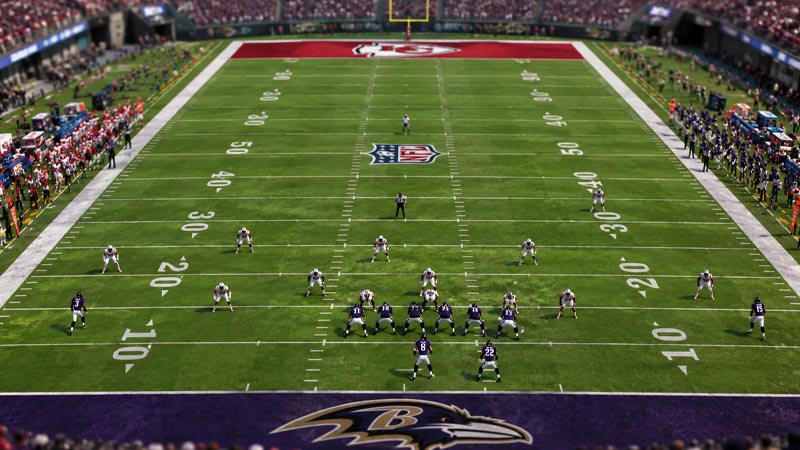
Every autumn weekend, millions of football fans are drawn to the most spectacular elements of the NFL: a perfectly thrown 50-yard touchdown, an acrobatic sideline catch, or a devastating open-field tackle.
Yet beneath these dramatic moments lies a quieter force that influences nearly every possession: field position.
While traditional box scores emphasize passing yards, rushing yards, touchdowns, and turnovers, NFL coaching staffs and analytics departments pay close attention to another critical variable: where each offensive possession begins.
Starting field position can dramatically alter the probability of scoring, the types of plays a team can call, and the level of risk an offense is forced to accept.
In professional football, space is more than the physical area in which the game takes place. It is a form of strategic currency.
An offense that begins near midfield has a fundamentally different challenge from one starting at its own 5-yard line. The closer a team begins to the opponent’s end zone, the less territory it must conquer and the more pressure it places on the defense.
Understanding modern NFL football therefore requires looking beyond individual plays. The game is also a continuous battle to control, manipulate, and exploit physical space.
The Mathematical Reality of Drive Lengths and Scoring Probability
At its most basic level, football is a game governed by probability. The location of the ball at the beginning of a possession can have a major effect on the likelihood of scoring.
An offense starting deep in its own territory may need to travel 80 or 90 yards before reaching the end zone.
An offense beginning at the opponent’s 40-yard line may need to travel only 40 yards. Every additional yard creates another opportunity for something to go wrong.
Scoring Probability Matrix
| Starting Location | Strategic Effect |
|---|---|
| Past the 50-yard line / Opponent Territory | Significantly increases scoring opportunities |
| Own 10- to 20-yard line | Creates greater pressure and safety risk |
| 75- to 80-yard drive | Requires sustained execution with limited mistakes |
When an offense begins a possession deep in its own territory, it enters a difficult mathematical environment. An 80-yard scoring drive requires a long sequence of successful plays.
Each additional snap introduces another opportunity for a sack, penalty, fumble, interception, dropped pass, missed block, or negative run.
Consider a drive that begins with first-and-10 at the offense’s own 20-yard line. The offense may need eight, ten, or even more successful plays to reach scoring territory.
A single holding penalty can transform a manageable second-and-4 into second-and-14. A missed blocking assignment can produce a sack and substantial yardage loss. A dropped pass can create an unfavorable down-and-distance situation.
The defense does not necessarily need to produce a spectacular play on every snap. It simply needs to remain disciplined and wait for the offense to make a mistake.
That is what makes long drives so difficult to sustain consistently at the professional level. The probability of avoiding every major error decreases as the number of plays increases.
Starting in opponent territory changes the equation immediately. An offense beginning at the opponent’s 45-yard line may need only a few successful plays to reach comfortable field-goal range. A few more plays can put it in position to attack the end zone.
The offense therefore has more room for error, while the defense has less territory to surrender.
Defensive Leverage and the Contraction of the Playbook
One of the most important consequences of poor offensive field position is the way it changes play-calling.
When an offense is backed up near its own 10- or 20-yard line, the offensive coordinator cannot approach the possession exactly as they would from midfield. Certain plays become significantly more dangerous because the consequences of failure are much greater.
1. Deep-Developing Pass Concepts
Long-developing passing plays can be particularly dangerous near the offense’s own goal line. The quarterback has less room to retreat, and a sack can push the offense into an even more difficult situation or potentially produce a safety.
The offensive line must therefore provide exceptional protection, while the quarterback must make decisions quickly.
2. Slow-Developing Run Schemes
Outside runs, counters, and other concepts requiring significant lateral movement can also become dangerous. If the defense penetrates the backfield before the play develops, the ball carrier may be tackled for a loss near the goal line.
A modest loss in the middle of the field might be manageable. A loss of several yards near the end zone can create a serious scoring threat.
3. Trick Plays and High-Risk Formations
Creative plays such as flea-flickers, reverses, and other deceptive concepts become harder to justify when the cost of failure is enormous. As a result, offensive play-callers often prioritize quick passes, straightforward runs, and other relatively safe concepts.
This creates an advantage for the defense. When defenders recognize that the offense is operating with limited space and cannot safely use its entire playbook, they can adjust accordingly.
Defensive backs can position themselves closer to the line of scrimmage. Linebackers can attack downhill more aggressively, while pass rushers can attack with greater confidence. The field itself effectively helps the defense.
By shrinking the usable space available to the offense, the defense reduces the number of tactical possibilities it must defend. The offensive coordinator’s creativity becomes constrained, allowing the defense to concentrate its resources on a smaller collection of likely plays.
The result can be a quick three-and-out, followed by excellent field position for the defense’s own offense.
The Danger Zone: High-Pressure Environments and Catastrophic Errors
Few places on an NFL field create more pressure than the area immediately in front of an offense’s own goal line.
In the middle of the field, a bad snap, penalty, or missed block may simply create a difficult down. Near the goal line, the same mistake can immediately affect the scoreboard.
A holding penalty committed in the end zone, for example, can result in a safety. The opponent receives two points and possession through the ensuing free kick.
A strip-sack near the goal line can be even more devastating. Instead of merely ending a drive, the turnover can allow the defense to score directly or place the offense in an almost impossible defensive situation. The psychological pressure also increases.
Quarterbacks must release the football quickly while avoiding unnecessary risks. Offensive linemen must execute their assignments with precision because one free pass rusher can create catastrophic consequences. Receivers must run precise routes because a tipped pass in a confined area can quickly become an interception.
The end zone essentially becomes an additional defender. It limits how far the quarterback can retreat, restricts the offense’s available space, and turns even small mistakes into potentially game-changing events.
Special Teams as the Great Tactical Lever
If offense and defense are the primary forces competing for yardage, special teams are the mechanism that repeatedly changes the battlefield.
Punting and kick coverage are especially important because they can flip the field between possessions.
Imagine an offense stalls at its own 20-yard line. It is forced to punt. A poor 35-yard punt might allow the opponent to begin around its own 45-yard line. Suddenly, the defensive team has surrendered excellent starting position.
A high-quality 60-yard punt with excellent coverage can produce the opposite result. The receiving team may be forced to begin inside its own 10-yard line.
Tactical Field Flip Scenario
Poor Punt
Offense stalls at own 20
→ 35-yard punt
→ Opponent starts around own 45
→ Short field
→ Increased scoring opportunity
Elite Punt
Offense stalls at own 20
→ 60-yard punt + strong coverage
→ Opponent pinned near own 8
→ Restricted play-calling
→ Increased defensive pressure
This is why special teams cannot be treated as merely a transition between offensive possessions. An elite punter can repeatedly force opposing offenses to travel long distances. Strong coverage units can prevent returns from producing additional yardage.
Together, they can consistently give their own offense favorable starting positions while making life more difficult for the opponent. Over an entire game, these small advantages accumulate.
A single punt may not determine the outcome. But repeatedly forcing an opponent to start at its own 8, 12, or 15-yard line while your offense begins near midfield can create a significant structural advantage.
The Physiology of Football: Energy Expenditure and Defensive Fatigue
Field position also has a physical dimension. NFL football involves repeated high-intensity collisions, explosive movements, and substantial physical exertion. Where possessions begin can therefore influence how much energy players must spend throughout the game.
A team that consistently wins the field-position battle can place its opponent’s defense under repeated pressure.
If an offense regularly starts near midfield, it may need only a handful of plays to enter scoring territory. Conversely, an offense starting near its own goal line may need to execute ten or more plays to reach the same area. This affects both sides of the football.
The Fatigue Cycle
Short Fields for Your Offense
→ Fewer plays required to score
→ Opposing defense repeatedly returns to the field
→ Increased defensive workload
Long Fields for the Opponent
→ More plays required to score
→ Opposing offense must sustain long drives
→ Your defense repeatedly tests its endurance
Long drives can force offensive linemen and ball carriers to maintain intense physical effort over numerous snaps.
Even when a drive eventually ends without points, the defense may have been forced to defend for several minutes and execute repeatedly. Over four quarters, that workload can matter.
As players become fatigued, technique can deteriorate. Blocking assignments may be missed, tackling can become less efficient, and defensive players may react slightly slower to developing plays.
The team that consistently controls field position can therefore enter the fourth quarter with a potentially valuable physical advantage.
Conclusion
Field position is one of the NFL’s most important strategic forces, influencing scoring probability, play-calling, defensive pressure, special teams, and player fatigue.
Starting a drive deep in opponent territory can create immediate scoring opportunities, while being pinned near the goal line increases pressure and the consequences of mistakes.
Through strong punting, disciplined defense, and efficient offense, teams can repeatedly control where possessions begin and force opponents into difficult situations.
Over four quarters, these small advantages accumulate into meaningful results. The scoreboard may record touchdowns and field goals, but behind those points is often a quieter battle for territory. In professional football, controlling space frequently means controlling the game itself.