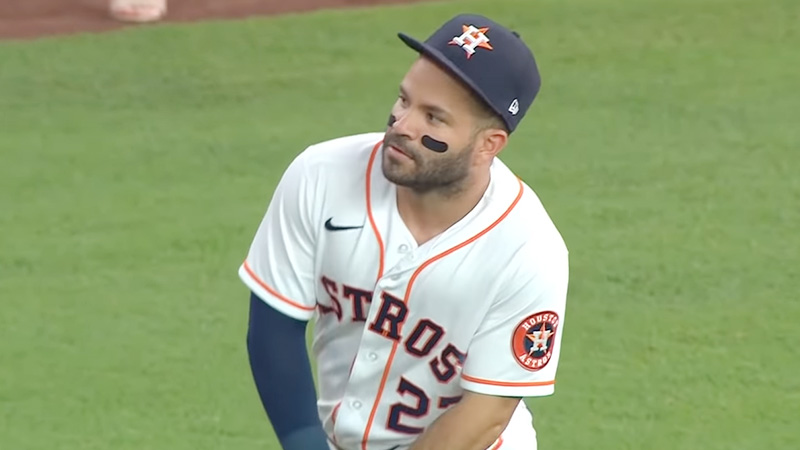
For more than a decade, Jose Altuve has been the heartbeat of the Houston Astros. He has an AL MVP award, three batting titles, two World Series rings and more than 2,000 career hits, all while standing 5-foot-6 in a sport that once doubted he belonged. That track record is exactly why his 2026 season has felt so jarring.
His batting average slipped to .250. His home run total fell from 26 to 16. His OPS dropped 70 points to .701, and in the field he finished at minus-17 defensive runs saved. For a player who built a career on consistency, the question Astros fans keep asking is simple: why is Altuve not playing well?
The honest answer is that no single issue explains it. Altuve’s 2026 decline comes from four overlapping factors: age-related offensive regression, a midseason oblique injury, a steep drop in defensive value, and the mental weight of trying to carry a changing lineup.
This breakdown walks through each one, what the numbers actually show, and what a realistic path forward looks like for the face of the franchise.
Altuve’s 2025 vs. 2026 Numbers at a Glance
Altuve went from a productive, above-average bat in 2025 to a roughly league-average one in 2026. The drop shows up in every major offensive category.
| Metric | 2025 | 2026 | Change |
|---|---|---|---|
| Batting average | .265 | .250 | -15 points |
| Home runs | 26 | 16 | -10 (about 38% fewer) |
| OPS | .771 | .701 | -70 points |
On defense, he posted minus-17 defensive runs saved and minus-10 outs above average in 2026, figures that place him well below the standard expected at his position.
A 15-point dip in batting average can happen to any hitter in a down year. What stands out here is the combination.
Average, power and on-base skills all slid at the same time, and the defensive numbers fell alongside them. When a player’s entire profile declines at once, it usually points to physical change rather than bad luck.
Factor 1: Age Is Finally Catching Up
Altuve turned 36 in May 2026, and his bat started to show it. Players in their mid-30s typically lose a fraction of bat speed and reaction time each year. For most hitters that loss is gradual. For a hitter whose game depends on precise timing, even a small slip can change results quickly.
Where the power went
Altuve has never relied on raw strength. His home runs come from elite timing, a compact swing and an ability to pull the ball into Houston’s short left-field porch.
When bat speed fades, those pulled fly balls become warning-track outs. That helps explain why his home runs fell from 26 to 16 even though his playing time was only partly disrupted.
More strikeouts, fewer hits finding holes
Altuve also struck out more in 2026. Every extra strikeout is one fewer ball in play, and fewer balls in play means fewer chances for hits. On top of that, his historical BABIP advantage has faded.
For years, Altuve beat the league average on balls in play. He did it with hard line drives and enough speed to turn routine grounders into infield hits. As his contact softens and his first step slows, more of those balls go straight to fielders. The result is a lower average without any dramatic change in approach.
Why second basemen age harder
There is also a positional pattern worth noting. Middle infielders absorb years of pivots, collisions at the bag and constant lateral movement. Many second basemen have seen their production fall off sharply in their early-to-mid 30s.
Altuve held off that trend longer than most, which made the 2026 drop feel sudden even though the warning signs had been building.
Factor 2: The Oblique Injury That Broke His Rhythm
In May 2026, Altuve suffered a Grade 2 left oblique strain while reaching for a pitch outside the strike zone. A Grade 2 strain is a partial tear of the muscle, not a simple tweak, and it typically costs a player several weeks.
Why obliques matter so much for hitters
The oblique muscles drive the rotation of the torso, which is where a hitter generates bat speed. For a right-handed hitter like Altuve, the left oblique fires hard on every full swing. An injury there does more than keep a player off the field. It can affect how freely he swings for weeks after he returns.
Hitters coming back from oblique strains often protect the area without realizing it. They shorten their follow-through, hesitate on inside pitches or avoid letting it fly on hittable counts. For a 36-year-old already fighting declining bat speed, that extra caution compounds the problem.
Lost timing and rhythm
Timing is the foundation of Altuve’s offense. A multi-week absence in the middle of the season resets that timing. Rehab at-bats rarely replicate major league velocity and pitch quality, so returning players often need weeks to find their stroke again.
The circumstances of the injury also matter. It happened on a reach outside the zone, a sign that he was already expanding his approach before he got hurt. That detail connects directly to the mental side of his season, covered below.
Factor 3: Defense Has Become a Liability
Altuve’s glove work fell sharply in 2026. He finished with minus-17 defensive runs saved and minus-10 outs above average. Put simply, his defense cost the Astros roughly a win and a half to two wins compared with an average fielder at his spot.
Range is the first thing to go
Defensive decline in aging infielders usually starts with range. The first step slows, so balls that were once routine plays become singles up the middle or through the hole. Arm strength and footwork around the bag also tend to slip. None of these changes is dramatic on its own, but together they add up quickly in the advanced metrics.
The team saw this coming
The Astros had already experimented with Altuve in left field in 2025, a clear signal that the club was planning for a time when second base would demand more than his body could give. The 2026 numbers suggest that time has arrived.
Why defense affects the whole picture
A league-average bat can still be a valuable everyday player if the glove is solid. A league-average bat paired with well-below-average defense is a much tougher sell. That is the core of the concern around Altuve right now. His total value has dropped further than his batting line alone would suggest.
Factor 4: Frustration and the Weight of Expectations
The numbers tell most of the story, but not all of it. By mid-2026, Altuve’s frustration at the plate was visible, and Astros fans noticed. On the r/Astros community, opinions split into two camps.
- He is pressing. Some fans felt Altuve was putting heavy pressure on himself in every at-bat, trying to do too much and chasing pitches he once would have taken.
- The edge still helps. Others argued that the same intensity has always fueled his biggest swings, and that his competitive fire is part of what made him great.
Why both sides have a point
Pressing is a well-known trap for veteran hitters. When skills begin to fade, the natural response is to compensate by swinging harder and expanding the zone.
That approach usually backfires, producing more strikeouts and weaker contact. The fact that his oblique injury came on a reach outside the zone supports the idea that he was forcing the issue.
At the same time, intensity is not the problem by itself. Altuve has played with that edge his entire career. The difference now is that his physical tools no longer back it up as consistently.
A changing clubhouse
The pressure is also structural. With stars like Kyle Tucker and Alex Bregman gone from the core that won the 2022 title, Altuve is one of the last links to the Astros’ championship era. Being the veteran face of a team in transition adds weight to every slump, and that weight can show up in the batter’s box.
What Altuve’s Decline Means for the Astros
Altuve is signed through the 2029 season under the five-year extension he agreed to in early 2024. That contract makes his decline more than a talking point. It is a roster question the front office has to answer this winter.
The Astros have several levers they can pull:
- More time at designated hitter. Moving Altuve off second base, even part-time, would protect his body and remove the defensive drag from his overall value.
- A new spot in the lineup. Altuve has long been a fixture at the top of the order. Sliding him down would reduce his plate appearances and ease the expectation that he sets the tone every night.
- A planned rest schedule. Regular off days for a 36-year-old coming off an oblique injury could help him stay fresher late in the season.
- A different position. The left-field experiment showed the club is open to it. A full-time move would trade one set of defensive challenges for another, but it could reduce the wear of daily infield work.
None of these options is a slight against Altuve. They are the same adjustments contending teams make with every great player as he ages. The best outcome for Houston is a version of Altuve who contributes efficiently rather than one who is stretched too thin.
Can Altuve Bounce Back in 2027?
A return to his MVP form is unlikely, but a meaningful rebound is realistic. Part of his 2026 slide was injury-driven, and that portion can be recovered with a full, healthy offseason.
Reasons for optimism
- The oblique should be behind him. A winter of rest and strength work gives him the chance to swing freely again from day one.
- His bat-to-ball skills remain strong. Even in a down year, Altuve’s contact ability is better than most hitters’. That foundation gives him room to adjust.
- He has adapted before. Altuve reinvented himself from a slap-hitting leadoff man into a 20-plus home run threat. Players with that kind of adaptability often find ways to age gracefully.
Reasons for caution
- Age does not reverse. Bat speed and range rarely return once they decline in a player’s mid-30s.
- Defense is the hardest part to fix. Without a position change, the defensive numbers are likely to stay negative.
- Approach habits can linger. If he keeps expanding the zone to chase power, the strikeouts will follow.
Three things to watch next season
- His strikeout rate in the first month. An early drop would signal that his timing and approach are back on track.
- The quality of his contact. More line drives and fewer weak fly balls would point to a healthier swing.
- Where he plays. Fewer innings at second base could be the single biggest boost to his overall value.
A reasonable expectation is a steadier, more efficient Altuve: a solid contributor with a better average and a modest power rebound, rather than a superstar carrying the lineup.
The Bottom Line
Jose Altuve is not playing well because several forces hit him at once. Age has trimmed his bat speed and range.
A Grade 2 oblique strain interrupted his season and his swing. His defense has turned into a real cost. And the pressure of being the veteran anchor on a changing roster has, at times, pushed him to do too much.
That combination explains the drop from a .771 OPS to .701 and from 26 home runs to 16. It does not erase what he has meant to Houston, and it does not mean he is finished.
With smarter usage, a healthy offseason and a tighter approach at the plate, Altuve can still be a productive piece of a winning lineup.