Rams and Chargers played in the same stadium for a period of time, before they both moved back to their original homes. The Rams returned to St Louis, MO after leaving L.A., CA while the Chargers Moved Back To San Diego, CA Both teams have had successful seasons since returning to their home cities; look out for what happens next.
Why Does La Have Two Nfl Teams?
Rams and Chargers shared the same stadium for a period of time. The Rams returned to St Louis, MO after leaving L.A., CA while the Chargers moved back to San Diego, CA They will now play in their respective home stadiums.
Rams Played In Los Angeles
The Rams moved to Los Angeles from St. Louis in 2016, and the Chargers followed suit a year later. Both teams were initially supposed to play in Carson, but the stadium’s construction was delayed several times and they eventually moved into their new homes in 2019.
The NFL approved both franchises’ moves after agreeing that it would be good for business overall since more people would have an opportunity to see each team play. Why LA didn’t bid on an extra NFL franchise. There are now 32 teams in the NFL.
Chargers Played In Los Angeles
The Chargers played in Los Angeles from 1961-1996 before moving to San Diego. They were one of the founding teams in the American Football League (AFL).
They went to the Super Bowl twice, losing both times to the Pittsburgh Steelers. In 2017, they moved back to LA and became an NFL team again under a new name – The Rams.
There are now two NFL teams in LA: The Rams and theChargers.
Rams And Chargers Shared The Same Stadium For A Period Of Time
In the late 1960s, the NFL was looking for a new home for its teams and decided to move them all to Los Angeles. The Rams and Chargers shared the same stadium for a period of time before they finally moved to their own stadiums in 1993.
The Raiders also played in LA during this time but eventually left after four seasons because of poor attendance figures. Since then, only the Rams have remained in LA while the Chargers are now located in San Diego. There have been proposals made over the years to bring back both teams but so far nothing has come about.
The Rams Returned To St Louis, MO After Leaving L.A., CA
The Rams returned to St Louis, MO after leaving L.A., CA in 1995. The team was founded in 1936 as the Cleveland Rams and moved to Los Angeles in 1946. However, the franchise left LA for St Louis four years later due to financial issues and fan backlash.
In 1994, they were able to return to their original home by winning an NFL championship game against the San Francisco 49ers at Anaheim Stadium in California. Since returning, the team has experienced success both on and off the field – most notably during their time under head coach Jeff Fisher from 2011-2016 who led them back into playoff contention each year.
The Chargers Moved Back To San Diego, CA
The Chargers moved back to San Diego, CA in 2017 after playing in Los Angeles for 54 years. The Raiders then relocated to Las Vegas and the NFL decided to add a 32nd team, the Rams, in 2020.
There are now just two teams left in the United States – the Patriots and Giants – who both reside in New England and New York City respectively. This has led some people to question why there are only two teams left when so many people live within driving distance of an NFL stadium.
Some have suggested that it is because of financial reasons; by having just two teams, cable networks can charge higher TV rights fees than if there were three or four competing franchises vying for viewers’ attention each year.
Why do LA have two football teams?
There are two major reasons why LA has two football teams. The first is that the entire area was divided into north and south by a railroad line in 1884, so the residents of each side had their own team. The second reason is that there are just not enough people to support both teams.
- Population diversity is one of the reasons that LA has two football teams. By having multiple teams, LA can cater to a large audience, which in turn helps to promote unity and community spirit.
- Another reason why there are two teams in LA is because of the size of the city – it simply wouldn’t be feasible to have only one team here.
- LA is a large and diverse city, so it makes sense for them to have two NFL franchises – especially since both cities share a lot in common culturally and economically.
- The fact that both cities are situated close to each other also plays into this decision; by catering to two different markets, Los Angeles ensures that everyone who wants access to professional sports will have some sort of option available.
- Finally, having more than one team allows for greater competition between players and fans alike; as a result, everyone benefits from improved quality entertainment value.
Does Los Angeles have 2 NFL teams?
Los Angeles does not have 2 NFL teams.
Los Angeles now has NFL teams
The Rams and Chargers share SoFi Stadium in Inglewood. The Rams began play in 1995 as an expansion team, while the Chargers joined the league in 1960. This means that LA now has two NFL teams.
Why does LA have two teams?
The Minneapolis Lakers and the San Diego Clippers were both moved to Los Angeles in 1960, but the move wasn’t approved by the NBA. Sterling was only fined for his comments, and no team has ever left or been moved again due toowner behavior.
There are several reasons why two teams were chosen instead of one: population density, TV market size and rivalries between cities. In 1984, when the Boston Celtics moved from Milwaukee to Massachusetts, there was significant backlash because it destroyed a historic rivalry between those cities.
Why does LA have two teams for every sport?
LA has a large market and second team in order to make money. Other cities wouldn’t have this issue because they don’t have such a large population. People in LA love their sports, so having two teams is necessary for them.
Does L.A. have 3 NFL teams?
Yes, L.A. does have three NFL teams – the Rams, Chargers and Raiders.
- California does have three NFL teams, as mentioned in the question. The Los Angeles Rams, the Los Angeles Chargers, and the San Francisco 49ers are all located in California.
- Twenty-eight states do not have a football team which is partially why there are only 22 NFL teams located in states across America.
- Each of the 32 NFL teams is spread out across 22 different states – this means that no team resides solely within one state (aside from the New England Patriots).
- Although L A has more NFL teams than any other U .S . city , it still cannot lay claim to having 3 of them due to geographical reasons: Santa Clara has an NFL team (the Niners), Oakland has two (the Raiders and the Athletics), and St Louis also has 2 professional football franchises (the Cardinals and Chiefs).
What cities have 2 football teams?
There are a few cities in the United States that have two football teams – including Los Angeles and Detroit. These cities often struggle with balancing their fan bases, but they’re still proud of their multi-sport icons.
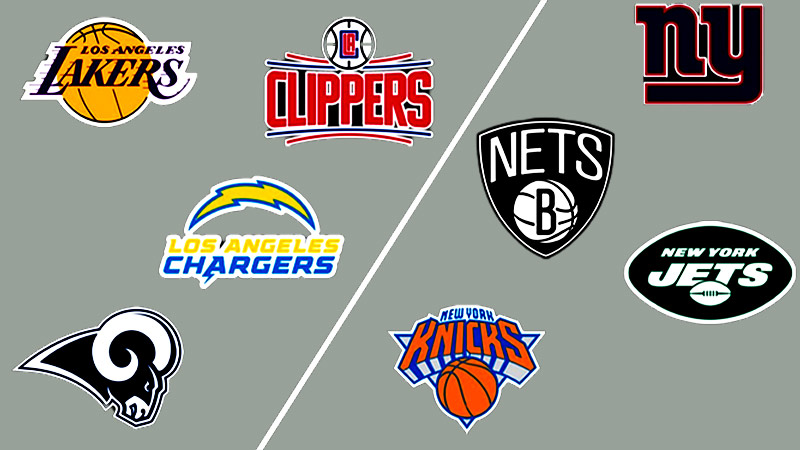
Two NFL Teams In New York
New York has two NFL teams – the Giants and the Jets.
Two NFL Teams In Los Angeles
Los Angeles also has two NFL teams – the Rams and the Chargers.
Which state has most NFL teams?
California has the most NFL teams, with 28 teams. Florida is second with 23 teams. Texas ranks third with 21 teams. The four other states that have at least ten NFL teams are New York (14), Ohio (13), Pennsylvania (12) and Illinois (10).
Why did L.A. not have a football team?
The Coliseum Commission was created in 1923, and it controlled the land where the NFL stadium would be built. City Hall wanted to build a new airport instead of a football stadium, so they didn’t have enough money available.
The final decision about whether or not L.A had a team came down to economics; if Los Angeles could afford to support an NFL team, then they would get one. In 1922 there were only eight teams in the NFL; when L.A failed to receive an expansion franchise, that basically sealed their fate as an NFL city.
What states don’t have a NFL team?
There are currently 32 NFL teams, but there are nine states that don’t have a team. The Patriots represent New England, which is the only state that has more than one team in the league.
Connecticut, Maine, New Hampshire, Rhode Island and Vermont all have an NFL team from another state that represents them instead. These states are typically smaller and less-populous than those with an NFL team so it can be difficult for them to get support from local businesses and residents alike when trying to land a franchise.
However, despite not having their own team yet these states continue to support their regional squads fiercely.
To Recap
There are a number of possible explanations for why La has two NFL teams. One possibility is that the area had a strong football tradition in the past, and there was demand for both professional leagues.
Another possibility is that it made economic sense to have two teams in La; one team could serve as an anchor franchise, while the other competed locally. Whatever the reasons, it’s fascinating to learn about how sports can play a role in shaping our communities.