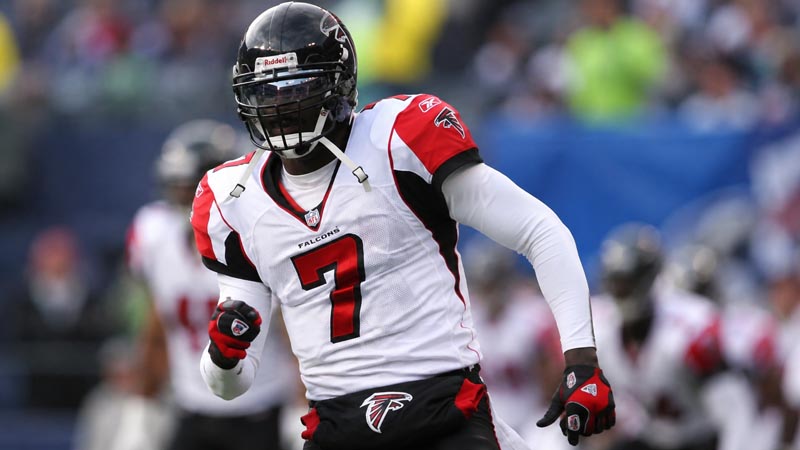
If you watch a modern professional football game, you are looking at a masterclass in streamlined athletic engineering.
From head to toe, players wear highly specialized, skin-tight gear designed to minimize drag, prevent opponents from grabbing fabric, and maximize compression.
Yet, if you look closely at the quarterback, you will often spot a striking visual anomaly: loose, baggy sleeves that drape over the arms, seemingly defying the modern aesthetic of the sport.
While defensive players and pass-rushers look like they have been painted into their uniforms, quarterbacks like Tony Romo, Sam Bradford, and Eli Manning have famously taken the field looking as if they were wearing jerseys a size or two too large.
This is not a simple fashion oversight. In a game decided by millimeters and fractions of a second, every element of a player’s gear is meticulously selected. The decision to wear loose sleeves is a calculated choice that balances physical movement, sensory feedback, and traditional style.
The Biomechanical Imperative: Unrestricted Movement in the Pocket
The primary reason quarterbacks choose loose jersey sleeves is to avoid feeling physically restricted during their throwing motion.
The mechanics of throwing a football are incredibly complex, relying on a highly coordinated kinetic chain that starts at the feet, transfers through the hips and torso, and accelerates through the shoulder, elbow, and wrist.
For a pocket passer, any sensation of resistance—even the slight pull of elastic fabric against the bicep or shoulder—can disrupt this delicate sequence.
Eliminating the Elastic Squeeze
Unlike the standard jerseys worn by most players, which feature snug elastic cuffs to hold the fabric close to the skin, quarterback jerseys can be customized with loose, non-elastic openings.
Players like Tony Romo and Sam Bradford have explicitly noted their dislike for tight elastic cuffs that squeeze their arms or inhibit their natural throwing motion.
When a quarterback pulls their arm back into the cocked position and accelerates forward, the shoulder joint undergoes extreme external rotation.
If a sleeve is too tight, the fabric tents across the shoulder and upper arm, creating a subtle resistance.
While this tension might seem negligible to an average observer, to an elite athlete, it can feel like throwing against a resistance band.
Loose sleeves ensure that the fabric moves independently of the arm, allowing the shoulder and rotator cuff to rotate through their full, natural range of motion without friction.
The Proprioceptive Advantage: Elbow Tracking and Sensory Feedback
Beyond the physical elimination of resistance, loose sleeves offer a fascinating cognitive and sensory advantage known as proprioception—the body’s ability to perceive its own position and movement in space.
The Science of Elbow Tracking
Some professional signal-callers have pointed out that loose, non-elastic sleeves actually help them better sense and maintain their elbow position during a throw. Specifically, the draping fabric provides a physical reference point that helps them keep their elbow elevated.
In passing mechanics, maintaining a high “arm slot” and keeping the elbow up is critical. A dropping elbow leads to a pushing motion rather than a crisp release, which can cause the ball to sail, lose velocity, or be easily batted down at the line of scrimmage.
When a quarterback wears a loose sleeve, the light contact of the shifting fabric against the skin of the upper arm acts as a passive sensory guide.
As the arm moves through the throwing arc, the movement of the loose sleeve provides immediate tactile feedback.
This allows the player to subconsciously track their arm path and ensure their mechanics remain consistent from the first quarter to the fourth.
A Tactical Contrast: Quarterbacks vs. The Rest of the Gridiron
To truly understand why quarterbacks fight for loose sleeves, it is helpful to look at the players lining up across from them.
The uniform requirements of a quarterback are fundamentally different from almost every other position on the field.
| Position Group | Sleeve Style | Primary Functional Purpose |
|---|---|---|
| Quarterbacks | Loose, Open, Non-Elastic | Maximizes rotational mobility; provides sensory feedback for throwing mechanics. |
| Defensive Linemen | Extremely Short, Tucked Under Pads | Eliminates holding points; prevents offensive linemen from grabbing fabric. |
| Wide Receivers | Tight, Elastic Cuffs | Prevents defensive backs from latching on; keeps gear streamlined during catches. |
| Defensive Backs | Snug, Compressed Fit | Minimizes drag; ensures tight coverage without excess material getting caught. |
Preventing the Defensive Grab
For defensive linemen and pass-rushers, loose fabric is a liability. Players like Michael Bennett have famously worn extremely short sleeves that tuck completely under their shoulder pads.
The reason is simple: it prevents offensive linemen from grabbing onto the jersey and holding them during a play.
Wide receivers and defensive backs similarly prefer snug, elastic-cuffed sleeves to ensure opponents have nothing to latch onto during physical, downfield matchups.
For a quarterback, however, the risk of a defender grabbing their sleeve in the pocket is secondary to the necessity of a clean delivery.
While defensive players prioritize a “painted-on” fit to eliminate holding points, quarterbacks prioritize the freedom of the passing motion above all else.
Nostalgia, Persona, and the Classic Quarterback Aesthetic
Football is a sport deeply rooted in tradition, and the visual identity of the quarterback has evolved over decades.
The loose-sleeve look carries a certain historical prestige that appeals to many modern signal-callers.
The Influence of Traditional Icons
For many athletes, uniform choices are influenced by the legendary figures they grew up watching. Many players simply prefer the traditional look modeled by past stars like Peyton Manning and Tom Brady.
These classic pocket passers defined an era of football, and their looser, more relaxed jersey sleeves became synonymous with the quarterback position itself.
This classic style stands in stark contrast to the highly compressed, ultra-modern look popularized by athletic, dual-threat quarterbacks like Colin Kaepernick, whose skin-tight jerseys resembled compression shirts rather than traditional football gear.
For purists, the loose sleeve is a visual hallmark of the classic pocket general—a statement of identity that separates the passer from the runners and defenders on the field.
Of course, personal preference is always the ultimate decider. Even among older generations of players, there were exceptions; legendary passer Drew Brees, for instance, was one of the few “old breed” quarterbacks who preferred to wear the elastic-cuffed style rather than the open, loose sleeve.
The Equipment Trade-offs: Pad Slippage and Wind Resistance
While loose sleeves offer clear mechanical and psychological benefits, they are not without their practical drawbacks.
Standard jerseys with elastic cuffs serve a structural purpose: they help keep the bulky shoulder pads firmly anchored in place.
The Challenge of Pad Slippage
Without the snug hold of elastic cuffs, quarterbacks who opt for loose sleeves frequently deal with minor equipment shifts.
Players like Eli Manning and Aaron Rodgers have regularly had their shoulder pads slip out of their longer, looser sleeves during the course of a game.
When a player is hit or extends their arms fully, the lack of tension in the sleeve allows the shoulder pad to shift upward or outward, requiring adjustment between plays.
“Can’t Teach Speed”
Despite the minor annoyance of shifting pads, some players find lighthearted advantages in the extra fabric. Eli Manning famously joked that his loose sleeves waved in the wind when he ran, creating the illusion that he was moving much faster down the field than he actually was.
While sports science might discount the aerodynamic advantages of billowing fabric, the psychological comfort of feeling relaxed and unconfined in the pocket is an undeniable asset.
The Verdict: Comfort Dictates Performance
In the high-stakes world of professional football, where teams spend millions of dollars optimizing every variable of player performance, the jersey sleeve remains a bastion of personal preference.
The loose sleeve is a perfect intersection of physical necessity and athlete psychology. By eliminating restriction, enhancing physical awareness through proprioception, and connecting players to the storied history of the position, this simple design choice remains a vital tool for the men under center.
In a game of inches, the best equipment is ultimately whatever makes a player feel the most comfortable, confident, and free to deliver the ball.