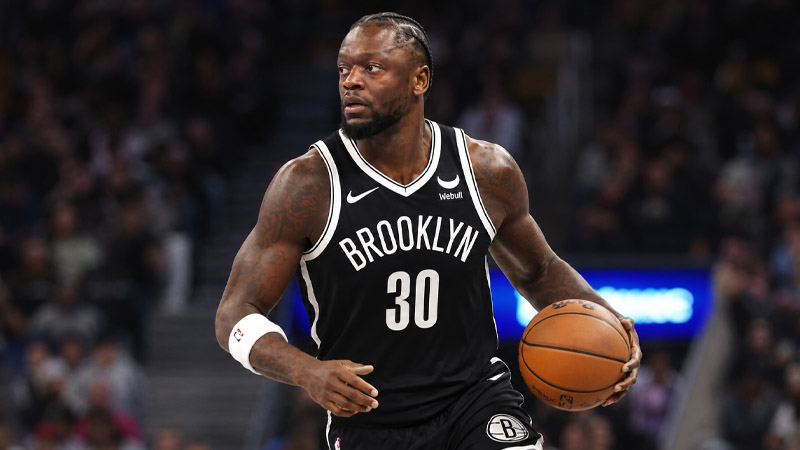
Julius Randle remains one of basketball’s most polarizing figures due to a stark disconnect between his All-NBA production and visible on-court inconsistencies.
While he averages elite stats, public frustration stems from his recurring postseason efficiency drops, perceived lack of defensive engagement, and “loud” mistakes like high-turnover isolation plays.
His intense moodiness and history of antagonizing fanbases, particularly in high-pressure markets, further fuel this divide.
Ultimately, Randle is often judged by his worst moments—body language and defensive lapses—rather than his consistent regular-season output. This paradox creates a unique narrative where an elite talent is frequently treated as a liability.
The Fundamental Conflict: All-NBA Talent vs. Public Scrutiny
The discourse surrounding Julius Randle is rarely middle-ground; he is either viewed as a “bully-ball” savior or a “ball-stopping” anchor that drags down team chemistry.
To understand why a player with multiple All-Star appearances faces such intense scrutiny, one must examine the specific nature of his contributions and how they are perceived by a modern audience that prioritizes efficiency and defensive effort.
The “Inverse Rudy” Comparison
A compelling perspective on the player suggests he functions as a sort of “inverse” to other specialized stars.
While some defensive specialists are mocked for their offensive gaffes, Randle is an offensive powerhouse whose defensive lapses are “exceptionally loud” and easy to mock.
Because his mistakes—such as walking back on defense or missing a rotation—are so visible, they often overshadow his consistent 20-point, 10-rebound production in the minds of the average viewer.
The Burden of High Expectations
Part of the frustration stems from the sheer level of talent he possesses. Critics argue that he underperforms relative to his physical gifts and skill set.
When a player is paid over $30 million annually and is expected to be a primary or secondary option on a contender, his “good spurts” must vastly outweigh the bad ones to maintain public support.
When he fails to reach his full potential, the resulting disappointment often manifests as vocal “hate” from the local and national media alike.
Why Does His Efficiency Drop in the Postseason?
The most substantial evidence used by critics is the dramatic decline in his performance when the stakes are highest.
The NBA Playoffs require a level of precision and adaptability that Randle has historically struggled to maintain, leading to a reputation as a “postseason dropper”.
Reliance on Heavy Isolation Scoring
His offensive approach often relies on slow, methodical, mid-post isolation maneuvers. While this “bully-ball” style works during the regular season, elite playoff defenses are designed to exploit these predictable patterns.
Opponents routinely force him into double-teams and high-turnover situations, grinding the team’s offensive momentum to a halt.
A Statistical Analysis of Recent Playoff Struggles
During the 2026 playoffs with the Minnesota Timberwolves, his efficiency plummeted to a level that frustrated even his most ardent supporters.
- Field Goal Percentage: He shot just 39% from the field overall during the series.
- Three-Point Shooting: In a critical elimination game against San Antonio, he recorded an abysmal 1-for-8 performance from beyond the arc.
- Clutch Time Gaffes: High-turnover rates and poor shot selection in the fourth quarter often lead fans to feel as though he is “wasting possessions”.
The Critical Issue of Defensive Effort and Awareness
Perhaps no aspect of his game draws more ire than his perceived lack of engagement on the defensive end. For many fans, scoring can be forgiven, but a lack of effort on defense is seen as a sign of disrespect to the team and the game.
Lapses in Off-Ball Awareness
He is frequently criticized for “falling asleep” on the defensive end, particularly when he is not the primary point-of-attack defender. Tape compilations often show him failing to rotate to an open shooter or losing track of his assignment entirely.
This lack of defensive IQ often leads to significant runs for the opposing team, negating the value of his offensive contributions.
Visual Cues of Low Effort
The frustration is compounded by his transition defense, or lack thereof. He has been observed “jogging back” or refusing to move in transition after a missed shot or a play that didn’t go his way.
For a 30-year-old veteran, this behavior is often described by fans as “pathetic,” as one would expect more mental and emotional growth in terms of consistency.
Understanding the “Randle Experience”: Body Language and Moods
The “Randle Experience” is a term often used to describe the emotional rollercoaster of watching him play. He is widely regarded as an emotional athlete whose on-court moodiness can dictate his effort levels for an entire game.
The Impact of Visual Pouting
When his shot isn’t falling, his body language can visibly sour, leading to a “cascade” of negative energy that affects his teammates and the coaching staff.
He has openly acknowledged his own intense moodiness, even admitting in interviews that it can make him a difficult player to coach. This “emotional fragility” is a major pain point for fans who want a leader who remains steady through adversity.
Ball-Stopping and Offensive Momentum
Critics often point to his tendency to ignore open teammates in favor of difficult isolation plays.
- Isolation Mentality: He sometimes “forgets he has teammates,” opting to dribble into three defenders rather than making a simple pass.
- The “Shabazz Muhammad” Comparison: Some fans compare his “auto-pilot” mode to players who prioritize their own shots over the flow of the offense.
- Clumsy Mistakes: His high turnover rate is often attributed to “low IQ” plays, such as dribbling into traffic or knocking the ball off his own knee.
A History of Friction with the Fanbase
The relationship between the athlete and his supporters has been historically “toxic,” particularly during his tenure in major markets like New York. This history colors the way new fanbases, such as those in Minnesota, perceive him before he even steps on the court.
| Key Event | Impact on Public Perception |
|---|---|
| The “Thumbs-Down” Incident (2022) | After being booed in New York, he flashed a thumbs-down to the crowd, earning a reputation for being thin-skinned. |
| Media Friction | His relationship with local media grew deeply strained, leading to a narrative that he could not handle high-pressure environments. |
| The Karl-Anthony Towns Trade | Being the centerpiece of a trade for a fan-favorite like KAT meant he entered Minnesota with an immediate deficit of goodwill. |
| On-Court Altercations | Public disagreements with officials and occasionally ignoring teammates like Rudy Gobert have fueled “locker room cancer” rumors. |
Is the Hatred Toward Julius Randle Justified?
While the criticisms are loud, many defenders argue that the “hate” is a result of unfair scapegoating. When the team loses, he is often the first player blamed, regardless of the context of the game or his actual production.
The Durable Workhorse Narrative
Despite the “lazy” labels, he is a physical workhorse who has played through severe injuries that would sideline other stars. For example, he played through a significant ankle injury in New York to help his team in the playoffs.
Coaches and peers consistently praise his work ethic and “tough demeanor,” suggesting that the public perception of him as a bad teammate is largely inaccurate.
A Unique Matchup Nightmare
When he is engaged and active, he is one of the few players in the league who can physically “bully” elite defenders like Victor Wembanyama.
His ability to get “hard buckets” when the offense breaks down is a skill that few other players possess, making him an undervalued asset when compared to his contract.
Frequently Asked Questions About the Scrutiny
Why do people say he is a “regular-season player”?
This label exists because his shooting percentages and efficiency historically drop during the playoffs, where defenses can specifically target his isolation-heavy style.
Is he actually a bad teammate?
While fans point to his body language, those within the organization often describe him as a professional with a “family-first” focus and a strong work ethic. The perceived “moodiness” is often seen as a byproduct of his own self-criticism rather than malice toward teammates.
Why was he traded from the Knicks and Timberwolves?
The “vocal backlash” from fans and the need for different team compositions eventually led to consecutive trades to Minnesota and then the Brooklyn Nets. In many cases, teams felt they had reached their ceiling with him as a primary focus.
Final Verdict: A Narrative Shaped by Contrast
The polarization of Julius Randle is ultimately a product of contrast. His successes are “quiet”—consistent double-doubles and All-NBA selections—while his failures are “loud”—bad turnovers, visual pouting, and defensive lapses.
In an era of instant social media highlights, these “loud” mistakes define his public persona more than his box-score contributions.
Whether he is a “tremendous player” or a “liability” often depends on which version of him shows up on a given night, leaving fans in a permanent state of love-hate frustration.
For Randle to truly shift the narrative, he must find a way to align his elite physical talent with consistent emotional and defensive engagement.